


What Is a Dual-Fuel HVAC System? Heat Pump + Furnace Explained
Can You Have a Heat Pump and a Gas Furnace in the Same Home?
When homeowners start researching new HVAC equipment, they often think they have to choose between two options:
or
a gas furnace.
But there’s another option that combines both technologies.
It’s called a dual-fuel HVAC system, sometimes referred to as a hybrid heating system.
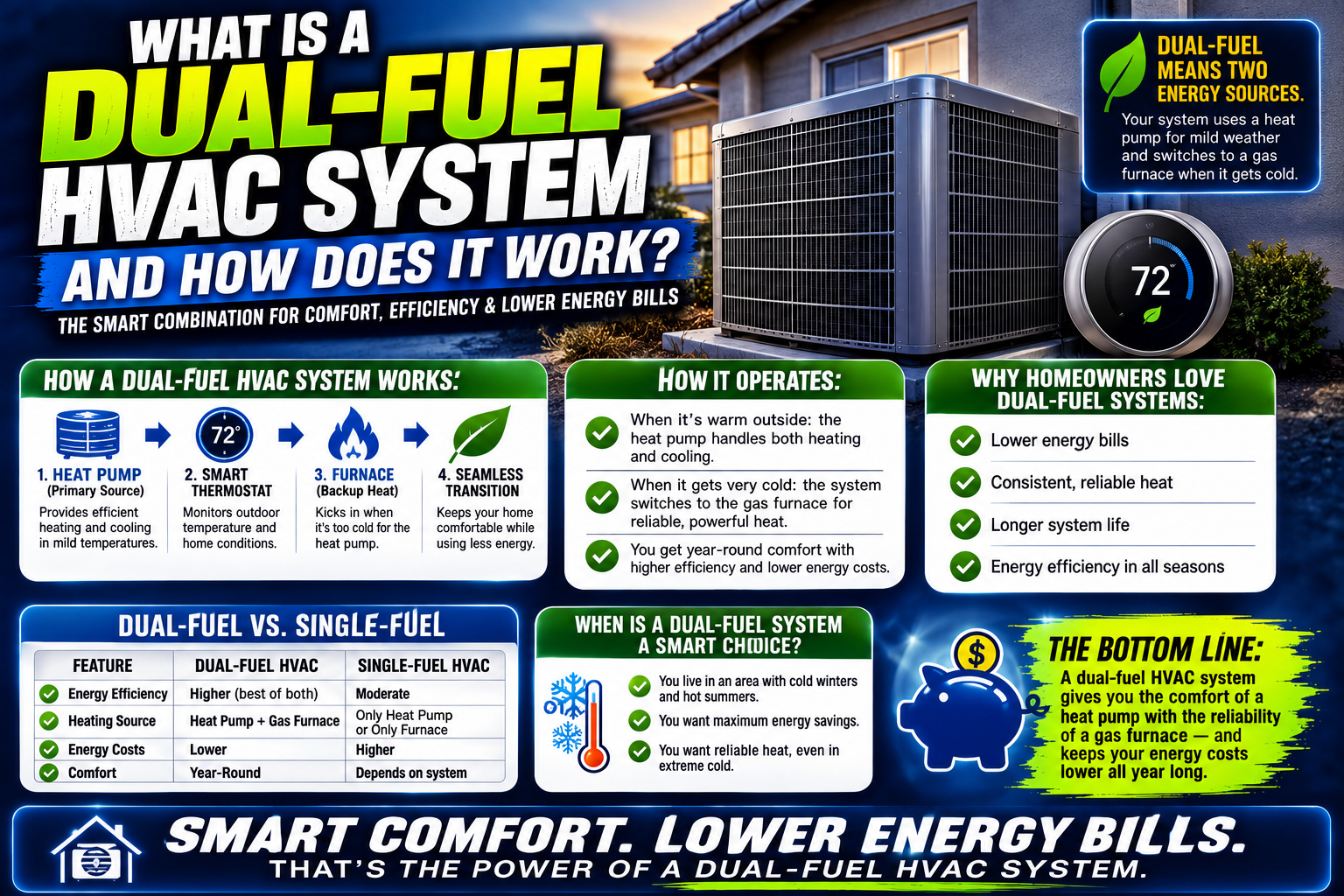
A dual-fuel system typically combines an electric heat pump with a gas furnace.
Instead of relying on one heating source during every outdoor condition, the system can use the heat pump during certain conditions and the furnace when appropriate.
For some homeowners, this provides an interesting combination of flexibility, comfort, and efficiency.
Here’s how it works.
What Is a Dual-Fuel HVAC System?
A dual-fuel system combines two different heating technologies:
- An electric heat pump
- A gas furnace
The heat pump can provide both cooling and heating.
The furnace provides gas heating.
Controls determine which heating source should operate based on the system design and operating conditions.
During cooling season, the heat pump operates similarly to a central air conditioner.
During heating season, the system can use either the heat pump or the furnace.
How Does a Heat Pump Heat a House?
A heat pump doesn’t create heat in the same way a gas furnace does.
Instead, it transfers heat.
During heating operation, the heat pump extracts available heat energy from outdoor air and transfers it indoors.
Even when outdoor air feels cold, heat energy is still present.
Modern heat pumps can operate across a wide range of outdoor conditions, although performance characteristics vary by equipment.
How Does a Gas Furnace Heat a House?
A gas furnace works differently.
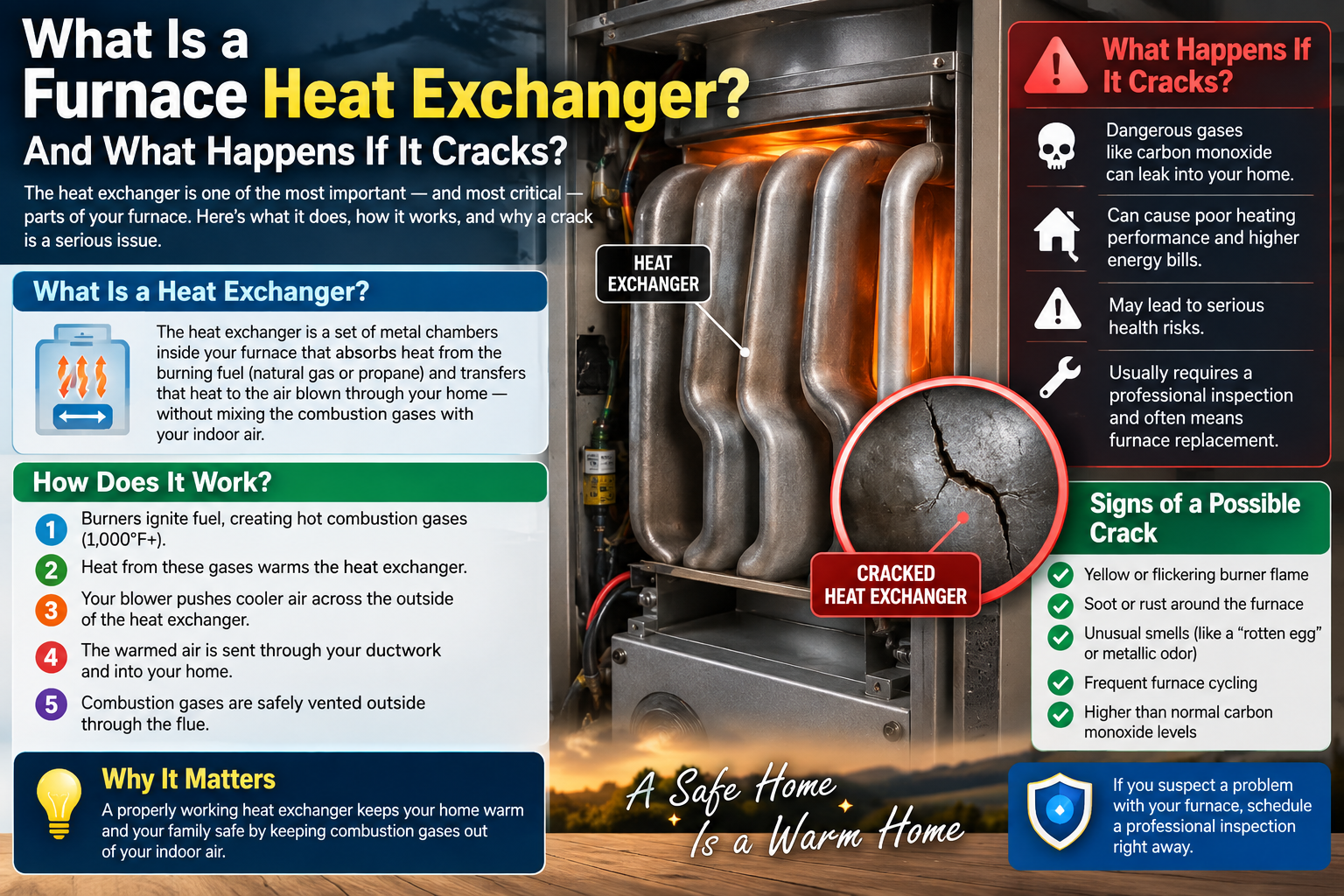
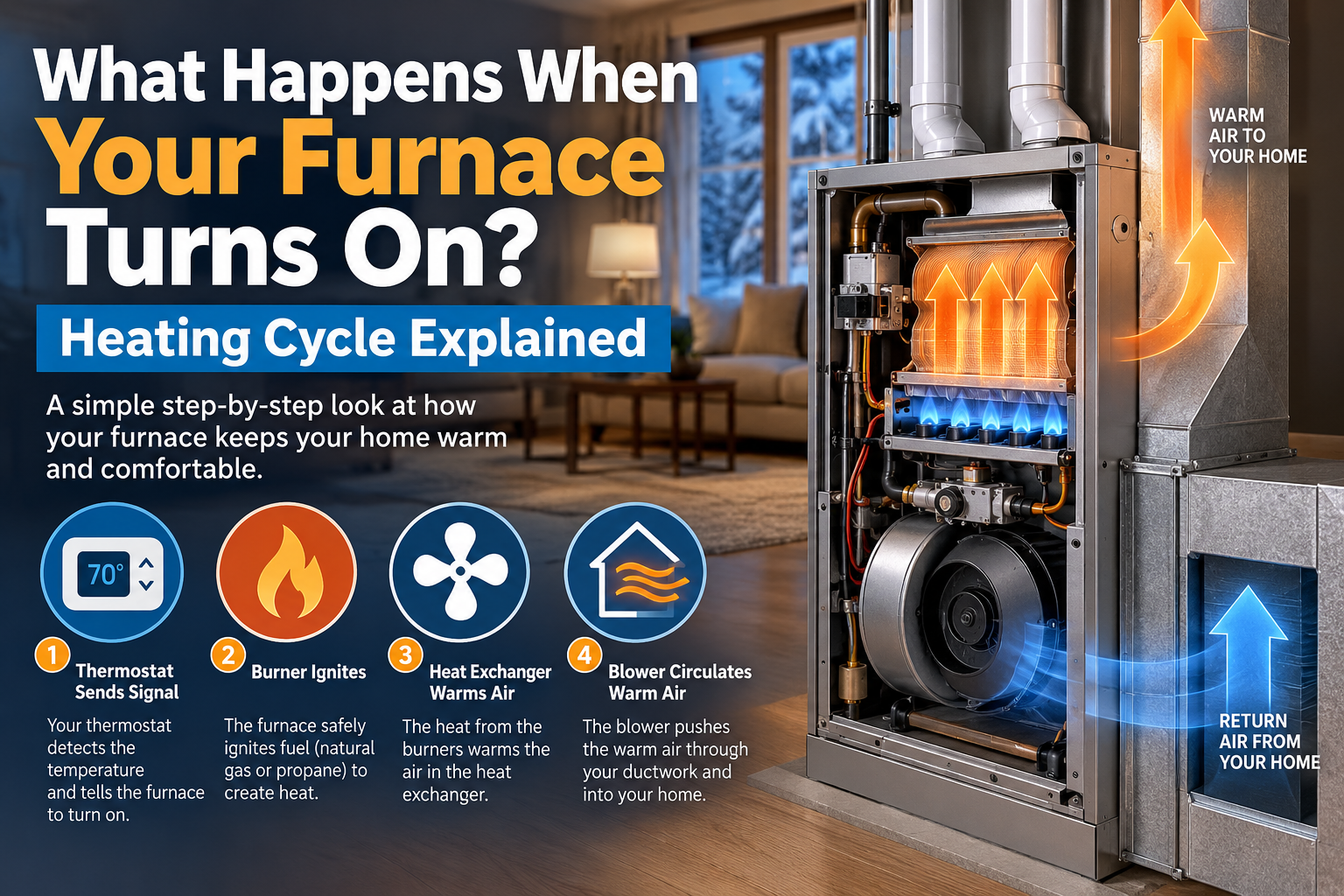
It creates heat through combustion.
The furnace’s heat exchanger transfers that heat to the air moving through the HVAC system.
The blower then distributes the heated air through the home’s ductwork.
So a dual-fuel system essentially gives the home access to two different methods of heating.
How Does Dual Fuel Decide Which Heat Source to Use?
The system’s controls determine when to use the heat pump and when to transition to furnace operation.
The exact strategy depends on:
- Equipment
- Control system
- Outdoor conditions
- System configuration
- Installation settings
In many applications, the heat pump handles heating during milder conditions.
When conditions reach a point where the system is configured to use the furnace, the heating source changes.
Homeowners generally don’t need to manually switch equipment every time the weather changes.
Properly configured controls manage the transition.
Why Would You Want Two Heating Sources?
Because the two technologies have different strengths.
A heat pump can provide efficient electric heating by transferring heat rather than relying solely on electric resistance heating.
A gas furnace can provide strong heating output using natural gas.
Combining the two allows the HVAC system to use different heating methods depending on conditions and system design.
Does Dual Fuel Still Provide Air Conditioning?
Yes.
The heat pump provides cooling during warm weather.
In cooling mode, it operates similarly to a conventional central air conditioner by transferring heat from inside the home to the outdoors.
So one dual-fuel system can provide:
- Summer: Heat pump cooling
- Milder winter conditions: Heat pump heating
- Other heating conditions: Gas furnace heating
The exact transition strategy depends on the equipment and controls.
Why Might Dual Fuel Make Sense in Southern California?
Southern California has a climate that’s very different from areas with extremely long, severe winters.
Communities throughout the Temecula Valley generally experience:
- Hot summers
- Mild fall weather
- Moderate winters
- Relatively limited periods of very cold weather
That can make heat pump technology attractive because heating demand is often moderate compared with colder regions.
For homeowners who already have natural gas and prefer having a furnace available, dual fuel may offer another option worth considering.
Is Dual Fuel More Efficient Than a Gas Furnace?
There’s no universal answer because energy efficiency and operating cost depend on several factors.
These include:
- Heat pump efficiency
- Furnace efficiency
- Outdoor temperature
- Electricity rates
- Natural gas rates
- Thermostat settings
- Home insulation
- Equipment sizing
- System controls
- Household usage
A properly designed dual-fuel system is intended to use its available heating technologies appropriately.
But homeowners shouldn’t assume that one configuration will always produce the lowest utility bill in every house.
Is Dual Fuel Better Than an All-Electric Heat Pump?
Not automatically.
An all-electric heat pump system can be an excellent solution for many homes.
Modern heat pumps have improved significantly and can provide heating across a broad range of conditions.
Whether dual fuel or all-electric makes more sense depends on:
- Existing utilities
- Current HVAC configuration
- Equipment options
- Home characteristics
- Energy rates
- Comfort preferences
- Budget
- Long-term goals
There’s no single HVAC configuration that’s best for every homeowner.
Is Dual Fuel Better Than a Traditional AC and Furnace?
Again, it depends.
A traditional split system may use:
Air conditioner for cooling
and
Gas furnace for heating.
A dual-fuel system instead uses a heat pump for cooling and also allows that heat pump to provide heating.
The furnace remains available as the second heating source.
For homeowners replacing both their AC and furnace, this can provide another equipment configuration to consider.
What Is the Difference Between Dual Fuel and a Heat Pump With Electric Backup Heat?
These systems aren’t the same.
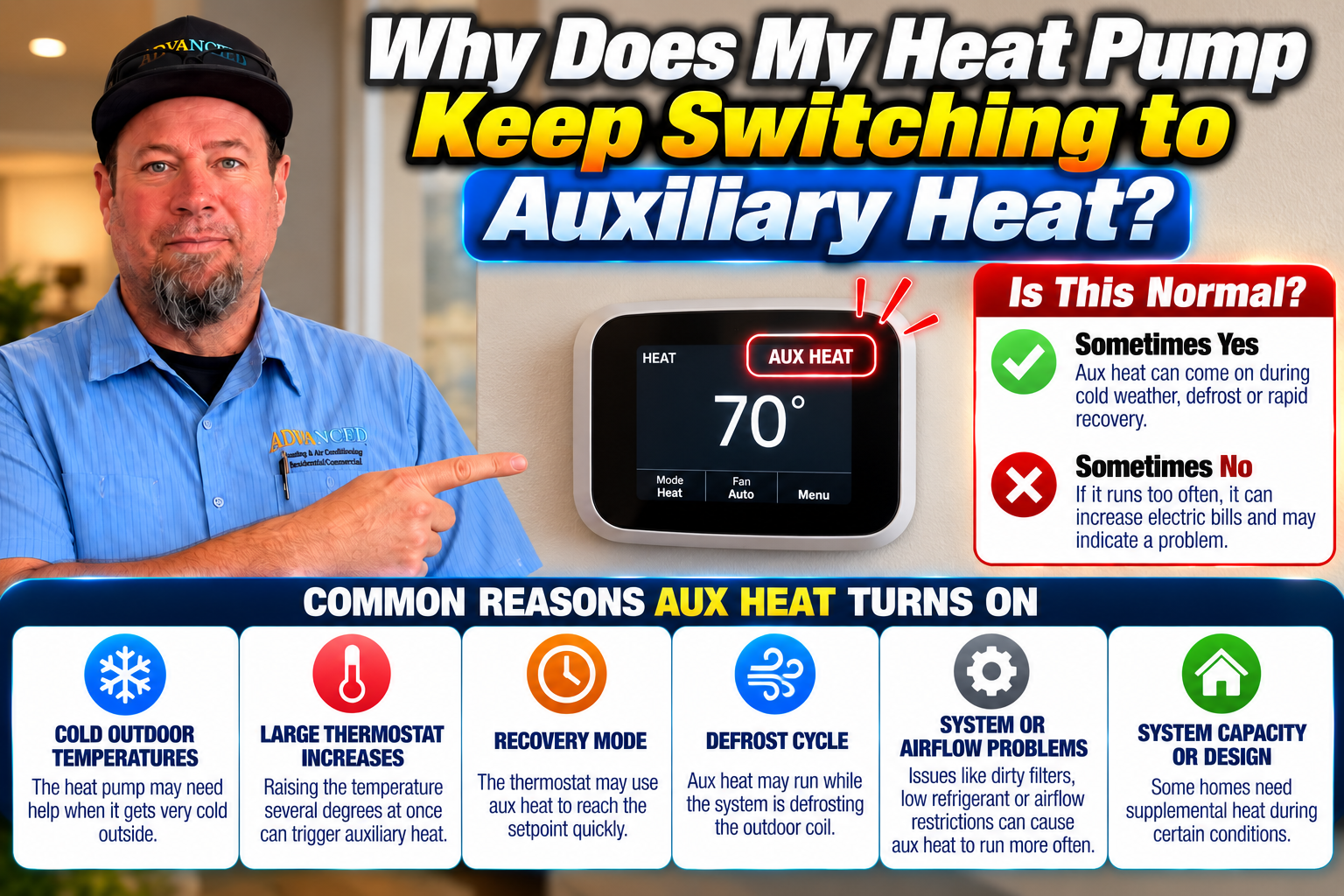
A heat pump can sometimes be paired with electric resistance auxiliary heat.
A dual-fuel system uses a gas furnace as the alternate heating source.
Both systems can provide additional heating capability, but they do it differently.
When comparing HVAC proposals, make sure you understand exactly what type of backup or secondary heat is being included.
Does a Dual-Fuel System Automatically Switch to the Furnace?
With appropriate controls and configuration, the transition between heating sources can occur automatically.
The homeowner shouldn’t need to constantly monitor outdoor temperature and manually decide which equipment should run.
However, proper installation and control setup are critical.
Advanced equipment only works correctly when it’s configured correctly.
Does Dual Fuel Require a Special Thermostat?
Dual-fuel systems generally require controls capable of managing multiple heating sources.
Depending on the equipment, this may involve:
- Compatible thermostat
- Outdoor temperature sensing
- Manufacturer-specific controls
- Communicating controls
- System programming
When getting an estimate, ask what thermostat or control system is included and how the equipment will determine when to change heating modes.
Can I Add a Heat Pump to My Existing Furnace?
Sometimes, but compatibility needs to be evaluated.
A contractor should consider:
- Furnace condition
- Furnace age
- Indoor coil
- Blower capability
- Ductwork
- Electrical requirements
- Controls
- Equipment compatibility
- Refrigerant system
- Available space
Simply purchasing an outdoor heat pump doesn’t mean it can automatically be connected to any existing furnace.
The components need to work together as a properly matched system.
Should I Keep My Existing Furnace and Add a Heat Pump?
This can make sense in certain situations, but the condition of the furnace matters.
If the existing furnace is already approaching the end of its useful service life, investing in a system designed around that furnace may not provide the best long-term value.
On the other hand, if the furnace is relatively new, compatible, and in good condition, there may be options worth discussing.
The entire HVAC system should be evaluated before deciding.
What Happens If the Heat Pump Needs Repair?
One potential feature of having two heating sources is that the system contains both a heat pump and furnace.
However, homeowners shouldn’t assume one component will always operate as an emergency replacement for another.
Whether the furnace can provide heat when another part of the system has failed depends on:
- Type of failure
- Controls
- Equipment configuration
- Safety systems
If the HVAC system isn’t operating correctly, it should still be professionally diagnosed.
Does Dual Fuel Require More Maintenance?
A dual-fuel system contains both heat pump equipment and a gas furnace.
That means both sides of the system need appropriate inspection and maintenance.
Depending on the equipment, maintenance may include evaluating:
- Outdoor heat pump
- Indoor coil
- Air filter
- Blower
- Electrical components
- Refrigerant circuit
- Furnace components
- Heat exchanger
- Gas heating operation
- Thermostat and controls
- Airflow
- Ductwork
Having more equipment capability also means there are more components involved in system operation.
What About the Ductwork?
Dual fuel still depends on proper airflow.
Whether the system is using the heat pump or furnace, conditioned air needs to move through the home’s duct system.
Problems such as:
- Leaking ducts
- Undersized returns
- Damaged flexible ducts
- Restrictions
- Poor distribution
can negatively affect comfort regardless of how advanced the equipment is.
Before installing a new system, existing ductwork should be evaluated when appropriate.
Does HVAC Sizing Matter With Dual Fuel?
Absolutely.
Having two heating technologies doesn’t eliminate the need for proper equipment sizing.
Cooling and heating requirements depend on factors such as:
- Home size
- Insulation
- Windows
- Air leakage
- Home orientation
- Ceiling height
- Ductwork
- Local climate
Equipment should be selected for the actual home rather than simply replacing old equipment based on its existing capacity.
Is Dual Fuel More Expensive to Install?
A dual-fuel system can have a higher initial cost than some simpler HVAC configurations because it incorporates:
- Heat pump technology
- Gas furnace
- Appropriate indoor equipment
- Controls
- Installation requirements
The actual cost varies significantly depending on equipment, efficiency, home configuration, ductwork, electrical work, and installation complexity.
Instead of comparing only purchase prices, homeowners should consider what they’re receiving and how long they expect to own the system.
Who Should Consider a Dual-Fuel HVAC System?
Dual fuel may be worth discussing if:
- You’re replacing both your AC and furnace
- Your home already has natural gas
- You’re interested in heat pump technology
- You want multiple heating capabilities
- You’re comparing higher-efficiency HVAC options
- You plan to remain in your home long term
- You’re evaluating a major HVAC upgrade
It may not be the best choice for every homeowner.
The point is to understand that the option exists.
What Should I Ask Before Buying Dual Fuel?
Ask your HVAC contractor:
What equipment is being installed?
Know the exact heat pump and furnace combination.
How will the system switch between heating sources?
Understand how the controls are configured.
Is the equipment properly matched?
Components should be designed to operate together.
How was the system sized?
Equipment capacity should match the home’s requirements.
Is my existing ductwork adequate?
New technology still requires proper airflow.
What thermostat is included?
Make sure the controls support the equipment’s capabilities.
What are the efficiency ratings?
Understand both heating and cooling performance.
What warranties apply?
Ask about manufacturer and labor coverage.
What maintenance will be required?
Understand the responsibilities of owning both heating technologies.
Frequently Asked Questions About Dual-Fuel HVAC
What does dual fuel mean in HVAC?
A dual-fuel HVAC system generally combines an electric heat pump with a gas furnace, allowing the system to use two different heating methods.
Does a dual-fuel system have air conditioning?
Yes. The heat pump provides cooling during warm weather.
Does dual fuel use gas and electricity at the same time?
System operation depends on the equipment and configuration. Dual-fuel systems are generally designed to select the appropriate heating source rather than simply operating both heat sources continuously.
Can a heat pump work with a gas furnace?
Yes. Compatible equipment can be designed as a dual-fuel system.
Is dual fuel good for California?
It can be an option worth considering, particularly for homeowners who already have natural gas and are interested in heat pump technology. The best system depends on the individual property.
Is dual fuel cheaper to operate?
Operating cost depends on electricity rates, natural gas prices, equipment efficiency, weather, system configuration, and household usage.
Does dual fuel require a special thermostat?
It requires controls capable of properly managing the heat pump and furnace. Exact thermostat requirements vary by equipment.
Should I replace my AC with a heat pump if I already have a furnace?
It’s worth considering when replacing cooling equipment. A heat pump can provide cooling like an AC while also providing another source of heating.
Dual-Fuel HVAC in the Temecula Valley
Homeowners throughout Temecula, Murrieta, Menifee, Lake Elsinore, Winchester, Hemet, Anza, and surrounding Southern California communities have more heating and cooling options available than ever before.
A traditional AC and furnace isn’t the only choice.
Neither is an all-electric heat pump.
Dual fuel gives homeowners another option by combining heat pump technology with gas heating.
The right answer depends on the home.
The Bottom Line
A dual-fuel HVAC system combines:
An electric heat pump
with
A gas furnace.
The heat pump can provide cooling during summer and heating during appropriate winter conditions.
The furnace provides another heating source when the system is configured to use it.
For some homeowners, that combination can provide an appealing balance of flexibility, comfort, and efficiency.
But don’t choose dual fuel simply because it sounds more advanced.
Compare the equipment, installation cost, energy sources, efficiency, controls, ductwork, home characteristics, and your long-term plans.
The best HVAC system is the one that makes sense for your particular home.
Considering a Heat Pump, Furnace, or Dual-Fuel HVAC System?
Advanced Heating & Air Conditioning can help you understand the differences between today’s heating and cooling options.
Whether you’re considering a traditional AC and furnace, all-electric heat pump, or dual-fuel system, our team can evaluate your home and explain the available choices.
We proudly serve Temecula, Murrieta, Menifee, Lake Elsinore, Winchester, Hemet, Anza, and surrounding communities.
Contact Advanced Heating & Air Conditioning to schedule an HVAC evaluation or request an estimate for your next heating and cooling system.