


Why Does My Furnace Smell Like Gas?
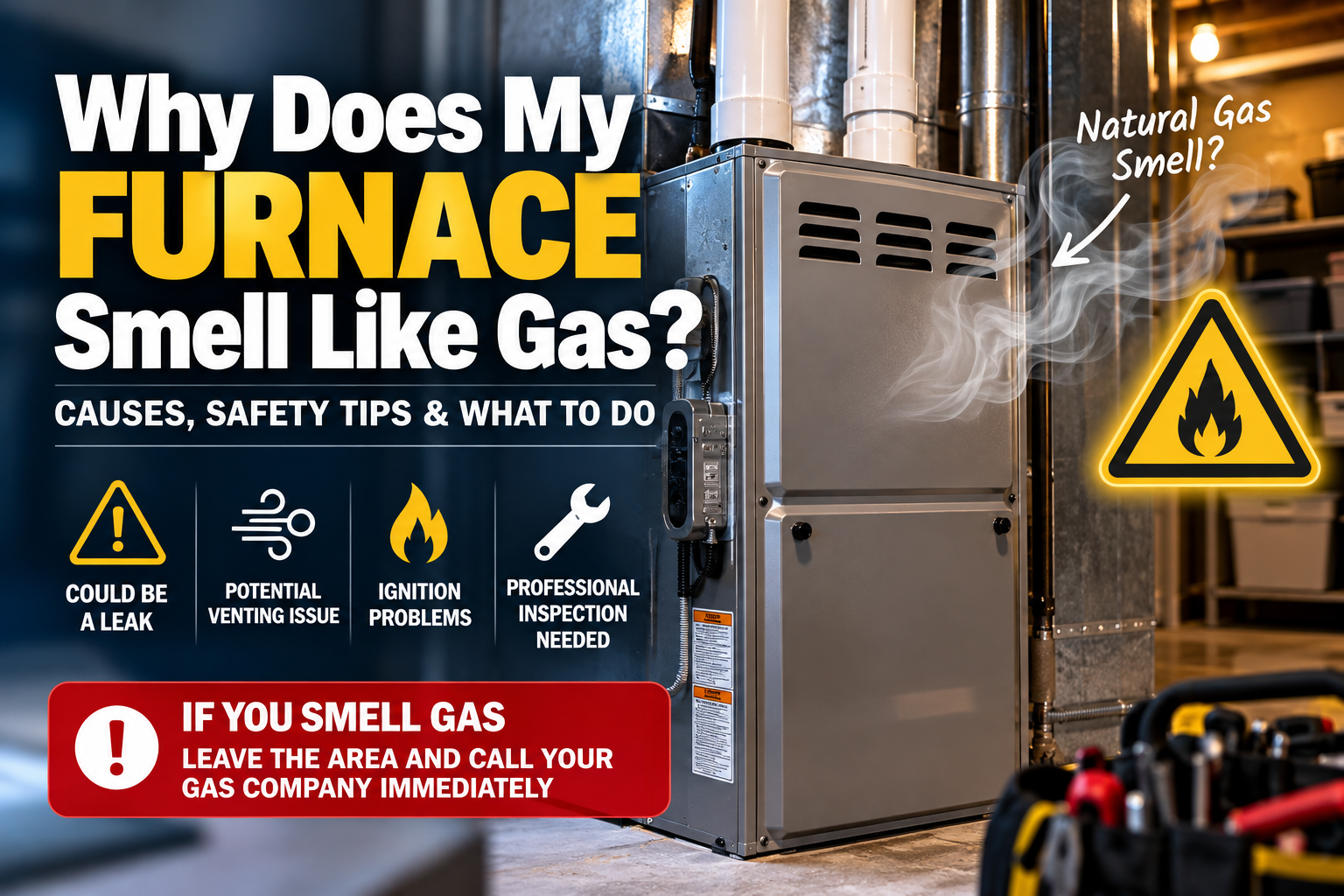
Why Does My Furnace Smell Like Gas? What Homeowners Should Know
You turn on the furnace and notice an unusual smell.
Then you wonder:
Is that natural gas?
A suspected gas odor around a furnace should be taken seriously.
There are situations where someone may notice a very brief odor associated with furnace ignition, but a strong, persistent, unexplained or recurring natural-gas odor should never be considered normal.
More importantly, this isn’t the type of furnace problem where homeowners should start removing panels or trying to locate a leak themselves.
Here’s what you should know.
Key Takeaways
- Natural gas is intentionally odorized so leaks are easier to detect.
- A strong or persistent gas odor is not normal.
- Don’t use electrical switches, flames or anything that could create an ignition source if you suspect a significant gas leak.
- Leave the affected area and contact your gas utility or emergency services from a safe location.
- Don’t attempt to repair gas piping, gas valves or furnace combustion components yourself.
- A gas smell and a normal dusty furnace-startup smell are completely different situations.
What Does Natural Gas Smell Like?
Natural gas itself is essentially odorless.
Utilities add an odorant so people can recognize a potential leak.
It’s commonly described as smelling similar to:
Rotten eggs or sulfur.
That odor is intentionally distinctive.
This should not be confused with the dusty smell homeowners sometimes experience when turning on their furnace for the first time after summer.
Accumulated dust can produce a temporary odor during the first heating cycles of the season.
Burning dust and natural gas are not the same smell and should not be treated the same way.
Is It Normal to Smell a Little Gas When the Furnace Starts?
A very brief odor near ignition may sometimes be noticed, depending on the equipment and circumstances.
However, homeowners shouldn’t use this as a reason to dismiss a gas smell.
If the odor is:
- Strong
- Persistent
- Getting stronger
- Present when the furnace isn’t operating
- Returning frequently
- Noticeable throughout the house
treat it as a potential gas leak.
Don’t remain inside trying to determine whether the amount is “normal.”
Safety comes first.
1. There Could Be a Gas Leak
The most important possibility is an actual natural-gas leak.
A furnace installation can include several gas-related components and connections, including:
- Gas supply piping
- Shutoff valve
- Flexible connector where applicable
- Gas valve
- Burner assembly
- Associated fittings and connections
A problem involving any gas-carrying portion of the system requires proper evaluation.
Gas leaks aren’t a DIY furnace repair.
2. The Furnace May Be Having an Ignition Problem
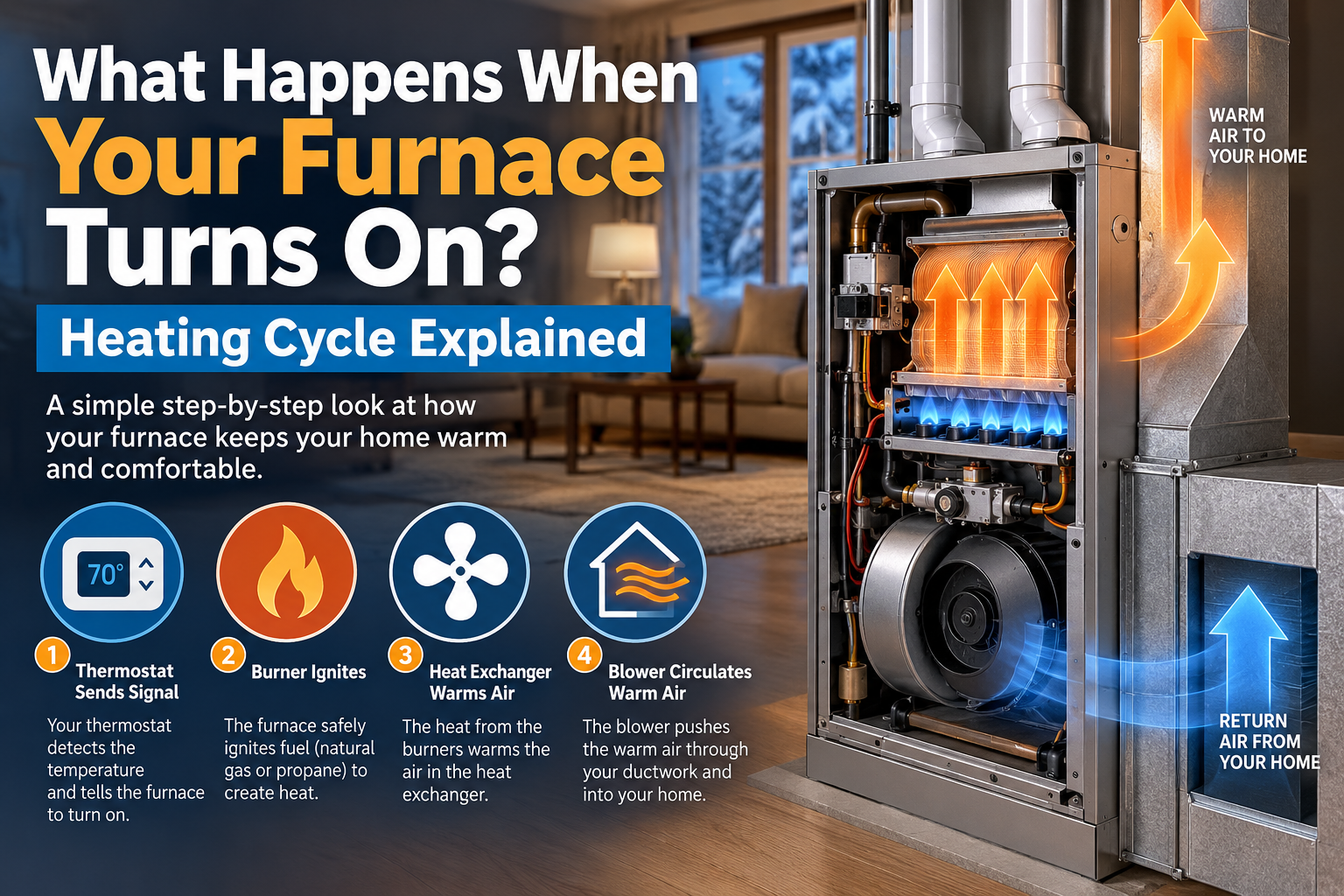
A gas furnace follows a controlled sequence before and during burner ignition.
The furnace doesn’t simply release gas whenever the thermostat asks for heat.
Modern systems use controls and safety devices designed to manage ignition.
If the furnace is having difficulty igniting, you might notice symptoms such as:
- Repeated startup attempts
- Clicking
- Burners failing to light
- Burners lighting and shutting down
- Furnace lockout
- No heat
Ignition and pilot-light problems are common furnace issues requiring diagnosis.
If an unusual gas odor accompanies ignition problems, don’t repeatedly reset the furnace trying to make it start.
3. A Burner Problem Could Affect Combustion
Furnace burners need to operate correctly for proper combustion.
Dirt, debris, corrosion, improper operation or other combustion-related problems can affect burner performance.
This is one reason heating maintenance includes burner inspection.
Advanced Heating & Air Conditioning’s heating-maintenance service includes inspecting and cleaning burners and checking the flame pattern and combustion as part of its furnace tune-up.
Homeowners should not attempt to adjust furnace burners themselves.
4. A Gas Valve Could Be Involved
The furnace gas valve controls fuel delivery to the burners.
It operates as part of the furnace’s ignition sequence.
A valve problem, control problem or another condition affecting fuel delivery can interfere with normal operation.
However, a technician shouldn’t replace a gas valve simply because the homeowner reports a gas odor.
The actual source needs to be identified.
5. A Pilot-Light Problem May Be Involved on Older Furnaces
Some older gas furnaces use a standing pilot light.
If that pilot goes out or doesn’t operate correctly, the furnace may not function as intended.
Newer furnaces commonly use electronic ignition systems instead.
The correct diagnosis depends on the type and age of the equipment.
Don’t attempt to relight or service a furnace unless the manufacturer’s instructions specifically provide a safe homeowner procedure and there is no suspected gas leak.
If you already smell significant gas, leave the area instead of attempting ignition.
6. The Smell May Be Coming From Another Gas Appliance
Finding a gas odor near the furnace doesn’t automatically prove that the furnace is responsible.
Depending on the home, other gas appliances may include:
- Water heater
- Gas range
- Fireplace
- Clothes dryer
- Pool heater
- Other fuel-burning equipment
Gas can travel through a building.
The location where you notice the smell isn’t necessarily the location of the leak.
That’s why suspected leaks should be properly investigated rather than diagnosed by smell alone.
7. The Odor May Not Be Natural Gas at All
Homes contain many sources of unusual odors.
A furnace can produce or circulate smells associated with:
- Dust
- Electrical components
- Heated plastic
- Household chemicals
- Paint
- Cleaning products
- Stored materials
- Pest activity
But when you’re uncertain whether an odor is natural gas, it’s better to treat the situation cautiously rather than assuming it’s harmless.
What Should I Do If I Smell Gas?
If you smell a strong or persistent natural-gas odor, prioritize getting people out of the affected area.
Avoid doing anything that could create a spark or flame.
That can include operating electrical switches or intentionally lighting anything.
Once you’re safely outside, contact your gas utility or 911 as appropriate and follow their instructions.
For a strong or persistent gas odor, the safety direction is the same: leave the home, avoid switches and open flames, and contact the gas utility or 911 from outside before arranging furnace repair.
Should I Turn the Furnace Off?
If you’re dealing with an ordinary furnace malfunction and there’s no suspected gas leak, shutting down malfunctioning equipment may sometimes be appropriate.
But a significant gas odor is different.
Don’t spend extra time inside manipulating furnace controls, electrical switches or equipment.
Leave the area and follow the gas utility’s emergency instructions.
Should I Open the Windows?
If you suspect a significant gas leak, your priority is to leave the building safely.
Don’t remain inside attempting to ventilate the house or diagnose the problem.
Follow the instructions provided by your gas utility or emergency responders.
Can I Look for the Gas Leak Myself?
No.
Don’t use matches, lighters or other flames to search for a leak.
Don’t disassemble the furnace.
Don’t loosen gas fittings.
Don’t attempt to repair gas piping.
Gas-system diagnosis requires appropriate training and equipment.
Once the gas utility or emergency responders determine the property is safe, a qualified HVAC professional can inspect furnace-related equipment if necessary.
What Does an HVAC Technician Check?
Once the situation has been made safe, furnace diagnosis can include evaluating the equipment’s:
- Gas connections
- Gas valve
- Burner operation
- Ignition system
- Flame characteristics
- Venting
- Safety controls
- Furnace sequence of operation
- Combustion performance
The exact procedure depends on the equipment and the problem.
The objective is to determine where the odor originated and why.
Gas Smell vs. Burning Smell
This distinction is important enough to make clear:
- Dusty smell at first fall startup — dust heating after months of inactivity.
- Burning plastic — possible overheating material or electrical issue.
- Hot electrical odor — possible electrical/component problem.
- Rotten egg / sulfur odor — possible natural-gas leak.
- Musty odor — possible moisture, dust or biological source.
The odor alone doesn’t diagnose the furnace.
But a suspected natural-gas odor deserves immediate attention.
Does a Gas Smell Mean My Heat Exchanger Is Cracked?
Not necessarily.
A gas odor can have several possible sources and doesn’t prove that the furnace heat exchanger is damaged.
Likewise, a cracked heat exchanger is a separate furnace condition that should be established through proper inspection and evidence.
This is why homeowners should be cautious about diagnosing major furnace problems based on a single symptom.
What About Carbon Monoxide?
Natural gas and carbon monoxide are different.
Natural gas is odorized so people can smell a potential leak.
Carbon monoxide is colorless and odorless.
You cannot smell carbon monoxide.
That’s why working carbon-monoxide alarms are essential in homes with fuel-burning appliances.
A gas smell should not be used as a substitute for carbon-monoxide detection.
Can Furnace Maintenance Find Gas Problems?
Heating maintenance can help identify developing furnace issues before peak heating season.
Advanced Heating & Air Conditioning’s maintenance service includes burner inspection, electrical checks, thermostat testing, safety-control testing and overall system-performance evaluation.
Maintenance can’t guarantee that a future leak or component failure will never occur, but regular inspection provides an opportunity to identify visible or measurable problems before they develop further.
Why Fall Is a Good Time to Test a Gas Furnace
Southern California furnaces can remain unused for long periods.
That’s why testing the heating system before the first cold night makes sense.
During an early-season test, pay attention to:
- Startup
- Ignition
- Airflow
- Unusual noises
- Unusual odors
- Whether the home actually reaches temperature
If something doesn’t seem normal, you have time to address it before you depend on the furnace every night.
Frequently Asked Questions
Why does my furnace smell like rotten eggs?
Natural gas is odorized with a sulfur-like smell often compared with rotten eggs. A strong or persistent odor should be treated as a possible gas leak.
Is a small gas smell when my furnace starts normal?
A brief odor may occasionally be noticed around ignition, but a strong, recurring or persistent gas smell should not be ignored.
Can a dirty furnace cause a gas smell?
Dirty burners or combustion problems can affect furnace operation, but a suspected natural-gas odor should not simply be blamed on dirt. The source should be properly identified.
Can a bad igniter cause me to smell gas?
An ignition problem can prevent normal furnace operation, but there are several possible causes of startup failure. If a significant gas odor is present, leave the area rather than repeatedly attempting to restart the furnace.
Is natural gas the same as carbon monoxide?
No. They’re different gases. Natural gas is intentionally odorized; carbon monoxide is colorless and odorless.
Can I use my furnace if I occasionally smell gas?
A recurring gas odor should be investigated. Don’t continue operating equipment when you suspect a gas leak.
Who should I call first if I smell gas?
For a strong or persistent suspected natural-gas leak, leave the affected area and contact your gas utility or emergency services from a safe location. Once the property has been declared safe, an HVAC professional can address furnace-related repairs if needed.
Furnace Safety Starts With Proper Diagnosis
A furnace gas odor isn’t something to diagnose by replacing random components.
A technician needs to determine:
- Is natural gas actually present?
- Where is it coming from?
- Is the furnace responsible?
- Is there an ignition or combustion problem?
- Is the equipment operating safely?
That’s the difference between addressing the symptom and identifying the actual cause.
Gas Furnace Service in the Temecula Valley
Once a suspected gas-leak situation has been made safe by the appropriate utility or emergency personnel, Advanced Heating & Air Conditioning can diagnose furnace ignition, burner, control and heating-performance problems.
Advanced’s furnace-repair service covers gas furnaces and includes complete system diagnostics, ignition and blower repairs, safety checks and performance testing.
Serving Temecula, Murrieta, Menifee, Winchester, Wildomar, French Valley, Canyon Lake, Lake Elsinore, Hemet and surrounding Southern California communities.
Advanced Heating & Air Conditioning
951-609-9881
California Contractor License #916901
AdvancedHeatingAndAir.com
REAL PEOPLE. REAL SERVICE. REAL COMFORT.