


Why Is My AC Running Constantly?
Few things are more frustrating during a Temecula summer than noticing your air conditioner never seems to shut off.
If your AC is running constantly, it’s natural to wonder whether the behavior is normal or a sign that something is affecting system performance. The answer often depends on outdoor temperatures, system condition, and overall cooling demand.
During periods of extreme heat, air conditioners often run longer than usual to maintain indoor comfort. However, if your system runs continuously without adequately cooling your home, it may be signaling an underlying problem.
Understanding why your air conditioner is running all day can help you determine whether the issue is weather-related or if professional service may be needed.
Is It Normal for an AC to Run Constantly?
In some situations, longer cooling cycles are completely normal.
Air conditioners are designed to remove heat from your home. When outdoor temperatures rise significantly, the system must work harder to keep indoor temperatures comfortable.
Longer run times are often normal if:
- Outdoor temperatures are extremely high
- Your thermostat is set significantly lower than outdoor temperatures
- Doors or windows are being opened frequently
- Your home receives significant direct sunlight
However, if your AC won’t stop running and your home still feels warm, there may be a problem affecting system performance.
1. Dirty Air Filters
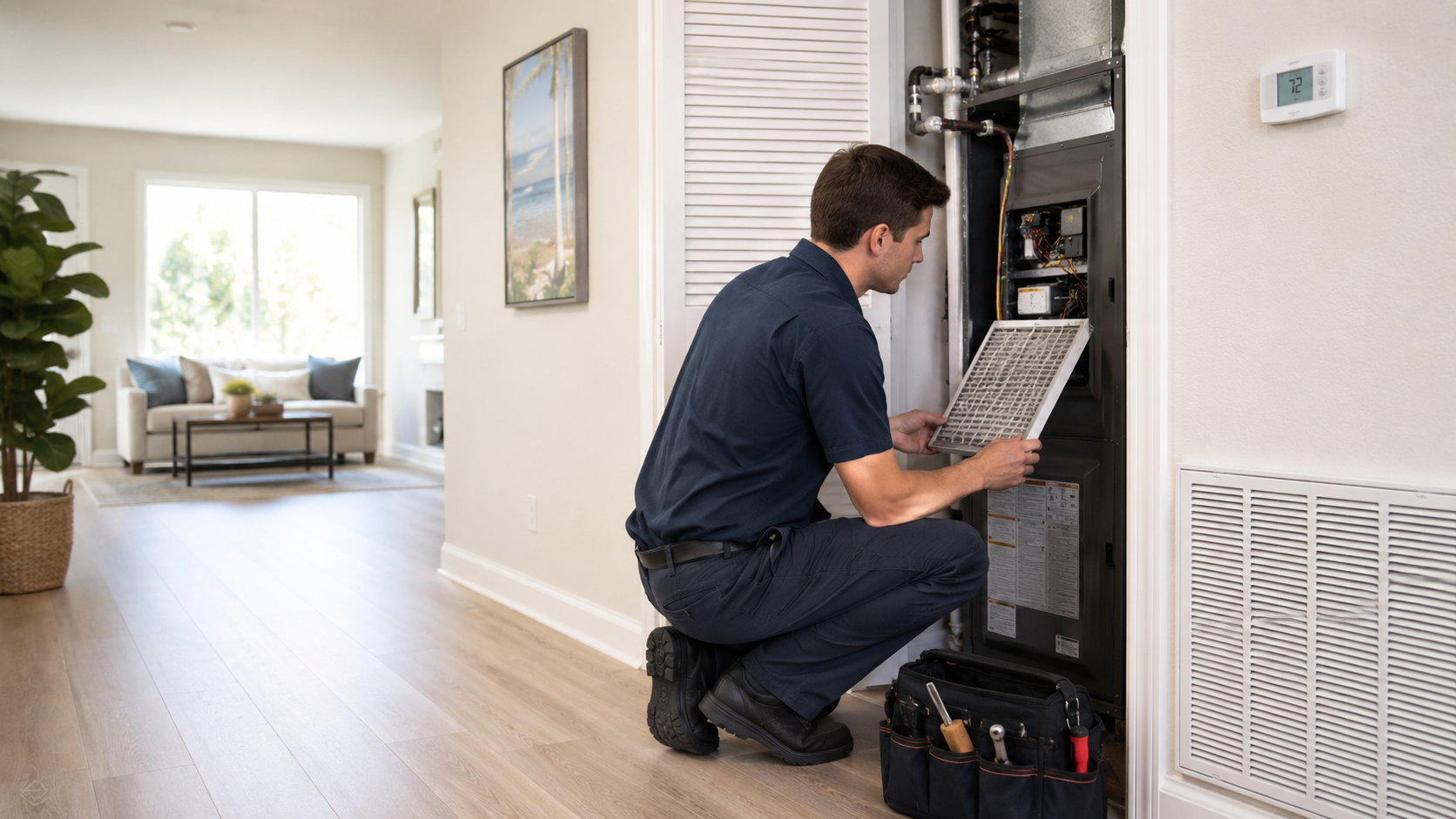
One of the most common causes of an AC running constantly is a dirty air filter.
Air filters help prevent dust, dirt, and airborne particles from entering the system. Over time, filters become clogged and restrict airflow.
When airflow is restricted:
- The system works harder to cool the home
- Cooling cycles become longer
- Energy consumption increases
- Indoor comfort may decrease
Fortunately, this is often one of the easiest issues to address.
Most homeowners should inspect their filters monthly and replace them as needed according to manufacturer recommendations.
2. Ductwork or Airflow Problems
Even if the air filter is clean, airflow problems elsewhere in the system can cause continuous operation.
Common airflow restrictions include:
- Closed supply vents
- Blocked return vents
- Leaky ductwork
- Damaged ducts
- Blower motor issues
When conditioned air cannot circulate properly, the system may struggle to reach the thermostat setting, causing it to run longer than necessary.
You may also notice:
- Weak airflow from vents
- Uneven temperatures between rooms
- Hot and cold spots throughout the home
If airflow problems persist, a professional inspection may be necessary.
3. Dirty Evaporator or Condenser Coils
Air conditioning systems rely on clean coils to transfer heat effectively.
Evaporator Coil Problems
The evaporator coil absorbs heat from indoor air.
When dirt accumulates on the coil, heat transfer becomes less efficient, reducing cooling performance.
Condenser Coil Problems
The condenser coil releases heat outside the home.
Because the outdoor unit is exposed to the elements, dirt, debris, leaves, and dust can accumulate over time.
When either coil becomes dirty:
- Cooling efficiency decreases
- Runtime increases
- Energy costs may rise
- The system experiences additional wear
Routine maintenance can help prevent these issues and keep the system operating efficiently.
4. Low Refrigerant or Refrigerant Leaks
Refrigerant plays a critical role in the cooling process.
If refrigerant levels become low due to a leak, your air conditioner may struggle to remove heat effectively.
Common signs of refrigerant problems include:
- AC not cooling properly
- Warm air coming from vents
- Ice buildup on refrigerant lines
- Hissing sounds near the system
- Extended cooling cycles
Because refrigerant systems require specialized equipment and handling, professional diagnosis and repair are recommended.
5. Thermostat Problems
Sometimes the issue is not the air conditioner itself.
A malfunctioning thermostat may incorrectly measure indoor temperatures or fail to communicate properly with the HVAC system.
Potential thermostat issues include:
- Incorrect settings
- Calibration problems
- Dead batteries
- Wiring issues
- Aging thermostat components
Before assuming a major HVAC problem exists, verify that your thermostat settings are correct and that the fan is not set to run continuously.
6. Your Air Conditioner May Be Too Small
Air conditioner sizing plays an important role in overall performance.
If a system is undersized for the home’s cooling demands, it may run almost continuously during hot weather while still struggling to maintain comfortable temperatures.
Signs of an undersized system may include:
- Long cooling cycles
- Difficulty reaching thermostat settings
- Consistently warm indoor temperatures
- Increased energy consumption
Proper equipment sizing requires detailed calculations that consider:
- Home size
- Insulation levels
- Window placement
- Sun exposure
- Occupancy
If sizing concerns are suspected, a professional evaluation can help determine whether the system is appropriately matched to the home.
7. Extreme Temecula Heat
Sometimes there is nothing wrong with the system at all.
Temecula’s climate creates challenging conditions for air conditioners during the hottest parts of the year. Summer temperatures frequently reach the 90s and can occasionally exceed 100°F, placing significant demand on residential cooling systems.
When temperatures climb into the upper 90s or exceed 100°F, even properly functioning systems may run for extended periods to maintain comfort.
During heat waves, homeowners may notice:
- Longer cooling cycles
- Reduced temperature differences between indoor and outdoor environments
- Increased energy usage
- Continuous operation during afternoon hours
In many cases, longer runtimes during extreme weather are a normal response to increased cooling demand.
What Happens If You Ignore an AC Problem?
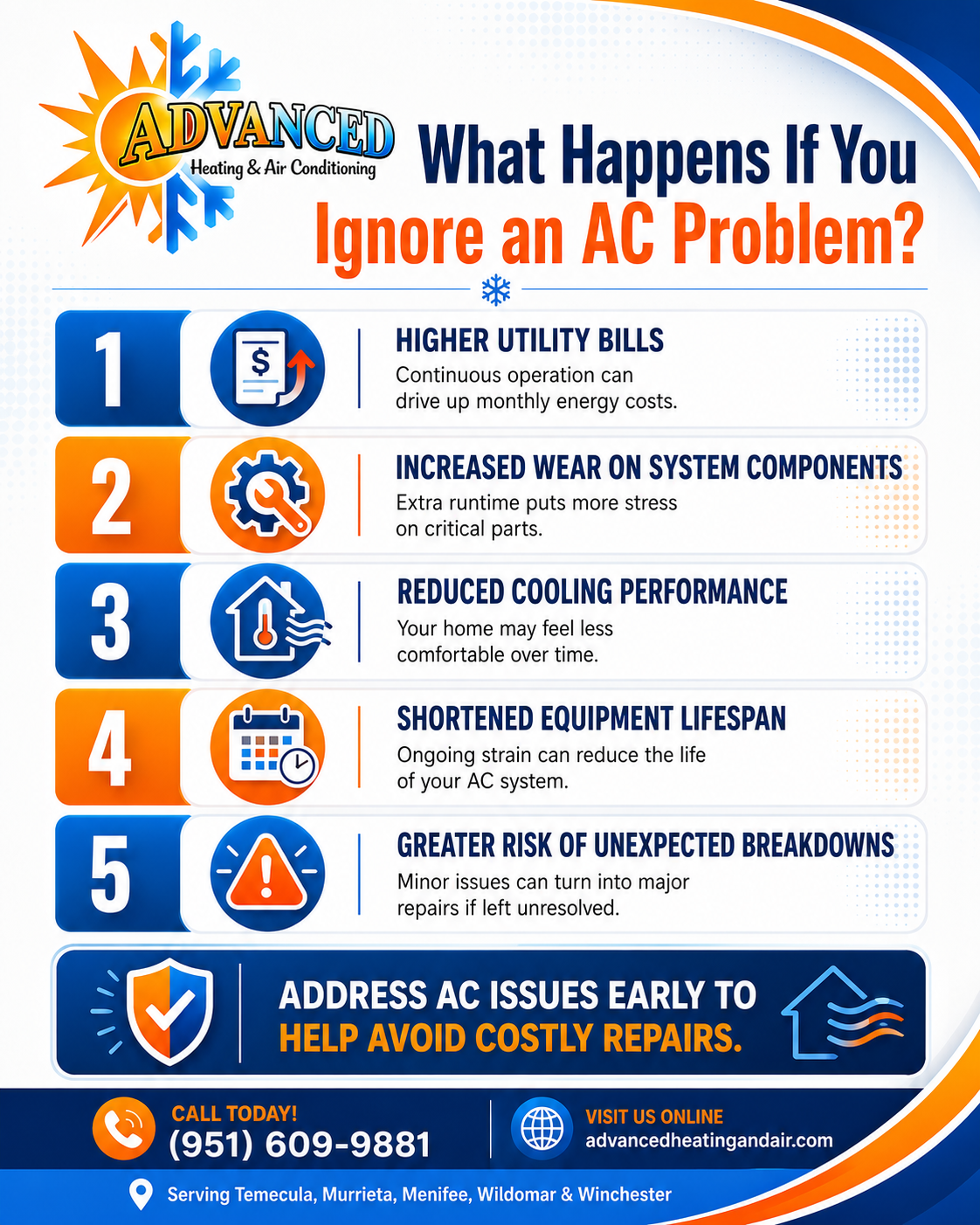
If your AC is always running because of an underlying issue, delaying repairs can create additional problems.
Potential consequences include:
- Higher utility bills
- Increased wear on system components
- Reduced cooling performance
- Shortened equipment lifespan
- Greater risk of unexpected breakdowns
Addressing minor issues early can often help prevent more expensive repairs later.
When Should You Call a Professional?
Professional service may be appropriate if:
- The system runs continuously and never reaches the thermostat setting
- Warm air is coming from vents
- Ice forms on refrigerant lines
- Energy bills increase unexpectedly
- Airflow is weak throughout the home
- The system makes unusual noises
An HVAC technician can inspect the system, identify the underlying cause, and recommend the most appropriate solution.
Final Thoughts
If your AC is running constantly, the cause may be as simple as a dirty air filter or as complex as refrigerant problems, airflow restrictions, or equipment sizing issues.
In some situations—especially during periods of extreme summer heat in Temecula—longer cooling cycles are completely normal. However, if your air conditioner runs continuously while struggling to keep your home comfortable, professional evaluation may be beneficial.
Homeowners throughout Temecula, Murrieta, Menifee, Wildomar, and surrounding communities can often avoid costly repairs by addressing cooling concerns early and maintaining a regular service schedule.
For professional AC repair, maintenance, and system inspections, Advanced Heating & Air Conditioning provides experienced service and support throughout the region.
Frequently Asked Questions
Is it normal for my AC to run all day?
During extremely hot weather, longer cooling cycles can be normal. However, if the system runs continuously without cooling effectively, a problem may exist.
Can a dirty air filter cause my AC to run constantly?
Yes. Dirty filters restrict airflow, forcing the system to work harder and run longer to reach the desired temperature.
Why is my AC running but not cooling?
Common causes include refrigerant issues, dirty coils, airflow restrictions, thermostat problems, or equipment sizing concerns.
Does low refrigerant cause continuous operation?
Yes. Low refrigerant levels can reduce cooling performance, causing the system to run longer while struggling to maintain indoor temperatures.
When should I call an HVAC professional?
If your system runs constantly, produces warm air, develops ice buildup, experiences weak airflow, or causes unusually high energy bills, professional evaluation is recommended.