


Why Does My Furnace Click but Not Turn On? 9 Possible Causes
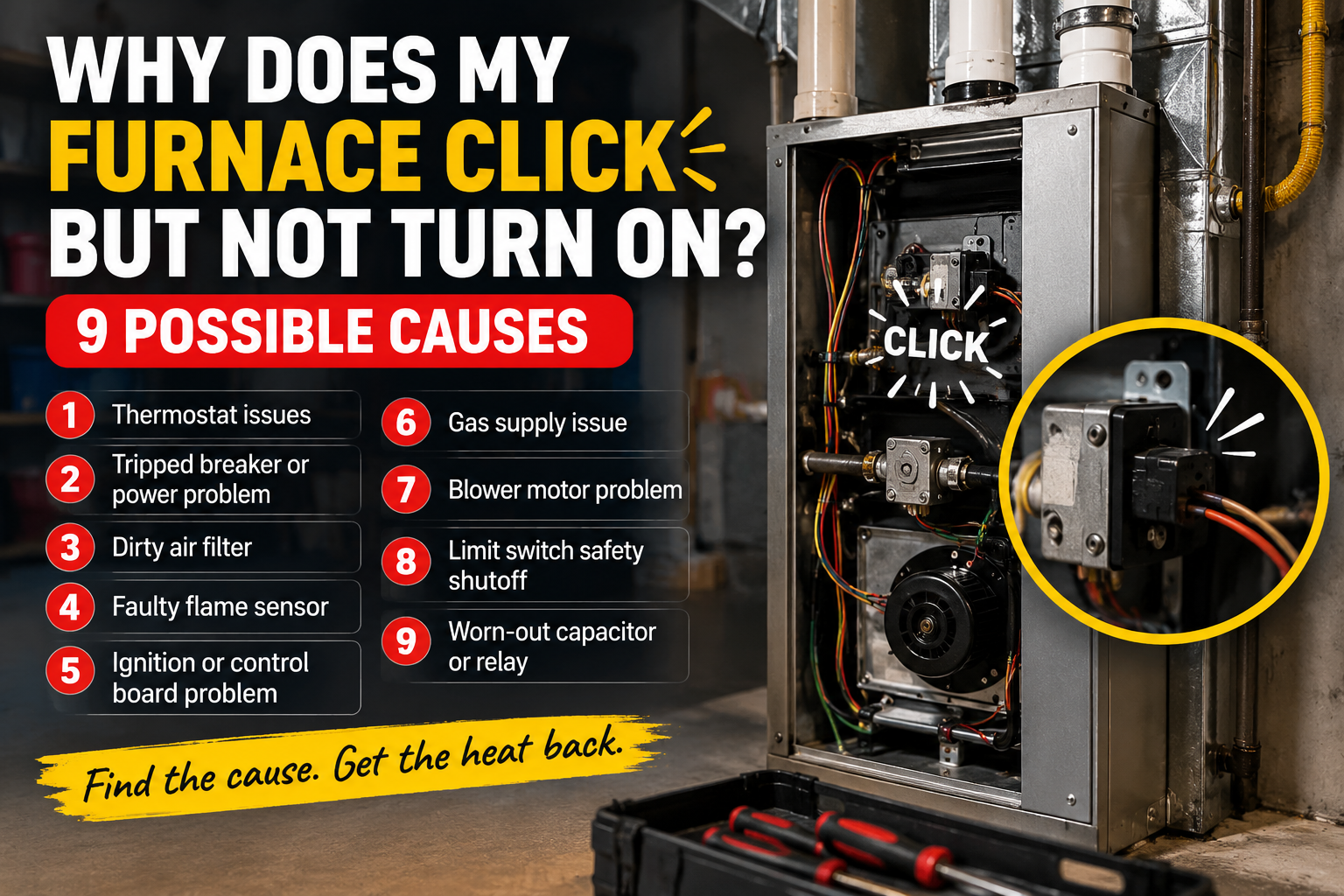
Why Does My Furnace Click but Not Turn On? 9 Possible Causes
You turn the thermostat up and wait for the heat.
Then you hear it:
Click.
Maybe you hear another click a few seconds later. The furnace sounds like it’s trying to start—but the burners never light and warm air never reaches the house.
A clicking furnace doesn’t automatically mean you need a new furnace. The sound may simply tell us where the furnace is stopping during its startup sequence.
Modern furnaces go through several steps before they allow the burners to operate. If one of those steps isn’t completed or confirmed, the furnace’s controls may prevent the heating cycle from continuing.
Here are nine possible reasons your furnace may click but fail to start.
Key Takeaways
- A click can be a normal part of furnace startup.
- Repeated clicking without heat can indicate an ignition, electrical, gas, venting or control problem.
- Modern furnaces use multiple safety controls before and after ignition.
- The component creating the symptom isn’t always the component causing the problem.
- Repeatedly resetting a furnace isn’t a substitute for diagnosing why it won’t complete its heating cycle.
1. The Furnace Igniter Isn’t Working
Many modern gas furnaces use a hot-surface igniter rather than a standing pilot light.
When the thermostat calls for heat, the furnace begins its startup sequence. Once the necessary safety conditions are confirmed, the igniter heats up so the burners can ignite.
If the igniter is damaged or fails electrically, the furnace may begin the sequence but never light the burners.
You may hear the furnace attempting to operate without ever getting heat.
Igniters can be fragile components and should be tested rather than assumed bad based only on symptoms.
2. The Gas Valve Isn’t Opening
Another possibility is the gas valve.
Once the furnace has completed the appropriate startup checks and the ignition source is ready, the controls signal the gas valve.
If the valve doesn’t operate correctly, the burners won’t receive the fuel necessary for ignition.
However, the valve itself isn’t always the cause.
The furnace may intentionally prevent the gas valve from opening because another safety condition hasn’t been satisfied.
That’s why proper diagnosis matters.
3. There’s a Gas-Supply Problem
A furnace can’t produce gas heat without an adequate fuel supply.
A closed valve, interruption in gas service, gas-pressure issue or another supply-related condition could prevent the furnace from lighting.
Homeowners should not attempt to disassemble or modify furnace gas components.
And if you smell natural gas, treat that differently from an ordinary no-heat problem. Leave the affected area and follow your gas utility’s emergency instructions from a safe location.
4. The Pressure Switch Isn’t Confirming Proper Draft
Before a modern gas furnace ignites, the inducer motor typically starts to establish proper combustion airflow and venting conditions.
A pressure switch helps confirm that the expected conditions exist.
If they don’t, the furnace may stop the ignition sequence.
The important point is this:
A pressure-switch fault doesn’t automatically mean the pressure switch itself needs to be replaced.
The actual cause could involve venting, the inducer assembly, tubing, drainage on applicable furnaces, or another condition preventing the switch from operating as expected.
Replacing the switch without finding the cause can leave the original problem unresolved.
5. The Inducer Motor Has a Problem
The draft inducer plays an important role before burner ignition.
If the inducer doesn’t start, isn’t operating properly or cannot establish the conditions required by the furnace controls, the heating sequence may not continue.
A homeowner might hear a click from the furnace controls but never hear the normal startup sounds that usually follow.
This is another reason the order of events matters during furnace diagnosis.
6. The Flame Sensor Is Dirty or Malfunctioning
This symptom can be slightly different.
The burners may actually ignite—but shut off almost immediately.
The flame sensor’s job is to confirm that a flame exists after the gas valve opens.
If the furnace can’t confirm flame, its safety controls typically shut the gas back off.
You may then hear the system attempt another ignition cycle.
A flame-sensing issue is one possible cause, but technicians should verify what’s actually happening rather than replacing the sensor automatically.
7. The Thermostat Isn’t Communicating Correctly
The thermostat starts the process by calling for heat.
A thermostat problem, loose connection, wiring issue, incorrect setting or control problem can interfere with that signal.
Before assuming the furnace has failed, homeowners can safely check that:
- The thermostat is set to HEAT.
- The desired temperature is above the current room temperature.
- The thermostat display appears normal.
- The thermostat batteries are replaced if the model uses replaceable batteries.
8. An Electrical or Control-Board Problem Is Interrupting Startup
Today’s furnaces rely heavily on electrical controls.
Relays, wiring, connectors, switches and the furnace control board all participate in the heating sequence.
A click may actually be a relay operating.
The important question is:
What should happen immediately after that click?
If the expected next component doesn’t operate, electrical testing can help determine whether the component isn’t receiving the proper signal or is receiving power but failing to respond.
This is much more reliable than diagnosing a furnace based on sound alone.
9. A Furnace Safety Control Is Preventing Operation
Modern furnaces have safety devices designed to prevent operation under certain conditions.
Depending on the furnace, these can monitor conditions related to flame, temperature, venting and other aspects of operation.
If a safety condition isn’t satisfied, the furnace may intentionally stop the heating sequence.
That’s important because sometimes a furnace that “won’t turn on” is actually doing exactly what it was designed to do:
Prevent operation until a potentially unsafe or abnormal condition is corrected.
Is One Click From My Furnace Normal?
It can be.
Furnaces contain relays, gas controls and other components that can produce clicking sounds during normal operation.
The concern is usually not simply a click.
It’s a change in normal behavior, such as:
- Clicking with no ignition
- Repeated clicking
- Multiple failed startup attempts
- Burners lighting and immediately shutting off
- Clicking accompanied by unusual odors
- The furnace entering a lockout condition
Those symptoms provide much more useful diagnostic information.
Why Does My Furnace Keep Trying to Start?
Some furnace controls will make additional ignition attempts when the first attempt isn’t successful.
After a certain number of failed attempts, the furnace may enter a temporary lockout as a safety measure.
Repeatedly cycling power to force additional attempts doesn’t fix whatever prevented ignition in the first place.
If the furnace repeatedly fails to start, have the cause diagnosed.
Can I Reset My Furnace?
Some problems may appear to clear after power is cycled, but resetting the furnace repeatedly can hide the symptom temporarily without correcting the underlying issue.
If your furnace repeatedly requires a reset to produce heat, that’s useful diagnostic information.
Tell the technician exactly what’s happening:
- What sound do you hear?
- Does the inducer start?
- Does the igniter glow?
- Do the burners light?
- How long do they remain lit?
- Does the blower eventually start?
Those observations can help identify where the normal heating sequence is stopping.
What Can a Homeowner Safely Check?
Before scheduling service, there are a few basic checks you can make without opening or modifying the furnace.
Confirm the thermostat is set correctly, check the air filter, make sure obvious HVAC power switches haven’t accidentally been turned off and verify that your home has normal electrical service.
Don’t bypass safety switches, modify wiring, manually manipulate the gas valve or attempt to defeat furnace safety controls.
When Should I Shut the Furnace Off?
Stop operating the furnace and seek appropriate professional assistance if you notice:
- A natural-gas odor
- Smoke
- Sparks
- Burning electrical odors
- Melted wiring or components
- Unusual flame behavior
- Carbon-monoxide alarm activation
If a carbon-monoxide alarm activates or you suspect a gas leak, leave the affected area and follow the appropriate emergency and utility guidance.
Why Professional Furnace Diagnosis Matters
A furnace startup problem can involve several components that all produce similar homeowner symptoms.
That’s why:
“My furnace clicks but doesn’t start” is a symptom—not a diagnosis.
A qualified technician can follow the furnace’s sequence of operation and determine exactly where it stops.
For example:
Thermostat calls for heat → inducer starts → pressure condition is verified → igniter operates → gas valve opens → burners ignite → flame is proven → heat exchanger warms → blower operates.
When the sequence stops, the technician can investigate why it stopped instead of simply replacing parts.
Frequently Asked Questions
Why does my furnace click once but nothing happens?
A relay or control may be operating, but another part of the startup sequence may not be completing. Possible causes include ignition, inducer, pressure-switch, control, electrical or fuel-related problems.
Why does my furnace click several times before starting?
Occasional normal control sounds can occur, but repeated unsuccessful ignition attempts should be investigated, especially if the behavior is new.
Why does my furnace ignite and then immediately turn off?
The furnace may not be confirming flame correctly, or another safety or operating condition may be interrupting the heating cycle.
Does clicking mean my furnace needs to be replaced?
No. Clicking alone doesn’t determine whether a furnace requires repair or replacement. System age, condition, repair history and the actual cause of the problem should all be considered.
Can a thermostat cause my furnace not to ignite?
A thermostat or thermostat-circuit problem can interfere with the initial call for heat, although many other furnace problems can create similar symptoms.
Should I keep resetting a furnace that won’t ignite?
No. If the furnace repeatedly fails to complete its startup sequence, determine why rather than continuously resetting it.
Furnace Repair in Temecula & Surrounding Communities
If your furnace sounds like it’s trying to start but your home never gets heat, Advanced Heating & Air Conditioning can diagnose the complete heating sequence to determine where the problem is occurring.
Advanced provides furnace repair for gas and electric heating systems and services all makes and models.
Serving Temecula, Murrieta, Menifee, Winchester, Wildomar, French Valley, Canyon Lake, Lake Elsinore, Hemet and surrounding communities.
Advanced Heating & Air Conditioning
951-609-9881
California Contractor License #916901
AdvancedHeatingAndAir.com