


Why Is My AC Freezing Up? 7 Common Causes & Solutions
Learn the seven most common reasons your air conditioner freezes up, how to prevent it, and when to call a professional HVAC technician in Temecula and Murrieta.
Why Is My Air Conditioner Freezing Up? 7 Common Causes Every Homeowner Should Know
When most homeowners see ice forming on their air conditioner, they’re surprised.
“It’s over 100 degrees outside—how can my air conditioner be frozen?”
Believe it or not, this is one of the most common problems we diagnose during the hot summers throughout Temecula, Murrieta, Menifee, Lake Elsinore, Winchester, Hemet, and the surrounding communities.
Although seeing ice on your air conditioner may seem strange, it’s actually a warning sign that something isn’t operating correctly.
The good news is that many frozen air conditioner problems can be prevented with regular maintenance and early diagnosis.
In this guide, we’ll explain:
- Why your AC freezes up
- The seven most common causes
- What you should do immediately
- When it’s safe to troubleshoot yourself
- When it’s time to call a professional
- How regular maintenance helps prevent frozen systems
How Does an Air Conditioner Freeze During Summer?
Your air conditioner removes heat from your home by allowing refrigerant to absorb that heat inside the evaporator coil.
Under normal conditions:
- Warm air flows across the coil
- Heat is absorbed
- Moisture drains away
- Cold air returns to your home
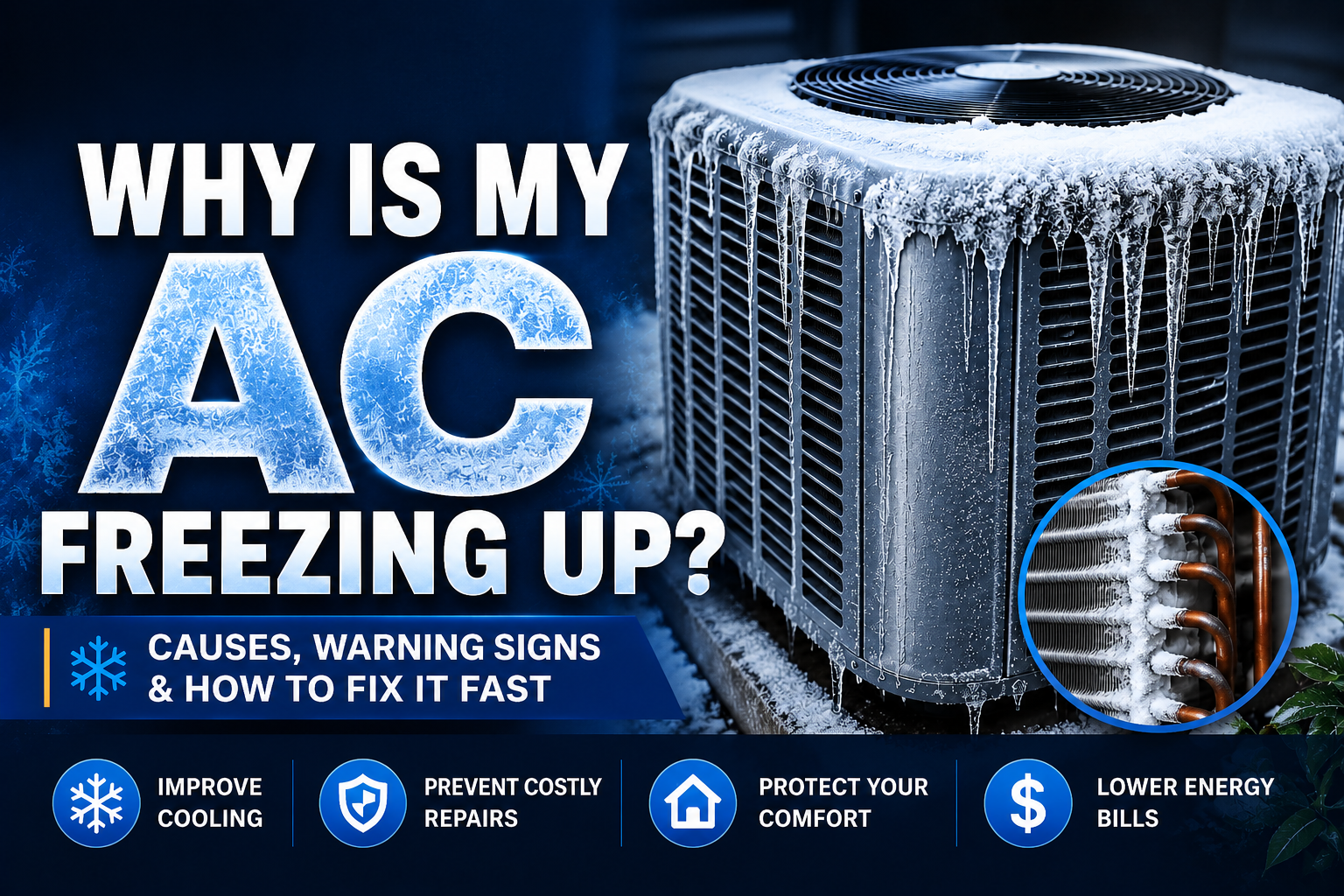
However, when airflow is restricted or refrigerant pressure drops, the evaporator coil becomes much colder than designed.
Instead of condensation forming on the coil…
Ice begins to build.
Once ice starts forming, airflow becomes even more restricted, creating a cycle that causes the entire evaporator coil to freeze solid.
1. Dirty Air Filter (The Most Common Cause)
This is by far the most common reason we find during residential service calls.
A dirty filter restricts airflow.
Without enough warm air moving across the evaporator coil, temperatures drop below freezing.
Moisture freezes.
Ice builds.
Eventually your system may stop cooling completely.
Signs of a Dirty Filter
- Weak airflow
- Rooms take longer to cool
- Higher electric bills
- Ice on refrigerant lines
- AC runs constantly
How Often Should You Change Your Filter?
Most homes should replace filters every:
- 1–2 months with pets
- 2–3 months for average households
- Monthly during heavy summer use if the filter loads quickly
Changing your filter is one of the easiest ways to protect your HVAC system and improve indoor air quality.
2. Low Refrigerant
Many homeowners assume refrigerant simply “runs out.”
It doesn’t.
If refrigerant is low, there is almost always a leak somewhere in the system.
Low refrigerant lowers pressure inside the evaporator coil.
Lower pressure means lower temperatures.
Eventually the coil freezes.
Signs of Low Refrigerant
- AC blowing warmer air
- Ice on refrigerant lines
- Bubbling or hissing sounds
- Longer cooling cycles
- Rising energy bills
A licensed HVAC technician should locate the leak, repair it, and recharge the system to the manufacturer’s specifications.
Simply adding refrigerant without repairing the leak usually results in the problem returning.
3. Dirty Evaporator Coil
Even if your filter has been changed regularly, dirt can still accumulate on the evaporator coil over time.
Dust acts like insulation.
Heat can’t transfer efficiently.
Temperatures drop.
Ice forms.
Professional coil cleaning restores airflow and improves efficiency.
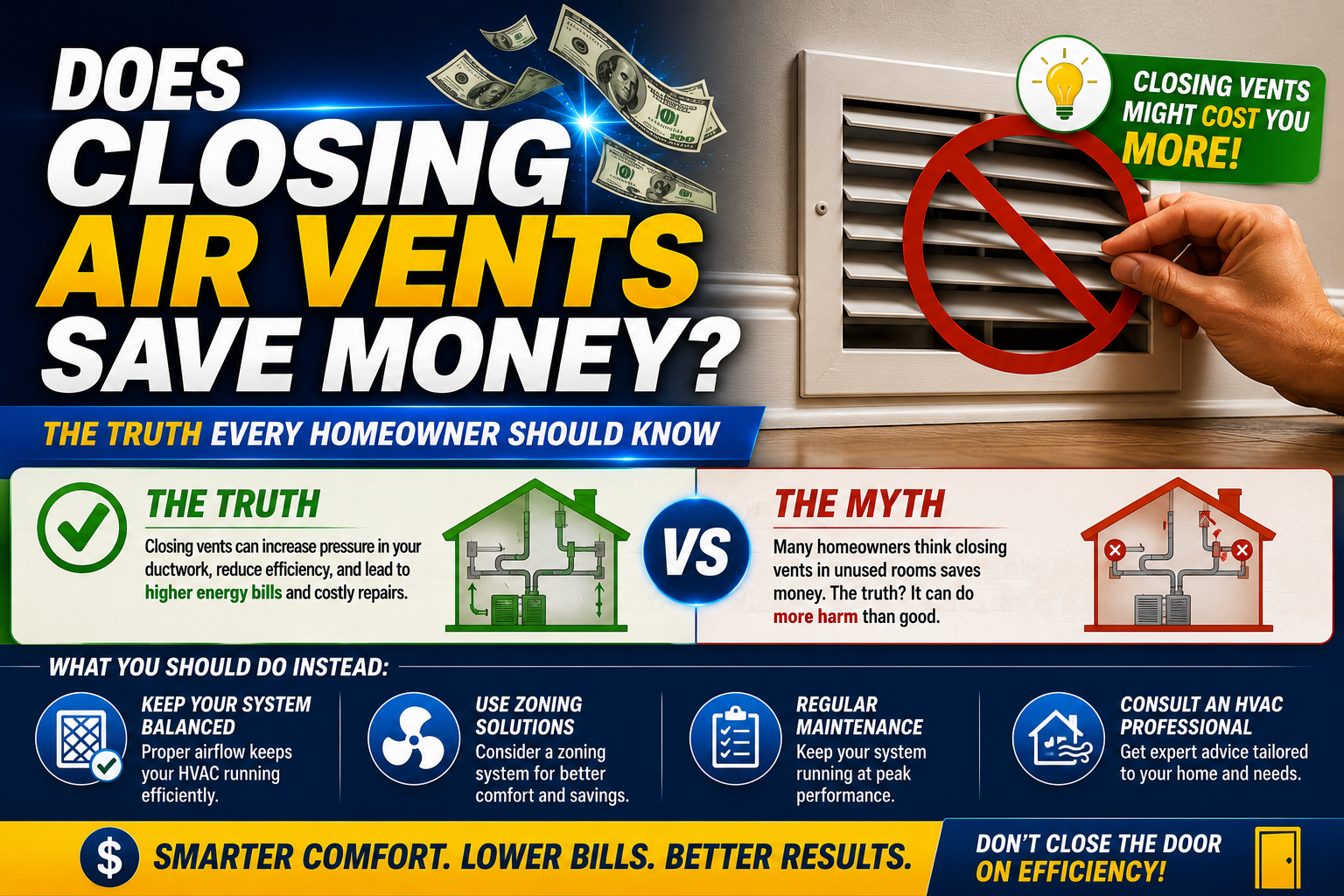
4. Blocked Air Vents
Many homeowners close vents in unused rooms hoping to save energy.
Unfortunately, this can reduce airflow enough to cause freezing.
Your HVAC system is designed to move a specific amount of air.
Closing too many vents changes that airflow.
Instead of saving money, it may increase energy costs and damage the system.
5. Blower Motor Problems
Your blower motor pushes warm household air across the evaporator coil.
If the blower motor slows down or fails:
- Airflow decreases
- Coil temperature drops
- Moisture freezes
- Ice spreads quickly
Warning signs include:
- Weak airflow
- Strange noises
- Burning smell
- System running continuously
6. Dirty Condenser Coils
Many homeowners don’t realize the outdoor unit also affects indoor performance.
If condenser coils become clogged with:
- Dirt
- Cottonwood
- Grass
- Leaves
- Debris
The system can’t release heat efficiently.
Pressures become unbalanced.
Cooling performance suffers.
While dirty outdoor coils don’t directly create ice as often as airflow problems, they contribute to inefficient operation that stresses the system.
7. Running the Thermostat Too Low
During extreme heat, setting your thermostat to very low temperatures (such as 60–65°F) doesn’t cool your home faster.
Instead, it causes the system to run almost continuously.
Long run times combined with dirty filters or minor airflow restrictions can allow ice to form.
A thermostat setting around 74–78°F is typically more efficient for most homes during the summer.
What Should You Do If Your AC Is Frozen?
If you notice ice:
Step 1
Turn the cooling OFF.
Step 2
Leave the fan ON.
This helps thaw the evaporator coil faster.
Step 3
Replace your air filter if it’s dirty.
Step 4
Inspect supply and return vents to ensure they are open and unobstructed.
Step 5
Once the system has completely thawed, restart it.
If it freezes again, schedule a professional inspection.
Continuing to operate a frozen system can damage the compressor—one of the most expensive components in your air conditioner.
Can You Fix a Frozen Air Conditioner Yourself?
Some issues can be resolved by homeowners:
- Replacing a dirty filter
- Opening blocked vents
- Clearing debris around the outdoor unit
- Allowing the system to thaw completely
However, refrigerant leaks, electrical issues, blower motor failures, and frozen evaporator coils that repeatedly return should always be diagnosed by a qualified HVAC technician.
How Regular Maintenance Prevents Frozen AC Systems
One of the best ways to avoid a frozen air conditioner is routine preventive maintenance.
During a professional maintenance visit, technicians inspect:
- Refrigerant levels
- Airflow
- Evaporator coil condition
- Condenser coil cleanliness
- Blower motor operation
- Electrical components
- Drain line
- Capacitors and contactors
- Temperature split
- Overall system performance
Identifying small problems early often prevents costly repairs later.
Frequently Asked Questions
Is a frozen air conditioner dangerous?
While the ice itself isn’t dangerous, continuing to operate the system can damage major components, including the compressor.
Should I pour hot water on the ice?
No.
Allow the system to thaw naturally using the fan setting.
Rapid temperature changes can damage components.
How long does it take to thaw?
Most systems thaw within several hours.
Severely frozen systems may require 12–24 hours.
Will changing my filter stop my AC from freezing?
If restricted airflow caused the problem, replacing the filter may resolve it.
If ice returns, additional issues likely exist.
Does low refrigerant always mean a leak?
Yes.
Air conditioners do not consume refrigerant during normal operation.
Low refrigerant almost always indicates a leak that should be repaired.
Why Homeowners in Temecula and Murrieta Trust Professional HVAC Maintenance
Summer temperatures in Southwest Riverside County place significant demands on residential HVAC systems.
Regular maintenance helps improve:
- Cooling performance
- Indoor comfort
- Energy efficiency
- Equipment lifespan
- Reliability during extreme heat
Many frozen air conditioners we inspect could have been prevented through routine service and early detection of airflow or refrigerant issues.
Conclusion
A frozen air conditioner is your system’s way of telling you that something isn’t right. Whether the cause is a dirty air filter, restricted airflow, low refrigerant, or another mechanical issue, addressing it early can help prevent larger and more expensive repairs.
If your air conditioner continues freezing after replacing the filter and allowing it to thaw, a professional inspection can identify the root cause and restore reliable cooling.