


How Often to Service Your HVAC in Temecula & Murrieta
How Often Should I Have My HVAC System Serviced in Temecula and Murrieta Valley?
For most homeowners in Temecula, Murrieta, and the surrounding Temecula Valley, Advanced Heating & Air Conditioning recommends professional HVAC maintenance twice a year: once before summer and once before winter. Advanced currently publishes this twice-yearly recommendation, with cooling service before the heavy summer season and heating service before winter.
A simple schedule is:
- Spring → Air conditioning / cooling maintenance
- Fall → Furnace / heating maintenance
If you have a heat pump, seasonal maintenance can be especially valuable because the same equipment may operate during both heating and cooling seasons.
You don’t necessarily need to wait until something is wrong.
In fact, that’s the entire point of preventive HVAC maintenance: find developing problems while the system is still operating instead of waiting for a breakdown.
Why Twice a Year in Temecula and Murrieta?
Southern California puts different demands on HVAC equipment than many other parts of the country.
Our cooling systems can experience extended operation during hot weather, while heating equipment may sit unused for months before being needed again.
That makes two times of year particularly useful for HVAC service:
Before Summer — Have the cooling system inspected before you’re depending on it every day.
Before Winter — Have the heating system inspected before the first cold nights arrive.
Advanced’s current Temecula maintenance guidance recommends this spring-and-fall approach, while ENERGY STAR similarly recommends pre-season cooling and heating checkups.
When Should I Have My Air Conditioner Serviced?
Spring is usually the best time.
You want your air conditioner inspected before the hottest Temecula and Murrieta weather arrives, not after the system stops cooling during a heat wave.
Advanced recommends at least annual AC maintenance, ideally during spring before cooling season.
During an AC maintenance visit, a technician may inspect or evaluate:
- Condenser and evaporator coils
- Refrigerant-system operation
- Electrical connections
- Capacitors and other electrical components
- Blower operation
- Airflow
- Condensate drainage
- Thermostat operation
- Air filter
- Temperature performance
- Overall system condition
ENERGY STAR’s professional maintenance checklist similarly includes checking electrical connections, controls, condensate drainage, coils, refrigerant level and blower components.
When Should I Have My Furnace Serviced?
Fall is generally ideal.
Your furnace may have been sitting unused through much of spring and summer.
Before relying on it during colder weather, a heating maintenance visit gives the technician an opportunity to inspect the system and verify that it’s operating properly.
Advanced recommends annual heating maintenance, ideally before heating season begins.
Depending on the equipment, heating maintenance can include checking:
- Burners
- Ignition system
- Heat exchanger
- Blower components
- Electrical connections
- Thermostat
- Safety controls
- Airflow
- Overall heating operation
For combustion heating equipment, ENERGY STAR also recommends checking gas connections, gas pressure, burner combustion and the heat exchanger as part of professional maintenance.
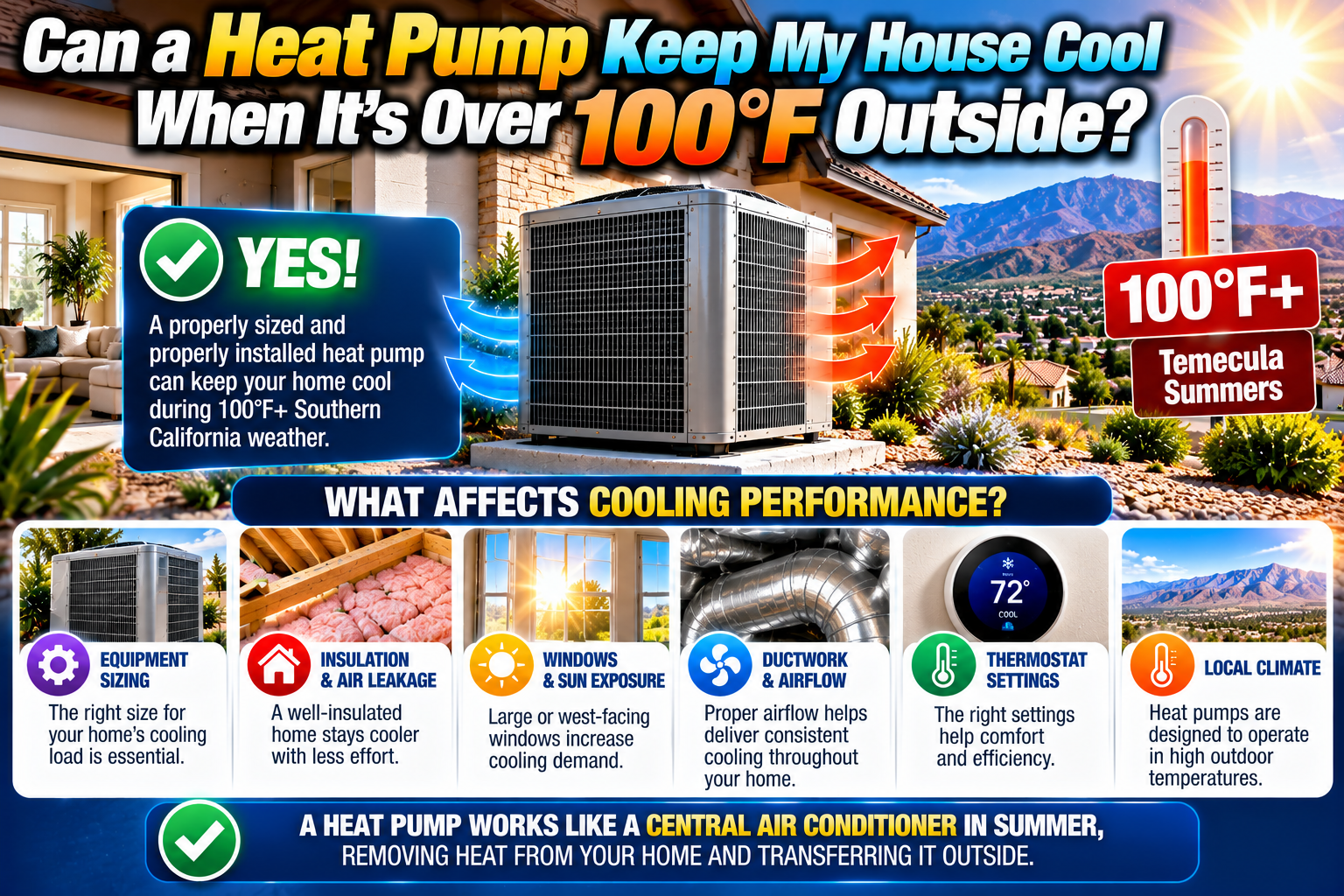
What If I Have a Heat Pump?
This is especially important because a heat pump is different from a traditional air conditioner.
A heat pump can provide cooling during summer and heating during winter.
That means the equipment may operate throughout much more of the year.
For a heat-pump home in Temecula or Murrieta, we like the idea of spring and fall system checks because you’re preparing the equipment for both major operating seasons.
Advanced’s AC maintenance guidance specifically notes that homes with heat pumps that also provide heating can benefit from a second fall visit.
Why Heat-Pump Maintenance Is Becoming More Important
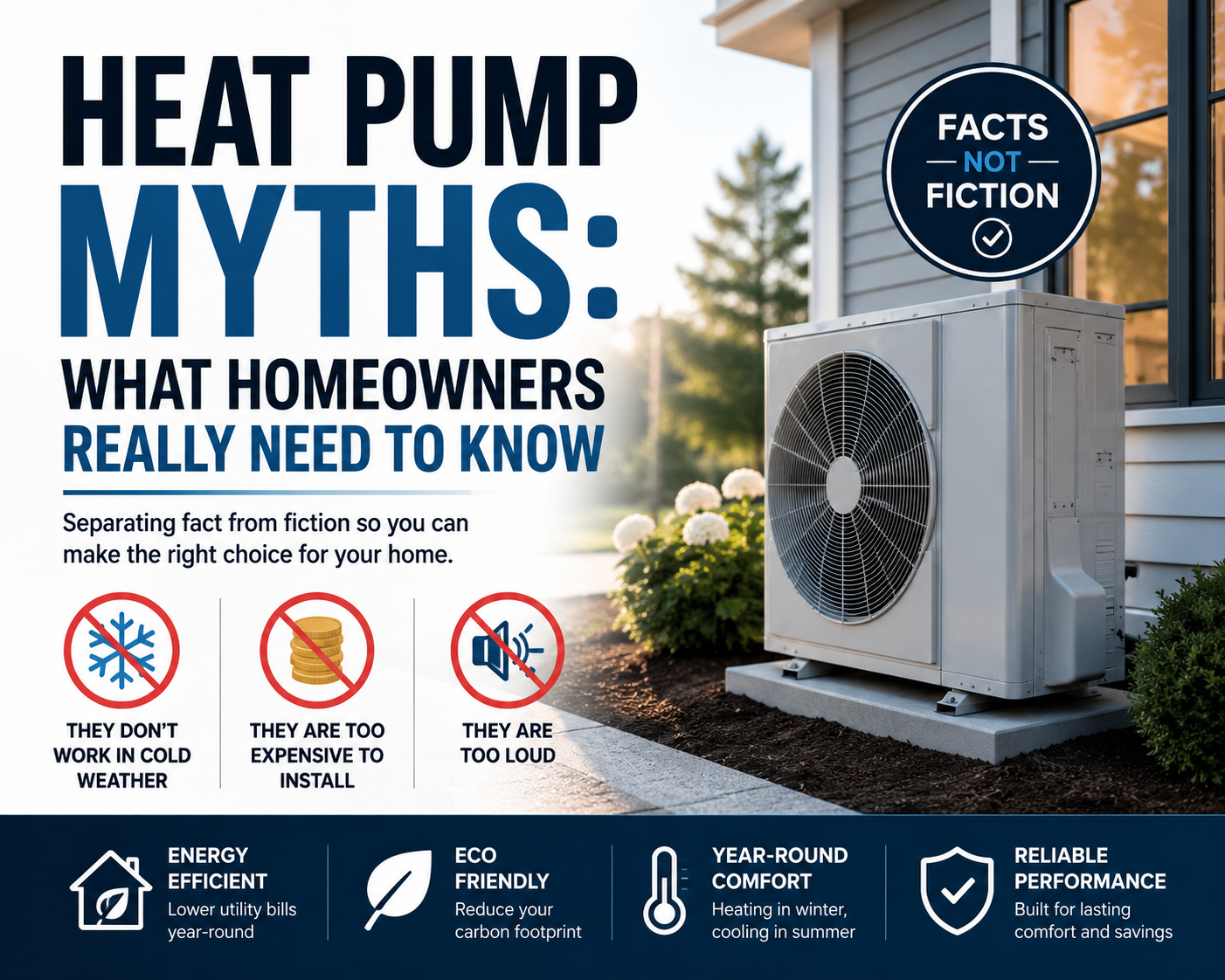
We’re seeing more homeowners consider heat pumps when replacing older HVAC equipment.
And Advanced Heating & Air Conditioning is a big believer in properly designed and installed heat-pump systems for our Southern California climate.
But buying good equipment isn’t enough.
A heat pump still depends on:
- Proper airflow
- Clean coils
- Correct refrigerant operation
- Electrical components
- Thermostat and controls
- Indoor blower performance
- Outdoor-unit condition
- Ductwork
The better you take care of the entire system, the better opportunity you give that equipment to provide reliable heating and cooling.
Does a Brand-New HVAC System Still Need Maintenance?
Yes.
One of the biggest misconceptions we hear is: “My system is new. Why would I need maintenance?”
Because new HVAC equipment still operates mechanically and electrically.
It still has filters. It still moves air. It still has coils. It still has electrical connections. And it still needs to drain condensation when operating in cooling mode.
New equipment shouldn’t need the same repairs as an aging system, but it still benefits from regular inspection and maintenance.
Advanced’s maintenance guidance specifically recommends routine service even for newer equipment.
Can Maintenance Help Prevent an HVAC Breakdown?
Maintenance can reduce the risk of some unexpected breakdowns, but nobody should promise you that maintenance guarantees your HVAC system will never fail.
Mechanical and electrical components can eventually fail even on well-maintained equipment.
What maintenance gives us is an opportunity to identify developing conditions such as:
- Weak electrical components
- Loose electrical connections
- Restricted airflow
- Dirty coils
- Drainage problems
- Thermostat issues
- Worn components
- Abnormal operating conditions
Finding one of those problems during a scheduled spring maintenance appointment is much better than discovering it when your AC stops cooling on one of the hottest days of the year.
ENERGY STAR specifically identifies maintenance as a way to help prevent future problems and unwanted costs.
Will HVAC Maintenance Lower My Electric Bill?
It can help your equipment operate efficiently, but homeowners should be careful with guarantees about specific savings.
Your utility bill depends on much more than HVAC maintenance.
It can be affected by:
- Outdoor temperature
- Electricity and natural-gas rates
- Thermostat settings
- Home insulation
- Windows
- Duct leakage
- Equipment efficiency
- System sizing
- How many hours the system operates
However, dirty coils, restricted airflow and neglected filters can make an HVAC system work harder.
ENERGY STAR notes that dirty filters can restrict airflow and increase energy use, while dirty cooling coils can cause the system to operate longer.
So maintenance isn’t magic—but keeping the system clean and operating properly makes sense.
How Often Should I Change My HVAC Filter?
Your filter needs attention much more frequently than your professional maintenance schedule.
There’s no single replacement interval that’s correct for every house.
How quickly a filter gets dirty can depend on:
- Filter type
- Number of occupants
- Pets
- Dust
- Construction nearby
- Indoor air quality equipment
- How frequently the HVAC system operates
- Filter size and design
ENERGY STAR recommends checking the filter monthly, particularly during heavy-use periods, and replacing or cleaning it when dirty. Its general homeowner guidance says that, at minimum, many standard filters should be replaced about every three months.
But your equipment and filter manufacturer recommendations should always take priority.
Does a More Expensive Filter Mean It’s Better for My HVAC System?
Not necessarily.
This is something homeowners often overlook.
Higher filtration can create more airflow resistance.
Your HVAC system needs sufficient airflow across the indoor equipment.
Installing an overly restrictive filter without considering the system’s airflow can potentially create performance problems.
That’s why Advanced looks at the HVAC system as a complete system, not simply individual components.
The correct filter is one that provides appropriate filtration while allowing the equipment to receive the airflow it needs.
What Happens If I Skip HVAC Maintenance?
Nothing may happen immediately.
That’s exactly why maintenance is easy to postpone.
Your AC may turn on. Your furnace may heat. Everything may seem normal.
But small problems can develop quietly.
A dirty coil doesn’t necessarily cause an immediate breakdown. A weak capacitor may continue working. A drain may slowly become restricted. An electrical connection may begin deteriorating. Airflow can gradually decline.
By the time the homeowner notices something, the problem may have become larger.
Advanced identifies reduced efficiency, increased repair risk, unexpected breakdowns and shortened equipment life as possible consequences of neglected maintenance.
Can Regular Maintenance Make My HVAC System Last Longer?
Regular maintenance can help reduce unnecessary wear and identify conditions that could negatively affect equipment.
But we don’t believe in promising homeowners that maintenance will make an HVAC system last a specific number of years.
HVAC lifespan depends on many factors:
- Installation quality
- Equipment quality
- System sizing
- Airflow
- Ductwork
- Usage
- Climate
- Maintenance history
- Repair history
- Operating conditions
Our philosophy is simpler: take care of the equipment you already own and give it the best opportunity to operate properly for as long as practical.
My HVAC System Is 15 Years Old. Should I Still Maintain It?
Absolutely.
In fact, older systems can be some of the most important equipment to inspect regularly.
Age alone doesn’t mean an HVAC system needs replacement.
If your older system is operating safely, keeping your home comfortable and hasn’t become unreliable, regular maintenance can help you monitor its condition.
Advanced doesn’t believe every maintenance appointment should turn into: “You need a new system.”
Sometimes you do. Sometimes you don’t. A good technician should be able to explain what they found and why it matters.
What If Advanced Finds a Problem During Maintenance?
Finding a problem during maintenance doesn’t automatically mean it needs to be replaced.
The technician should explain:
- What was found
- What the component does
- How serious the problem is
- Whether it needs immediate attention
- What could happen if you wait
- What the repair involves
Then the homeowner can decide how to proceed.
This is one of the most important differences between preventive maintenance and a sales appointment.
Advanced’s published maintenance approach says technicians explain identified problems and provide repair information rather than simply performing work without discussing it with the homeowner.
Should Maintenance Be Done Before My System Breaks?
Yes.
That’s really the entire idea.
You don’t change the oil in your vehicle because the engine already failed.
Preventive maintenance is performed because you want to inspect and care for the equipment while it’s still working.
HVAC maintenance follows the same principle. In spring, let’s make sure the AC is ready. In fall, let’s make sure the heating system is ready.
It’s a much better conversation than: “My AC stopped working and it’s 100°F outside.”
Can I Maintain My HVAC System Myself?
There are several things homeowners can—and should—do themselves.
You can:
- Check your filter
- Replace or clean the filter when necessary
- Keep supply and return vents unobstructed
- Keep vegetation and debris away from outdoor equipment
- Watch for unusual noises
- Pay attention to unusual smells
- Monitor thermostat operation
- Watch for water around indoor equipment
ENERGY STAR specifically recommends homeowners check filters regularly and keep indoor and outdoor HVAC equipment clear of debris.
But professional maintenance includes electrical, mechanical, refrigerant, combustion and safety checks that generally aren’t homeowner DIY tasks.
Does Advanced Offer HVAC Maintenance in Both Temecula and Murrieta?
Yes.
Advanced Heating & Air Conditioning is based in Temecula and provides residential and commercial heating and cooling service throughout the surrounding area, including Murrieta. Its published service area also includes communities such as Menifee, Winchester, Wildomar, Lake Elsinore, French Valley, Hemet and Fallbrook.
Advanced services:
- Air conditioners
- Gas furnaces
- Heat pumps
- Mini-splits
- Residential HVAC systems
- Commercial HVAC equipment
- All major makes and models
Should Commercial HVAC Systems Be Serviced More Often?
Potentially.
Commercial equipment can operate much longer hours than residential equipment.
Restaurants, retail stores, offices, warehouses and other businesses may have HVAC systems running for extended periods every day.
The appropriate maintenance frequency depends on:
- Equipment type
- Operating hours
- Building use
- Environmental conditions
- Filter loading
- Manufacturer recommendations
- Number of HVAC systems
Some commercial equipment may need more frequent inspections or filter service than a typical residential system.
That’s why commercial preventive maintenance should be designed around the property rather than automatically using the same schedule as a house.
What Is the Best HVAC Maintenance Schedule for Temecula and Murrieta?
For most residential homes, keep it simple:
Spring — cooling service: inspect and prepare your air conditioner or heat pump before summer.
Fall — heating service: inspect and prepare your furnace or heat pump before winter.
Throughout the year: check your filter regularly and pay attention to changes in noise, airflow, comfort, thermostat operation and energy consumption.
This twice-yearly schedule is also the recommendation currently published by Advanced Heating & Air Conditioning for Temecula-area HVAC systems.
Why Choose Advanced Heating & Air Conditioning for HVAC Maintenance?
Advanced Heating & Air Conditioning has been serving homeowners and businesses throughout the Temecula Valley since 2008 and provides maintenance for air conditioners, furnaces and heat pumps.
Our approach to maintenance isn’t simply: change the filter and leave.
We want to understand how the complete HVAC system is operating. That means looking at equipment condition, electrical components, airflow, coils, drainage, thermostat operation, heating performance, cooling performance and potential developing problems.
Then we explain what we found.
Because good HVAC maintenance should accomplish something very simple: help you take care of the system you already own.
And when the day eventually comes that your existing system no longer makes sense to repair, Advanced can also help you compare today’s replacement options—including modern heat-pump systems.
How Often Should I Have My HVAC System Serviced in Temecula or Murrieta Valley?
Our recommendation for most homeowners is twice a year: once in spring before cooling season, once in fall before heating season.
At minimum, annual professional maintenance is widely recommended; ENERGY STAR recommends annual pre-season checkups, while Advanced recommends servicing both cooling and heating equipment seasonally.
That small amount of preventive attention can help identify developing problems, maintain proper operation and give you a much better understanding of the condition of one of the most important—and expensive—systems in your home. You can schedule HVAC maintenance here.
Advanced Heating & Air Conditioning
HVAC Maintenance • AC Maintenance • Furnace Maintenance • Heat-Pump Maintenance • Repair • Installation
Serving Temecula, Murrieta & the Surrounding Temecula Valley
HVAC Services You Can Count On.
Frequently Asked Questions
How often should I service my HVAC system in Temecula?
Advanced recommends twice-yearly HVAC maintenance for most homes: cooling service before summer and heating service before winter.
When should I have my AC serviced?
Spring is generally the best time, before the Temecula Valley’s heavy cooling season begins. Advanced recommends at least annual AC maintenance, ideally before summer.
When should I have my furnace serviced?
Once annually before heating season is a good baseline. Advanced recommends furnace/heating maintenance before winter.
Should a heat pump be serviced twice a year?
Because a heat pump can provide both heating and cooling, Advanced notes that homes using heat pumps for both functions can benefit from spring and fall service.
Does a new HVAC system need maintenance?
Yes. New equipment still requires filters, airflow, coils, drainage, electrical components and operating performance to be maintained and inspected.
How often should I check my HVAC filter?
ENERGY STAR recommends checking the filter monthly, particularly during periods of heavy heating or cooling use, and cleaning or replacing it when dirty.
Can HVAC maintenance prevent every breakdown?
No. No maintenance program can guarantee a mechanical or electrical component will never fail. Regular maintenance can, however, help identify developing problems before some of them become breakdowns.
Does Advanced service both Temecula and Murrieta?
Yes. Advanced’s published service area includes both Temecula and Murrieta, along with many surrounding Temecula Valley communities.