


How Often Should HVAC Maintenance Be Done in Temecula?
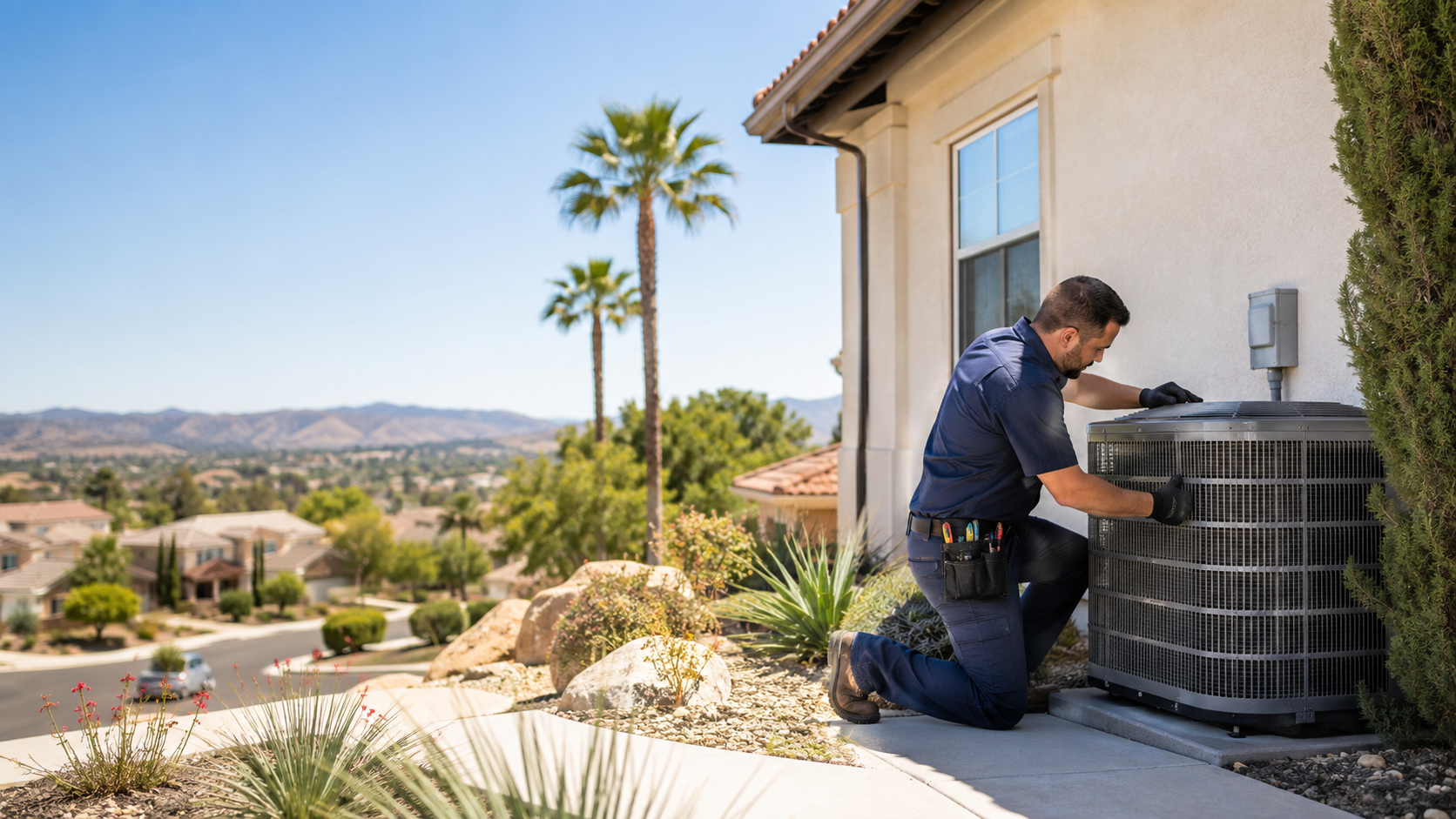
Your HVAC system works hard throughout the year to keep your home comfortable. In Temecula, where summers regularly bring extended periods of hot weather, air conditioning systems often operate for months at a time. During cooler months, homeowners rely on their heating systems to maintain indoor comfort.
With so much year-round use, many homeowners ask the same question: How often should HVAC maintenance be done in Temecula?
The short answer is that most HVAC professionals recommend scheduling maintenance twice per year—once before the cooling season and once before the heating season. Regular maintenance helps improve efficiency, reduce the likelihood of unexpected breakdowns, and extend the lifespan of your equipment.
Understanding the ideal maintenance schedule can help homeowners protect their investment and keep their systems operating reliably throughout the year.
Why HVAC Maintenance Matters
Like any mechanical system, HVAC equipment experiences normal wear and tear over time.
Dust accumulates on components, electrical connections loosen, filters become clogged, and moving parts gradually wear down. Without routine inspections and maintenance, small issues can develop into larger problems that affect system performance.
Regular HVAC maintenance can help:
- Improve energy efficiency
- Reduce unnecessary wear on components
- Identify potential problems early
- Improve indoor comfort
- Extend equipment lifespan
- Help support manufacturer-recommended maintenance requirements
Many HVAC problems that lead to costly repairs begin as relatively minor issues that could have been identified during a routine service visit.
How Often Should HVAC Maintenance Be Scheduled?
For most homes in Temecula, HVAC maintenance should be performed twice each year.
Spring Maintenance for Air Conditioning Systems
Air conditioning maintenance is typically recommended during the spring before temperatures begin rising significantly.
Scheduling service before peak summer heat allows technicians to identify issues before the system is placed under heavy demand.
Spring maintenance often includes:
- Refrigerant inspection
- Condenser coil evaluation
- Electrical system testing
- Thermostat verification
- Airflow assessment
- Filter inspection
Preparing the system before summer can help improve cooling performance during periods of extreme heat.
Fall Maintenance for Heating Systems
Heating maintenance is generally recommended during the fall before cooler temperatures arrive.
Although Temecula winters are relatively mild compared to other parts of the country, heating systems still benefit from annual inspections.
Fall maintenance often includes:
- Furnace inspection
- Safety testing
- Ignition system checks
- Airflow verification
- Electrical inspections
- Thermostat testing
This helps ensure the heating system operates safely and efficiently when needed.
Heat Pumps May Benefit From Twice-Yearly Service
Heat pumps provide both heating and cooling, which means they operate throughout the year.
Because they experience more annual runtime than traditional systems, many HVAC professionals recommend heat pump maintenance every six months to help maintain efficiency and reliability.
Why Temecula’s Climate Makes Maintenance More Important
Temecula’s climate places unique demands on residential HVAC systems.
During summer, temperatures frequently reach the 90s and can occasionally exceed 100°F. Extended periods of high heat often result in longer cooling cycles and increased equipment stress.
Additional local factors include:
- Extended cooling seasons
- High summer temperatures
- Dust and debris accumulation
- Increased system runtime
- Greater strain on outdoor equipment
Because air conditioners in Southern California often operate longer than systems in cooler climates, routine maintenance becomes even more important.
What Happens During an HVAC Maintenance Visit?
Many homeowners are surprised by how much is involved in a professional HVAC tune-up.
A comprehensive maintenance appointment typically includes a detailed inspection of both indoor and outdoor components.
Depending on the system, maintenance may include:
Electrical System Inspection
Technicians inspect wiring, electrical connections, capacitors, and other components to help ensure safe operation.
Refrigerant Evaluation
Proper refrigerant levels are essential for cooling performance and efficiency.
Coil Inspection
Evaporator and condenser coils are inspected for dirt buildup or damage that may affect heat transfer.
Blower and Motor Inspection
Technicians evaluate blower performance and inspect motors for signs of wear.
Air Filter Assessment
Dirty filters can restrict airflow and reduce efficiency.
Thermostat Testing
Thermostats are checked to help ensure accurate temperature control and system communication.
Signs Your HVAC System May Be Overdue for Maintenance
In some cases, HVAC systems provide warning signs when maintenance has been neglected.
Common indicators include:
Higher Energy Bills
An increase in utility costs may indicate the system is working harder than necessary.
Uneven Temperatures
Some rooms may feel warmer or cooler than others due to airflow or performance issues.
Weak Airflow
Reduced airflow can affect comfort and system efficiency.
Frequent Cycling
Systems that turn on and off more often than normal may require professional attention.
Unusual Noises
Rattling, buzzing, grinding, or banging sounds can indicate developing mechanical problems.
If these symptoms appear, scheduling a maintenance visit may help identify the underlying cause.
What Homeowners Can Do Between Professional Visits
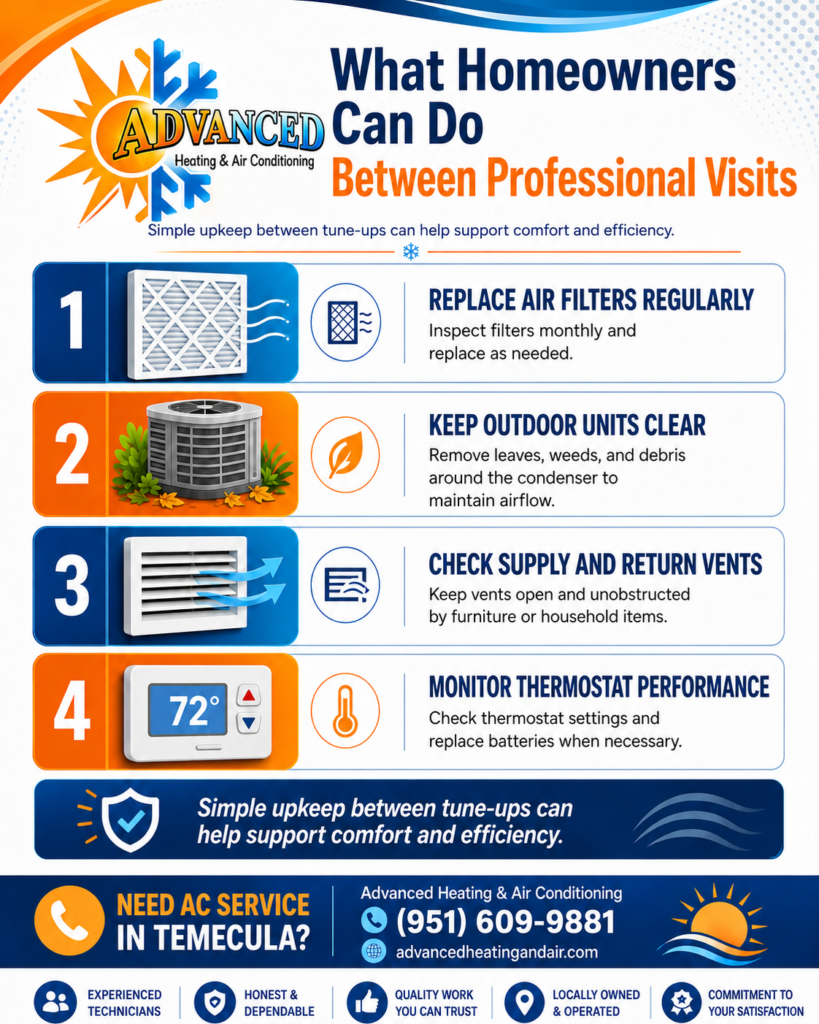
While professional maintenance remains important, homeowners can take several simple steps to support HVAC performance throughout the year.
Replace Air Filters Regularly
Most filters should be inspected monthly and replaced as needed.
Keep Outdoor Units Clear
Remove leaves, weeds, and debris from around the condenser unit to maintain airflow.
Check Supply and Return Vents
Ensure vents remain open and unobstructed by furniture or other household items.
Monitor Thermostat Performance
Verify thermostat settings and replace batteries when necessary.
The Cost of Skipping HVAC Maintenance
Some homeowners postpone maintenance because their system appears to be operating normally.
However, neglecting routine service can increase the likelihood of:
- Reduced efficiency
- Higher energy costs
- More frequent repairs
- Unexpected breakdowns
- Shortened equipment lifespan
Routine maintenance is often significantly less expensive than major repairs or premature system replacement.
Final Thoughts
For most homeowners, HVAC maintenance should be scheduled twice per year—once in the spring for air conditioning systems and once in the fall for heating systems.
This proactive approach can help improve efficiency, support reliable performance, identify developing issues early, and extend the lifespan of your equipment.
Given Temecula’s extended cooling season and hot summer temperatures, regular HVAC maintenance remains one of the most effective ways to keep your heating and cooling system operating at its best throughout the year.
Homeowners throughout Temecula, Murrieta, Menifee, Wildomar, and surrounding communities can benefit from a consistent HVAC maintenance schedule and professional inspections before peak heating and cooling seasons.
For professional HVAC maintenance, AC maintenance, and HVAC tune-up services in Temecula, Advanced Heating & Air Conditioning provides experienced service and support throughout the region.
FAQs
How often should HVAC maintenance be done in Temecula?
Most HVAC professionals recommend maintenance twice per year: once in the spring for air conditioning systems and once in the fall for heating systems.
Is HVAC maintenance really necessary?
Routine maintenance can help improve efficiency, identify developing issues early, reduce wear on components, and support long-term system reliability.
When should AC maintenance be scheduled?
Spring is generally the best time to schedule air conditioning maintenance before peak summer temperatures arrive.
How long does HVAC maintenance take?
Most maintenance appointments take approximately one to two hours, depending on the system size and condition.
Can homeowners perform HVAC maintenance themselves?
Homeowners can replace air filters, clear debris around outdoor units, and monitor thermostat performance. However, professional inspections are recommended for refrigerant, electrical, and mechanical components.