


Why Does My HVAC System Smell? 8 HVAC Odors Explained
What’s That Smell Coming From My Air Vents?
Your HVAC system turns on.
A few seconds later, you notice something strange.
There’s an odor coming from the vents.
Maybe it smells musty.
Maybe it smells like something is burning.
Maybe you can’t describe it — you just know your house didn’t smell that way before the HVAC system started running.
Unusual HVAC odors shouldn’t automatically be ignored.
Some smells may come from something relatively minor, while others can indicate an electrical, mechanical, moisture, drainage, or other problem that needs attention.
The type of odor, where it’s coming from, and when it occurs can provide useful clues.
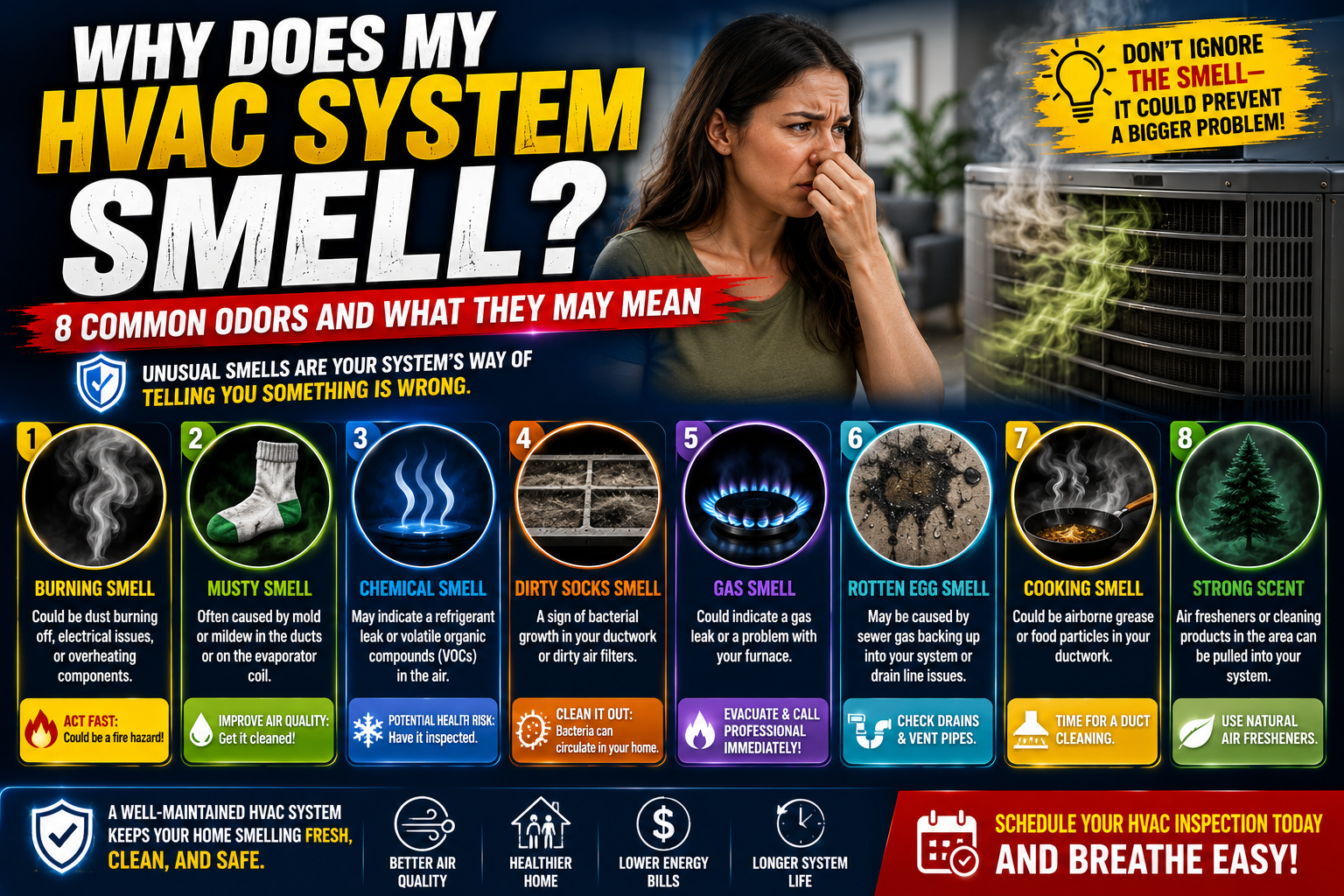
Here are eight HVAC smells homeowners should know about.
1. Musty or Damp Smell
A musty smell is one of the more common HVAC odor complaints.
Air conditioning systems naturally deal with moisture.
As warm indoor air moves across the cold evaporator coil, moisture can condense and enter the system’s drainage components.
Normally, that moisture drains away.
If excess moisture remains where it shouldn’t, however, you may begin noticing a musty or damp odor.
Possible areas to investigate include:
- Evaporator coil area
- Condensate drain
- Drain pan
- Ductwork
- Air filter
- Surrounding HVAC cabinet
A musty smell doesn’t automatically identify the cause.
The moisture source needs to be found.
2. Burning Dust Smell When the Heater First Turns On
Southern California heating systems may sit unused for months.
Then the first cold morning arrives.
You turn on the heater and notice a temporary dusty or burning smell.
In some situations, dust that accumulated on heating components during the warmer months may produce a temporary odor when the heating system first operates.
If the smell is mild and disappears relatively quickly, it may simply be associated with the system’s first seasonal use.
However, a strong, persistent, worsening, or electrical burning odor is different and should not be ignored.
3. Electrical Burning Smell
An electrical burning odor deserves prompt attention.
HVAC equipment contains numerous electrical components, including:
- Wiring
- Motors
- Capacitors
- Contactors
- Circuit boards
- Connections
- Controls
Electrical components can overheat or fail.
If you smell something that resembles:
- Burning plastic
- Hot wiring
- Melting insulation
- An electrical fire
turn the HVAC system off and have the problem evaluated.
If you see smoke, sparks, or signs of an active fire, leave the area and contact emergency services as appropriate.
Don’t continue running equipment with an obvious electrical burning smell.
4. Rotten Egg or Sulfur-Like Smell
A rotten egg or sulfur-like odor deserves special attention, particularly in homes with gas appliances.
Natural gas itself is odorless, but utilities add an odorant so leaks can be detected.
If you suspect a gas leak, don’t try to diagnose the HVAC system yourself.
Leave the area and follow your gas utility’s emergency instructions.
Avoid operating electrical switches or doing anything that could create an ignition source.
This is not a situation where you should simply wait to see whether the smell goes away.
5. Dirty Sock or Stale Odor
Some homeowners describe an HVAC odor as smelling like:
Dirty socks.
It may be particularly noticeable when the air conditioner starts.
This type of odor is often associated with moisture and buildup around cooling components, although the actual cause needs to be determined by inspection.
The evaporator coil operates in a cool, damp environment during air conditioning operation.
If contaminants accumulate and moisture remains present, unpleasant odors can develop.
A professional can inspect the coil, drainage system, filtration, and surrounding equipment.
6. Sewage-Like Smell
If the air coming from your vents smells like sewage, don’t automatically assume the HVAC system itself created the odor.
HVAC equipment circulates air.
That means it can sometimes distribute an odor originating somewhere else in the home.
Potential sources may include plumbing or drainage problems near ductwork or HVAC equipment.
If the smell is strongest when the HVAC system operates, the airflow may simply be spreading an existing odor throughout the house.
The actual source needs to be identified.
7. Dead Animal or Decaying Smell
Unfortunately, animals and pests can sometimes enter:
- Attics
- Crawl spaces
- Wall cavities
- Duct areas
- Outdoor equipment areas
If an animal becomes trapped or dies near ductwork, the HVAC system may circulate the resulting odor through the home.
A strong, unexplained decay odor should be investigated.
The solution may involve HVAC service, pest control, or both depending on where the source is located.
8. Chemical or Unusual Sweet Smell
A new chemical or unusual sweet odor shouldn’t be used by itself to diagnose an HVAC problem.
Many household materials can produce chemical odors, including:
- Cleaning products
- Paint
- Adhesives
- New flooring
- Furniture
- Construction materials
- Stored chemicals
Because the HVAC system circulates air, it may distribute those smells throughout the home.
However, if an unusual chemical odor appears suddenly when the HVAC system operates — especially if the system isn’t cooling properly — shut the equipment off and have the situation evaluated.
Why Do HVAC Smells Travel Through the Entire House?
Your central HVAC system is designed to move air.
Return ducts pull air back toward the equipment.
The system conditions that air.
Supply ducts then distribute it to rooms throughout the home.
If an odor enters the return-air system, it can potentially be distributed throughout multiple rooms.
This is why a smell originating near one part of the HVAC system may suddenly seem like it’s everywhere.
Could My Air Filter Be Causing the Smell?
A neglected filter can collect significant amounts of:
- Dust
- Pet hair
- Dander
- Debris
- Other particles
If the filter is excessively dirty, it should be replaced or cleaned as appropriate.
But simply replacing a filter won’t solve every HVAC odor.
If moisture, electrical problems, drainage issues, pests, or other conditions are responsible, the underlying problem still needs attention.
Can a Clogged AC Drain Cause Odors?
It can contribute to moisture-related problems.
Your air conditioner removes moisture from indoor air.
That water normally leaves through the condensate drainage system.
If the drain becomes restricted, water may remain in areas where it shouldn’t.
Possible signs of a condensate problem include:
- Water around indoor equipment
- AC shutting off unexpectedly
- Full drain pan
- Ceiling stains near attic HVAC equipment
- Damp or musty odor
Condensate problems should be addressed before they lead to water damage.
Can Dirty HVAC Coils Smell?
The indoor evaporator coil is constantly exposed to air moving through the HVAC system.
If filtration is poor or air bypasses the filter, particles can accumulate on indoor components.
The coil also becomes wet during normal cooling operation because moisture condenses on its surface.
Keeping the HVAC system properly maintained can help ensure the coil, drainage components, and surrounding equipment are inspected.
Could the Smell Be Coming From My Ductwork?
Possibly.
But don’t automatically assume every odor means the ducts need cleaning.
Duct-related odor problems could potentially involve:
- Moisture
- Debris
- Pest activity
- Contaminants entering through damaged ducts
- Odors from surrounding spaces
The first step should be determining where the smell actually originates.
A homeowner shouldn’t pay for duct cleaning simply because someone says every HVAC odor comes from “dirty ducts.”
Why Does My AC Smell Only When It First Starts?
If an odor appears only during startup and then disappears, something in or near the HVAC system may be releasing an odor when airflow first begins.
Possible areas to investigate include:
- Filter
- Evaporator coil
- Drain pan
- Ductwork
- Return-air area
- Nearby building materials
The timing of the smell is useful information to give your HVAC technician.
Why Does My Heater Smell When I Turn It On?
If the heater hasn’t operated for months, a temporary dusty smell may occur during the first seasonal use.
However, pay attention to how long the smell lasts and what it smells like.
A temporary dusty smell is very different from:
- Burning plastic
- Melting wiring
- Strong electrical odor
- Smoke
- Gas-like odor
Those conditions require immediate attention.
Can HVAC Maintenance Help Prevent Odors?
Routine HVAC maintenance can help identify conditions that may contribute to unusual smells.
Depending on the equipment, a professional inspection may include evaluating:
- Filter condition
- Indoor coil area
- Condensate drain
- Drain pan
- Blower components
- Electrical connections
- Heating components
- Duct connections
- Overall system operation
Maintenance doesn’t guarantee that your home will never develop an odor.
But it provides an opportunity to identify HVAC-related problems before they become more significant.
When Should I Turn My HVAC System Off?
Turn the system off and seek professional help if you notice:
- Strong electrical burning smell
- Smoke
- Sparks
- Melting odors
- Equipment overheating
- Unusual odor combined with electrical problems
If you suspect natural gas, leave the area and follow the appropriate gas emergency procedures rather than continuing to investigate the HVAC equipment.
Safety should always come before troubleshooting.
Don’t Try to Cover HVAC Odors With Air Fresheners
An air freshener may temporarily mask a smell.
It doesn’t identify the cause.
If the odor is being produced by:
- Moisture
- Electrical overheating
- Drainage problems
- Pest activity
- Contaminated materials
covering the smell doesn’t solve anything.
If an HVAC odor repeatedly returns, find the source.
Frequently Asked Questions About HVAC Smells
Why does my AC smell musty?
A musty smell may be associated with moisture around the evaporator coil, condensate system, filter, ductwork, or surrounding equipment. Inspection is necessary to identify the source.
Why does my heater smell like it’s burning?
A temporary dusty smell can sometimes occur when heating equipment is first used after sitting idle. A persistent electrical or plastic-burning odor should be investigated immediately.
Why do my vents smell bad?
The HVAC system may be distributing an odor originating from the equipment, ductwork, return-air system, or another part of the home.
Can a dirty air filter make my house smell?
A heavily contaminated filter may contribute to poor airflow and odors, but replacing the filter won’t correct every odor source.
Why does my AC smell like dirty socks?
Moisture and buildup around cooling components may contribute to this type of odor. The evaporator coil, drainage system, filter, and surrounding equipment should be evaluated.
Can clogged AC drains smell?
Drainage problems can create standing moisture and may contribute to musty or unpleasant odors.
Does a bad HVAC smell mean I need a new system?
Usually not based on smell alone. Many odor problems have specific causes that may be repairable. The equipment should be inspected before considering replacement.
Should I run my HVAC system if I smell something electrical burning?
No. Turn the system off and have it professionally inspected. Smoke, sparks, or signs of fire require immediate emergency attention.
HVAC Odors in Temecula Valley Homes
Heating and cooling systems throughout Temecula, Murrieta, Menifee, Lake Elsinore, Winchester, Hemet, Anza, and surrounding communities operate in conditions that change significantly throughout the year.
Air conditioners work hard during summer.
Heating equipment may sit unused for months before winter.
Dust, moisture, drainage problems, electrical wear, and outdoor conditions can all affect HVAC equipment.
When a new odor appears, don’t simply assume it’s normal.
Pay attention to what you’re smelling and when it happens.
Those details can help identify the source.
The Bottom Line
Your HVAC system shouldn’t regularly fill your home with unpleasant odors.
A temporary dusty smell when heating equipment first operates may be harmless.
A musty smell may point toward a moisture issue.
A burning electrical odor may indicate a more serious problem.
And a suspected gas odor requires immediate attention.
The important thing is not to diagnose the entire problem from the smell alone.
The odor is a clue.
Finding the actual source is what matters.
Something Smell Wrong When Your HVAC System Runs?
If your air conditioner or heating system suddenly produces an unusual odor, Advanced Heating & Air Conditioning can inspect the equipment and help identify what’s causing it.
We provide professional heating, air conditioning, maintenance, indoor air quality, and HVAC services throughout Temecula, Murrieta, Menifee, Lake Elsinore, Winchester, Hemet, Anza, and surrounding communities.
If your HVAC system smells different than it normally does, don’t simply cover the odor and hope it disappears.
Contact Advanced Heating & Air Conditioning to schedule an HVAC inspection.