


Should I Cover My Air Conditioner in the Winter? What Every Homeowner Should Know
Should I Cover My Air Conditioner in the Winter? What Every Homeowner Should Know
Key Takeaways
- Most homeowners in Southern California do not need to fully cover their air conditioner during the winter.
- A full cover can trap moisture and create an environment where mold, mildew, and pests may thrive.
- If you want added protection, a breathable top cover that keeps leaves and debris out is often a better option.
- Cleaning the outdoor unit and scheduling annual maintenance are more important than covering it.
Table of Contents
- Do Air Conditioners Need Winter Covers?
- What Happens If You Fully Cover Your AC?
- When a Cover Can Be Helpful
- Preparing Your AC for Winter
- Common Winter AC Myths
- Frequently Asked Questions
- From the Field
- Summary
Do You Really Need to Cover Your Air Conditioner?
As temperatures cool down, many homeowners begin preparing their homes for winter.
One question we hear every year is:
“Should I put a cover over my air conditioner?”
Years ago, many people believed every outdoor air conditioner needed to be wrapped completely before winter arrived.
Today, manufacturers and HVAC professionals often recommend something different.
Modern air conditioners are designed to remain outdoors year-round.
Rain, wind, sun, and changing temperatures are all part of their normal operating environment.
That means most homeowners throughout Temecula, Murrieta, Menifee, Lake Elsinore, Winchester, Hemet, Wildomar, and French Valley don’t need to completely wrap their outdoor condenser.
Your Air Conditioner Was Built for the Weather
Outdoor condensers are designed using materials that resist:
- Rain
- UV sunlight
- Heat
- Cold temperatures
- Dust
- Normal weather exposure
The cabinet protects many of the internal components while allowing proper airflow whenever the system operates.
Simply being exposed to winter weather doesn’t usually damage the unit.
Why Fully Covering the Unit Can Cause Problems
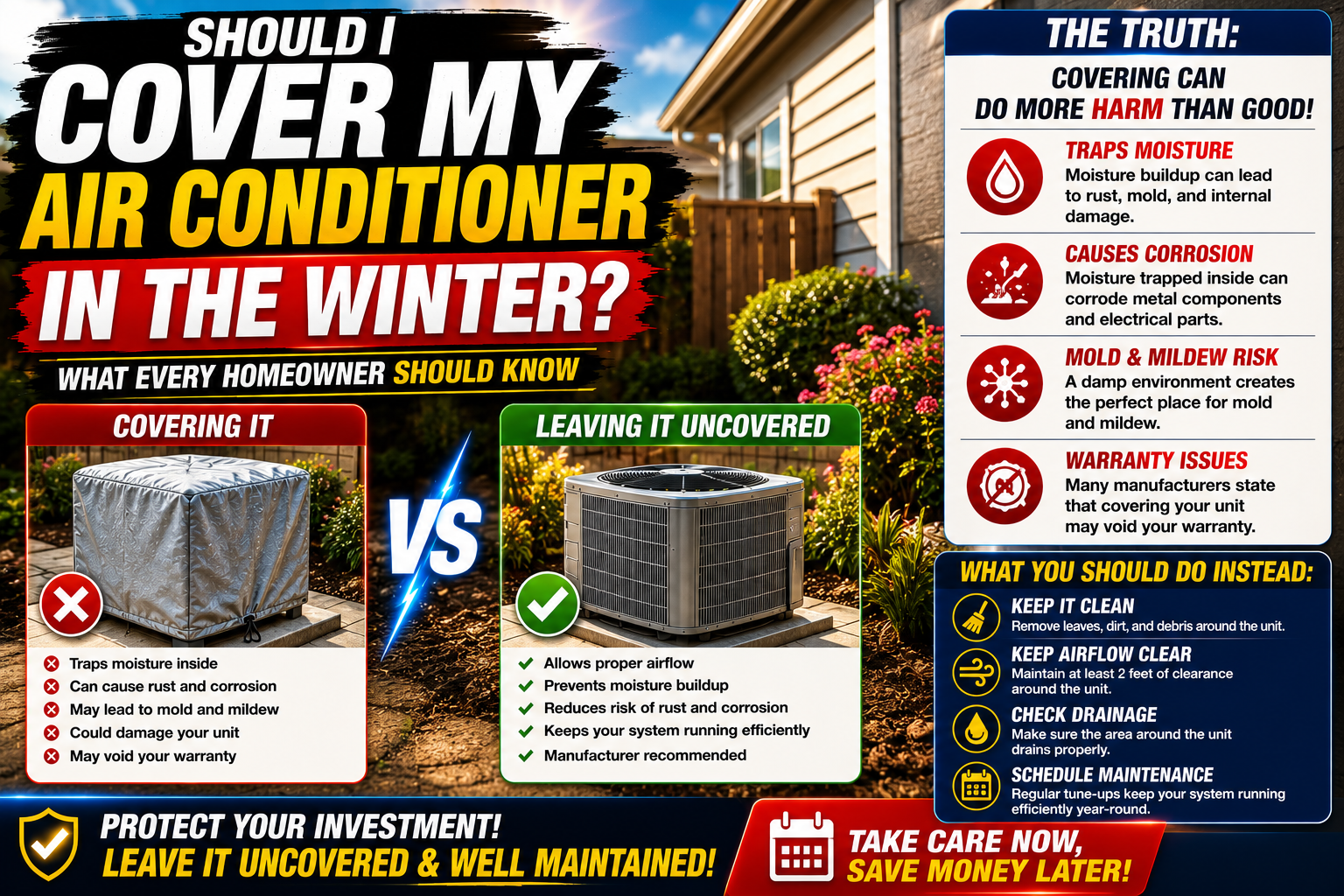
Many people believe covering the entire condenser provides extra protection.
Unfortunately, that’s not always true.
A full cover can trap:
- Moisture
- Condensation
- Humidity
When moisture can’t escape, it may contribute to:
- Rust
- Mold growth
- Mildew
- Corrosion
- Unwanted odors
A completely enclosed cover can also become a comfortable place for rodents, insects, or spiders looking for shelter during cooler months.
Southern California Is Different
Homeowners often read winter HVAC advice written for areas that experience:
- Heavy snow
- Ice storms
- Freezing rain
- Long periods below freezing
That’s very different from our climate.
Here in Southwest Riverside County, our winters are generally mild.
For most homes, snow and ice aren’t significant concerns, so the outdoor condenser doesn’t require the same level of winter protection as systems in colder climates.
When a Cover Makes Sense
There are situations where using a cover can be beneficial.
For example:
Lots of Trees
If your condenser sits beneath large trees, a breathable top cover can help reduce:
- Leaves
- Pine needles
- Twigs
- Seeds
- Other debris
This can make spring cleaning easier.
Construction Nearby
If your neighborhood is undergoing construction, temporary protection may help reduce dirt and dust accumulation.
Just remember to remove the cover before operating the system.
Long-Term Vacancy
If the home will remain vacant for an extended period, a properly fitted breathable cover may help keep debris out of the unit.
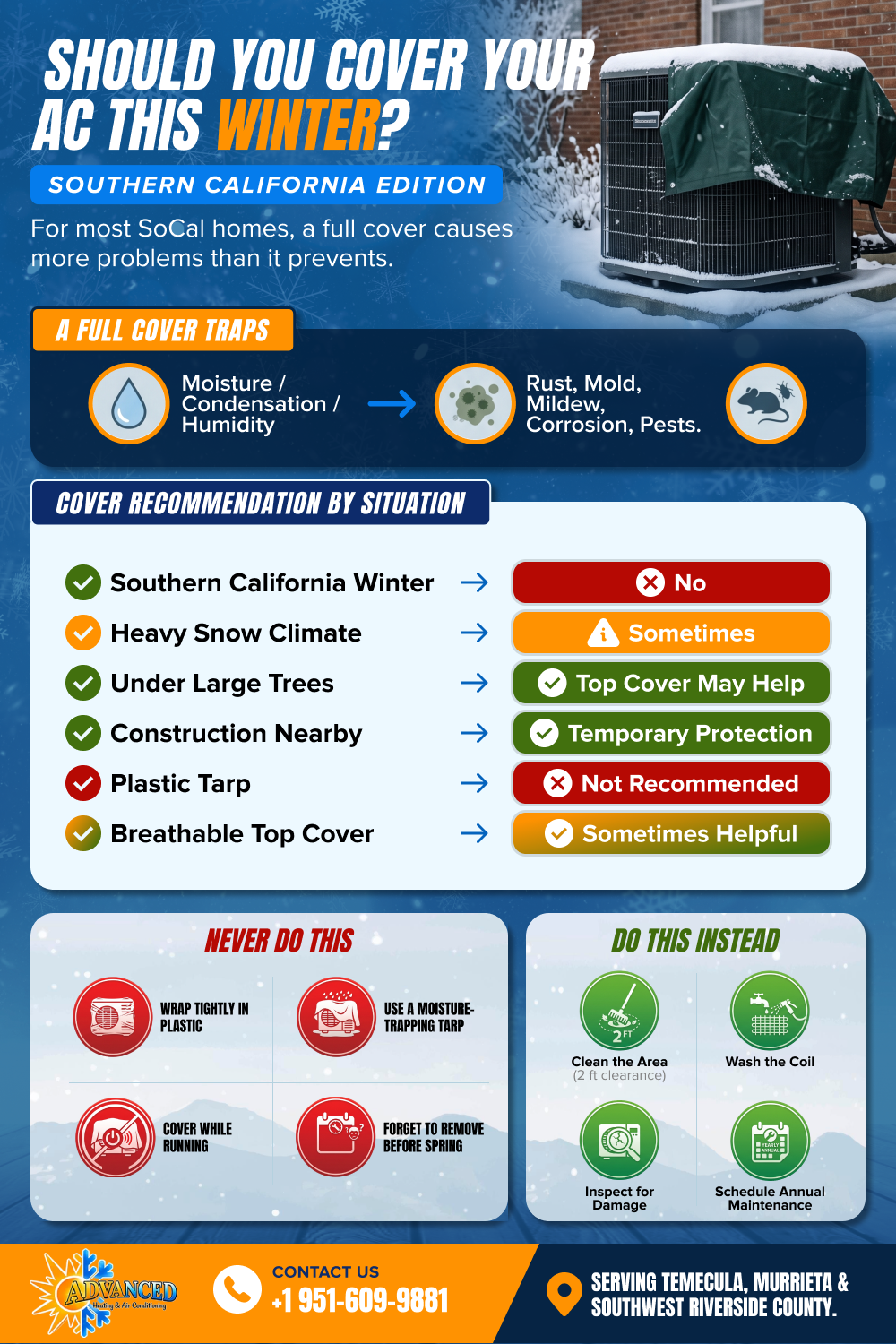
What You Should Never Do
Avoid:
- ❌ Wrapping the condenser tightly in plastic.
- ❌ Using a tarp that traps moisture.
- ❌ Covering the unit while it’s still operating.
- ❌ Forgetting to remove the cover before using the air conditioner in the spring.
One forgotten cover can severely restrict airflow and potentially damage the system if the air conditioner is started.
Better Ways to Protect Your Air Conditioner
Instead of focusing only on a cover, consider these maintenance steps.
Keep the Area Clean
Remove:
- Leaves
- Grass clippings
- Branches
- Weeds
Maintain at least 2 feet of clearance around the condenser to promote proper airflow.
Wash the Outdoor Coil
Over time, dust and debris accumulate on the condenser coil.
Cleaning the coil helps improve heat transfer and system efficiency.
Be careful not to bend the delicate aluminum fins.
Inspect for Damage
Look for:
- Bent fins
- Loose panels
- Damaged insulation
- Animal nests
- Oil stains
- Visible debris
If anything appears unusual, schedule an inspection before cooling season begins.
Schedule Annual Maintenance
Professional maintenance is one of the best ways to prepare your system for another year of operation.
A maintenance visit typically includes:
- Coil inspection
- Electrical testing
- Refrigerant evaluation
- Capacitor testing
- Motor inspection
- Temperature measurements
- Airflow evaluation
- Safety inspection
Routine maintenance often identifies small problems before they become expensive repairs.
Common Winter Myths
Myth #1: Every AC Needs a Full Cover
Not true.
Most modern condensers are designed to remain outdoors year-round.
Myth #2: Covers Prevent Rust
Actually, trapped moisture may contribute to corrosion if the cover doesn’t allow ventilation.
Myth #3: A Covered Unit Lasts Longer
Equipment lifespan depends far more on:
- Maintenance
- Proper airflow
- Installation quality
- Clean coils
- Correct refrigerant charge
than whether it’s covered during the winter.
Comparison Table
- Southern California winter — Cover recommended? Usually no.
- Heavy snow climate — Cover recommended? Sometimes.
- Under large trees — Cover recommended? A top cover may help.
- Construction nearby — Cover recommended? Temporary protection.
- Plastic tarp — Cover recommended? Not recommended.
- Breathable condenser top — Cover recommended? Sometimes helpful.
From the Field
Every spring, we visit homes where homeowners proudly tell us they protected their air conditioner all winter.
Sometimes that’s perfectly fine.
Other times, we remove a full cover and discover moisture trapped inside along with leaves, insects, and even rodent nests.
We’ve also serviced systems that were accidentally turned on while still covered, restricting airflow and causing unnecessary strain.
One of the best things you can do is keep the outdoor unit clean, maintain proper clearance around it, and schedule routine maintenance before the summer heat arrives.
A clean, well-maintained condenser almost always performs better than one that’s simply been covered all winter.
Frequently Asked Questions
Should I cover my AC during rain?
No.
Outdoor condensers are designed to withstand rain.
Is a top cover better than a full cover?
In many situations, yes.
A breathable top cover can help keep leaves out while allowing moisture to escape.
Can snow damage an air conditioner?
In colder climates, manufacturers may recommend certain protective measures. However, snow alone doesn’t automatically damage a properly installed outdoor condenser.
What should I do before turning my AC back on in spring?
Inspect the unit for debris, remove any cover, verify clearance around the condenser, replace the air filter, and consider scheduling a professional maintenance visit.
In Summary
For most homeowners in Southern California, completely covering your air conditioner during the winter isn’t necessary.
Modern outdoor condensers are built to handle the elements. In many cases, a full cover can trap moisture and create more problems than it prevents.
If your unit sits beneath trees or in an area where debris is a concern, a breathable top cover may provide some benefit. More importantly, keep the area around the condenser clean, inspect it periodically, and schedule annual maintenance to help ensure reliable performance when warmer weather returns.
Why Trust Advanced Heating & Air Conditioning?
Since 2008, Advanced Heating & Air Conditioning has proudly helped homeowners throughout Temecula, Murrieta, Menifee, Winchester, Lake Elsinore, Hemet, Wildomar, French Valley, and surrounding communities keep their heating and cooling systems operating at their best.
Our technicians believe in educating homeowners with practical, experience-based advice—not myths or unnecessary services. Whether you’re preparing your HVAC system for winter or getting ready for another Southern California summer, we’re here to help you make informed decisions that protect your comfort and your investment.
Related Articles
- How Often Should You Have Your HVAC System Serviced?
- How Often Should You Change Your HVAC Air Filter?
- Should I Repair or Replace My Air Conditioner?
- How Long Does an Air Conditioner Last?
- Why Is My Air Conditioner Running Constantly?
- Why Is My Electric Bill So High During the Summer?
- Does Closing Air Vents Save Money?