


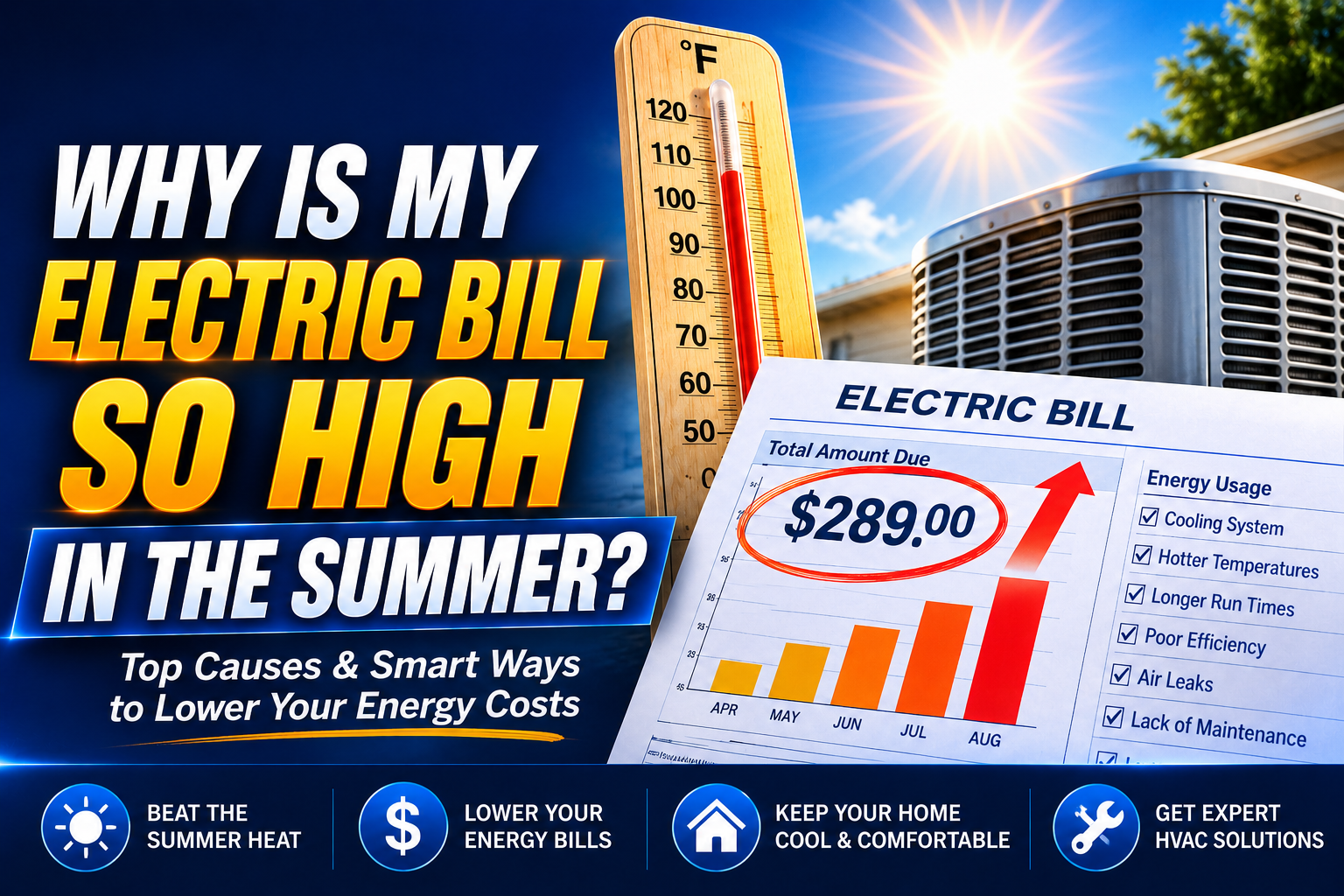
Why Is My Electric Bill So High During the Summer?
Why Is My Electric Bill So High? 10 HVAC Problems to Check
High summer electric bills may be caused by your HVAC system. Learn the most common reasons and how homeowners can reduce cooling costs.
Why Is My Electric Bill So High During the Summer? Your HVAC System May Be the Reason
Few things are more frustrating than opening your electric bill during the summer and seeing a total that’s hundreds of dollars higher than expected.
If you’ve asked yourself:
- “Why is my electric bill so high?”
- “Why is my air conditioner running all day?”
- “Should my AC run constantly in 100-degree weather?”
You’re not alone.
Every summer, homeowners throughout Temecula, Murrieta, Menifee, Lake Elsinore, Winchester, Hemet, and surrounding communities experience the same concern.
While higher outdoor temperatures naturally increase energy usage, an unusually high electric bill is often a sign that your HVAC system isn’t operating as efficiently as it should.
The good news? Many of the causes are preventable.
In this guide, we’ll explain the most common HVAC issues that increase energy costs, what you can do to improve efficiency, and when it’s time to call a professional.
How Much Does Your HVAC System Affect Your Electric Bill?
For many homes, heating and cooling account for the largest portion of monthly energy use, especially during periods of extreme weather.
When your air conditioner is operating efficiently, it cycles on and off as needed to maintain a comfortable indoor temperature.
When something is wrong, it may:
- Run longer than necessary
- Work harder to cool the home
- Consume more electricity
- Wear out components faster
Even a small issue can significantly increase operating costs over an entire summer.
1. Dirty Air Filter
This is one of the simplest problems—and one of the most overlooked.
A clogged air filter restricts airflow, forcing your system to work harder to push conditioned air through your home.
Instead of cooling efficiently, your air conditioner runs longer and consumes more electricity.
Signs Your Filter Needs Replacing
- Weak airflow
- More dust inside the home
- Longer cooling cycles
- Rising utility bills
- Uneven temperatures
Changing your filter regularly is one of the easiest and most affordable ways to improve HVAC efficiency.
5. Leaking Air Ducts
Many homeowners don’t realize that conditioned air may never reach the rooms it’s intended to cool.
Small gaps or disconnected ductwork can allow cooled air to escape into attics or crawl spaces.
That means your HVAC system works harder while your home remains uncomfortable.
Professional duct inspections can identify leaks and improve system efficiency.
6. Poor Thermostat Settings
Setting your thermostat to 65°F doesn’t cool your home faster.
It simply tells the air conditioner to continue running until that temperature is reached.
On very hot days, this may cause the system to run for extended periods without achieving the desired temperature.
A programmable or smart thermostat can help maintain comfort while reducing unnecessary energy use.
7. Lack of Preventive Maintenance
Routine maintenance is one of the most effective ways to reduce operating costs.
During a professional maintenance visit, technicians typically inspect:
- Refrigerant charge
- Electrical components
- Capacitors
- Contactors
- Blower motor
- Evaporator coil
- Condenser coil
- Drain line
- Temperature split
- Airflow
Addressing small issues early often prevents larger, more expensive repairs later.
8. An Aging HVAC System
Even well-maintained systems become less efficient over time.
As equipment ages:
- Components wear
- Motors become less efficient
- Compressors lose performance
- Repair frequency may increase
If your air conditioner is more than 12–15 years old and requires frequent repairs, it may be worth discussing replacement options with a qualified HVAC contractor.
9. Poor Home Insulation
Your HVAC system isn’t always the problem.
If cool air escapes through:
- Attic insulation
- Windows
- Doors
- Poorly sealed penetrations
Your air conditioner has to work much harder to maintain indoor comfort.
Improving insulation can reduce cooling costs while making your home more comfortable year-round.
10. Closing Too Many Supply Vents
Many homeowners believe closing vents in unused rooms saves money.
In reality, most residential HVAC systems are designed to move a specific amount of air.
Closing multiple vents can:
- Restrict airflow
- Increase system pressure
- Reduce efficiency
- Potentially contribute to frozen evaporator coils
Unless recommended by a qualified HVAC professional, it’s generally best to keep supply vents open.
Additional Ways to Lower Your Summer Electric Bill
In addition to maintaining your HVAC system, consider these energy-saving tips:
Replace Your Air Filter Regularly
A clean filter improves airflow and system efficiency.
Keep the Outdoor Unit Clear
Trim vegetation and remove debris around the condenser to allow proper airflow.
Use Ceiling Fans
Fans help circulate conditioned air, allowing you to raise the thermostat setting while maintaining comfort.
Close Curtains During Peak Sunlight
Blocking direct sunlight helps reduce indoor heat gain.
Seal Air Leaks
Weatherstripping and caulking around windows and doors can reduce cooling loss.
Schedule Annual HVAC Maintenance
Professional inspections help identify problems before they affect efficiency.
Frequently Asked Questions
Should my air conditioner run all day when it’s over 100°F?
During extreme heat, longer run times are normal. However, if your home never reaches the thermostat setting or the system runs continuously every day, it may indicate an efficiency problem.
Does a dirty air filter really increase my electric bill?
Yes. Restricted airflow forces your HVAC system to run longer and work harder, increasing energy consumption.
Can low refrigerant increase energy costs?
Absolutely. Low refrigerant reduces cooling capacity, often causing extended run times and higher utility bills.
Is HVAC maintenance worth it?
Routine maintenance can improve efficiency, reduce unexpected breakdowns, and help extend the life of your heating and cooling equipment.
Should I replace my thermostat?
If your thermostat is outdated or inaccurate, upgrading to a programmable or smart thermostat may improve comfort and help reduce unnecessary energy use.
Why Preventive Maintenance Matters
Many of the high electric bills we investigate are caused by small issues that could have been addressed during routine maintenance.
Preventive service helps ensure your HVAC system is operating safely, efficiently, and reliably throughout the hottest months of the year.
Whether your system needs a simple tune-up, a repair, or a more in-depth evaluation, identifying issues early often saves both energy and money over time.
Conclusion
A high summer electric bill isn’t always unavoidable. While hot weather naturally increases cooling demands, unusually high energy costs often point to an HVAC system that isn’t operating as efficiently as it should.
By changing air filters regularly, scheduling preventive maintenance, keeping your outdoor unit clean, and addressing small problems before they become major repairs, homeowners can improve comfort, reduce energy consumption, and help extend the life of their HVAC equipment.
If you’ve noticed a sudden increase in your electric bill or your air conditioner seems to run constantly, a professional inspection can help identify the underlying cause and recommend the most effective solution.