


Why Is My Furnace Leaking Water? 8 Possible Causes
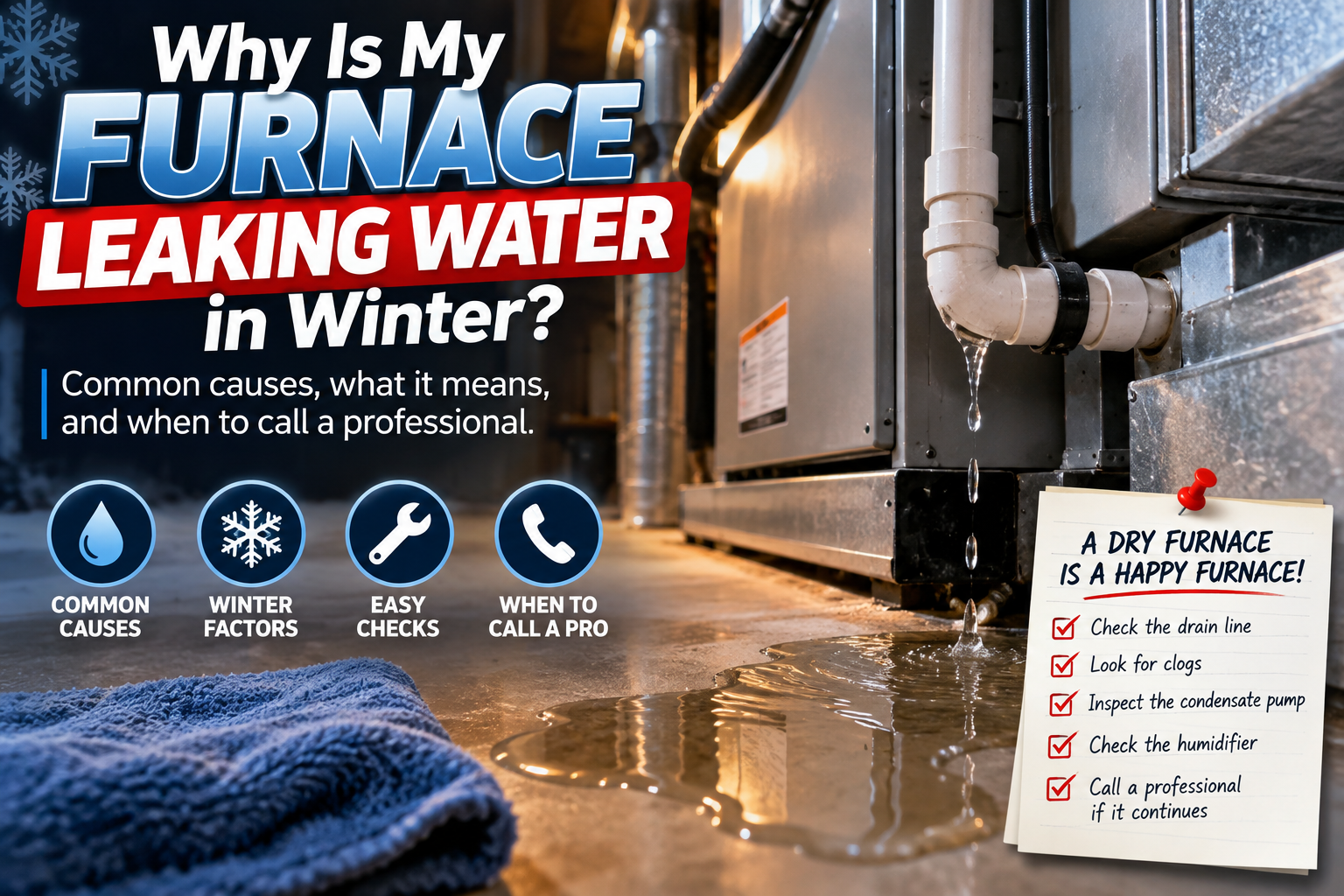
Why Is My Furnace Leaking Water in Winter? 8 Possible Causes
You walk past your furnace and notice something that doesn’t seem to belong there:
Water.
Maybe there’s a small puddle around the furnace cabinet. Maybe the floor is damp. Or perhaps you’ve noticed water near a drain line that wasn’t there before.
Many homeowners know that an air conditioner can produce condensation during summer.
But a furnace?
Surprisingly, some furnaces can produce water during normal heating operation.
Whether that’s normal depends largely on the type of furnace you have.
Water around a furnace can also indicate a clogged condensate drain, damaged tubing, condensate-pump problem, plumbing leak or another issue that needs attention.
Here are eight possible causes.
Key Takeaways
- High-efficiency condensing furnaces normally produce water during heating operation.
- Conventional furnaces generally operate differently and don’t intentionally drain combustion condensate the same way.
- A clogged furnace condensate drain can cause water to back up.
- Condensate tubing can crack, disconnect or become restricted.
- A failed condensate pump can cause water to overflow.
- Water near the furnace isn’t automatically coming from the furnace.
- Don’t ignore water around electrical or gas-fired equipment.
- The source should be identified before assuming which component needs repair.
1. You Have a High-Efficiency Condensing Furnace
This is the first thing to determine.
Many modern high-efficiency gas furnaces are condensing furnaces.
These furnaces extract more heat from the combustion gases than traditional furnaces.
As those gases cool, water vapor condenses into liquid water.
That water has to go somewhere.
The furnace is designed with a condensate-management system that directs the water through tubing and ultimately to an approved drainage location.
So if you own a condensing furnace:
The production of condensate can be completely normal.
Water appearing on the floor, however, is not how that condensate is supposed to leave the system.
2. The Furnace Condensate Drain Is Clogged
Condensate produced by the furnace has to travel through a drain system.
If that pathway becomes restricted, water can back up.
Depending on the furnace and installation, restrictions can involve:
- Debris
- Sludge
- Drain-line buildup
- Improper drainage
- Kinked tubing
- Other obstructions
Eventually, backed-up condensate may leak or overflow.
Some furnace systems also incorporate safety controls that can interrupt operation when drainage conditions aren’t correct.
That means a drainage problem can sometimes become a no-heat problem, not merely a water leak.
3. A Condensate Tube Is Cracked or Disconnected
High-efficiency furnaces can have several hoses or tubes associated with condensate drainage.
Over time, tubing can:
- Crack
- Split
- Loosen
- Disconnect
- Become kinked
Even a small problem can allow water to escape inside or around the furnace cabinet.
If the water appears only while the furnace is operating, condensate tubing becomes one area worth inspecting professionally.
4. The Condensate Trap Has a Problem
Many condensing furnaces incorporate a condensate trap.
Its design and function depend on the equipment, but it forms an important part of the furnace’s drainage system.
If the trap becomes clogged, damaged, improperly installed or otherwise unable to drain correctly, condensate may not leave the furnace as intended.
Because furnace condensate systems interact with combustion and venting operation, homeowners generally shouldn’t start removing or modifying internal furnace drainage components themselves.
5. The Condensate Pump Isn’t Working
Not every furnace can drain condensate by gravity.
Sometimes the installation uses a condensate pump.
The furnace drains water into a small reservoir. When the water reaches a certain level, the pump activates and moves the condensate to an appropriate drain location.
If the pump fails, becomes unplugged, develops a blockage or its float mechanism doesn’t operate properly, the reservoir can overflow.
Possible clues include:
- Water around the pump
- A full pump reservoir
- Furnace shutdown
- Water appearing only during furnace operation
- A pump that no longer makes its normal operating sound
Don’t simply bypass a condensate-related safety switch to keep the furnace running.
The drainage problem needs to be corrected.
6. The Furnace Venting System Has a Problem
High-efficiency condensing furnaces often use plastic vent piping rather than the metal flue commonly associated with older conventional furnaces.
That’s because the exhaust temperatures and condensation characteristics are different.
The venting system must be installed so that condensate behaves as intended by the furnace manufacturer and installation requirements.
Problems involving vent pitch, drainage, restrictions or installation can interfere with normal furnace operation.
Venting updates can be part of a furnace installation depending on the equipment and home.
This is another reason a furnace replacement involves more than simply swapping one metal box for another.
7. The Water May Be Coming From the Air Conditioner or Evaporator Coil
Here’s an important possibility:
The furnace may not be leaking at all.
In many central HVAC systems, the indoor air-conditioning evaporator coil is installed directly above or near the furnace.
That equipment has its own condensate drain system.
A leaking drain pan, clogged AC condensate line or another drainage issue can allow water to travel down toward the furnace.
From the homeowner’s perspective, it looks like:
“My furnace is leaking.”
But the actual source may be another HVAC component.
A clogged condensate drain activating a safety shutoff is a common real-world example of why drainage systems are worth diagnosing rather than assuming the main equipment has failed.
8. The Water Isn’t Coming From the HVAC System
Never assume water beside a furnace must originate from the furnace.
Nearby sources can include:
- Water heaters
- Plumbing lines
- Drain piping
- Humidifiers
- Roof leaks
- Attic leaks
- Washing equipment
- Other mechanical systems
Water follows gravity and can travel before it becomes visible.
The puddle’s location doesn’t always reveal the source.
That’s why the first step should be: find where the water is actually coming from.
Why Does a High-Efficiency Furnace Make Water?
This deserves a closer explanation.
Natural-gas combustion produces several byproducts, including water vapor.
A conventional furnace allows relatively hot combustion gases to exit through the vent.
A high-efficiency condensing furnace is designed to extract additional heat from those gases.
As the exhaust cools sufficiently, water vapor condenses into liquid.
That process helps the furnace recover heat that would otherwise leave through the vent.
So:
Condensation isn’t necessarily a defect.
It’s part of how a condensing furnace achieves higher efficiency.
The important part is making sure that water is properly collected and drained.
How Can I Tell If I Have a High-Efficiency Furnace?
One easy visual clue can be the furnace venting.
Many high-efficiency condensing furnaces use plastic vent piping, while many conventional furnaces use metal venting.
However, don’t determine furnace efficiency from appearance alone.
Check the equipment model information or documentation, or ask an HVAC technician to identify the system.
AFUE—Annual Fuel Utilization Efficiency—is the efficiency rating commonly used for furnaces.
Advanced Heating & Air Conditioning installs gas furnaces, high-efficiency furnaces and other heating systems, with equipment recommendations based on the home, efficiency goals and operating costs.
Is Furnace Condensate the Same as an AC Drain?
The basic idea—collecting and removing condensed water—is similar.
But the source of the water is different.
During air-conditioning operation, moisture condenses on the cold indoor evaporator coil as humid air passes across it.
With a high-efficiency furnace, condensation is associated with the combustion/exhaust heat-recovery process.
The two drainage systems may share portions of an installation depending on system design, but they originate from different processes.
Is Furnace Condensate Acidic?
Condensate from a high-efficiency gas furnace can be mildly acidic because combustion products can dissolve into the water.
Depending on equipment, local requirements and drainage arrangement, installations may use condensate-neutralization equipment before the water enters certain drainage systems.
That’s another reason furnace condensate shouldn’t simply be rerouted without understanding the installation.
Can a Furnace Water Leak Damage My Home?
Yes.
Even a relatively small leak can eventually damage:
- Drywall
- Flooring
- Cabinetry
- Ceilings
- Insulation
- Nearby equipment
Water around electrical components is another reason the problem shouldn’t be ignored.
A furnace installed in an attic can be particularly important because a leak may damage the ceiling below before the homeowner notices it.
Can a Clogged Furnace Drain Stop the Heat From Working?
On some systems, yes.
Modern HVAC installations may include switches or controls designed to shut equipment down when condensate isn’t draining properly.
That can help prevent overflowing water from causing greater damage.
If the furnace stops operating because a condensate safety has activated, don’t simply bypass the switch.
The safety isn’t the problem—the water condition is.
Find out why the condensate isn’t draining.
What Can Homeowners Safely Check?
Without opening or modifying internal furnace components, homeowners can look for several clues.
Check whether:
- Water appears only when the furnace operates.
- A visible drain tube has become obviously disconnected.
- A nearby condensate pump is overflowing.
- The furnace has stopped heating at the same time the water appeared.
- Another nearby appliance could be leaking.
- Water is approaching electrical components.
Avoid removing combustion-related components, modifying venting or bypassing drainage safety controls.
Should I Turn My Furnace Off If It’s Leaking Water?
A tiny amount of moisture at a known drain location isn’t the same as water actively leaking around the furnace.
If water is pooling around the cabinet, reaching electrical equipment or continuing to spread, shutting the HVAC equipment off while the source is investigated may help prevent additional damage.
If you smell gas, detect carbon monoxide, see electrical arcing or believe there’s an immediate safety hazard, leave the affected area and follow appropriate emergency or utility guidance.
Can Furnace Maintenance Help Prevent Condensate Problems?
Maintenance can’t prevent every drain problem, but inspecting the furnace before heating season can identify visible drainage, venting and operating concerns.
A heating inspection may include checking:
- Furnace operation
- Condensate drainage where applicable
- Venting
- Ignition
- Electrical components
- Blower operation
- Airflow
- Safety controls
- Thermostat operation
Advanced Heating & Air Conditioning’s furnace-repair process includes complete system diagnosis and safety/performance testing rather than simply replacing the first component associated with a symptom.
Frequently Asked Questions
Is it normal for my furnace to produce water?
A high-efficiency condensing gas furnace normally produces condensate during heating operation. That water should drain through the system rather than leak onto the floor.
Why is water pooling around my furnace?
Possible causes include a clogged condensate drain, damaged tubing, condensate-pump failure, drainage or venting problems, an AC condensate leak or water coming from another nearby source.
Why does my furnace leak only when the heat is running?
If you have a condensing furnace, the leak may be associated with condensate created during heating operation.
Can a clogged furnace drain cause the furnace to stop working?
Yes, some installations have condensate safety controls that can interrupt equipment operation when water isn’t draining correctly.
Why does my furnace have PVC pipes?
Many high-efficiency furnaces use plastic intake and exhaust piping because they operate with lower exhaust temperatures and different condensation characteristics than conventional furnaces.
Is furnace condensate dangerous?
Furnace condensate can be mildly acidic and should be routed according to the equipment requirements and applicable installation practices. Avoid unnecessarily handling or rerouting it.
Does every gas furnace produce drain water?
Not in the same way. High-efficiency condensing furnaces intentionally collect and drain condensate, while conventional furnaces generally operate with hotter flue gases and different venting.
Could my AC be leaking water onto my furnace?
Yes. Because the evaporator coil is commonly installed above or near a furnace, an AC condensate problem can make it appear that the furnace itself is leaking.
Don’t Assume the Furnace Is the Source
This is the biggest takeaway for homeowners:
Water beside the furnace does not automatically mean the furnace is leaking.
The correct diagnosis starts by identifying the source.
It could be normal furnace condensate that’s no longer draining correctly.
It could be the air-conditioning coil.
It could be a condensate pump.
It could be plumbing.
It could be something else entirely.
Good HVAC diagnosis follows the evidence rather than guessing from where the puddle happens to appear.
Furnace & Heating Service in the Temecula Valley
If you notice water around your furnace, repeated heating shutdowns or a condensate problem, Advanced Heating & Air Conditioning can inspect the system and determine where the water is actually coming from.
Advanced installs gas furnaces, high-efficiency furnaces, electric heating systems and heat pumps, and its installation process includes evaluating ductwork plus necessary electrical, gas and venting requirements.
Serving Temecula, Murrieta, Menifee, Winchester, Wildomar, French Valley, Canyon Lake, Lake Elsinore, Hemet and surrounding Southern California communities.
Advanced Heating & Air Conditioning
951-609-9881
California Contractor License #916901
AdvancedHeatingAndAir.com
REAL PEOPLE. REAL SERVICE. REAL COMFORT.