


Water Around Your Outdoor AC Unit? Here’s What It Could Mean
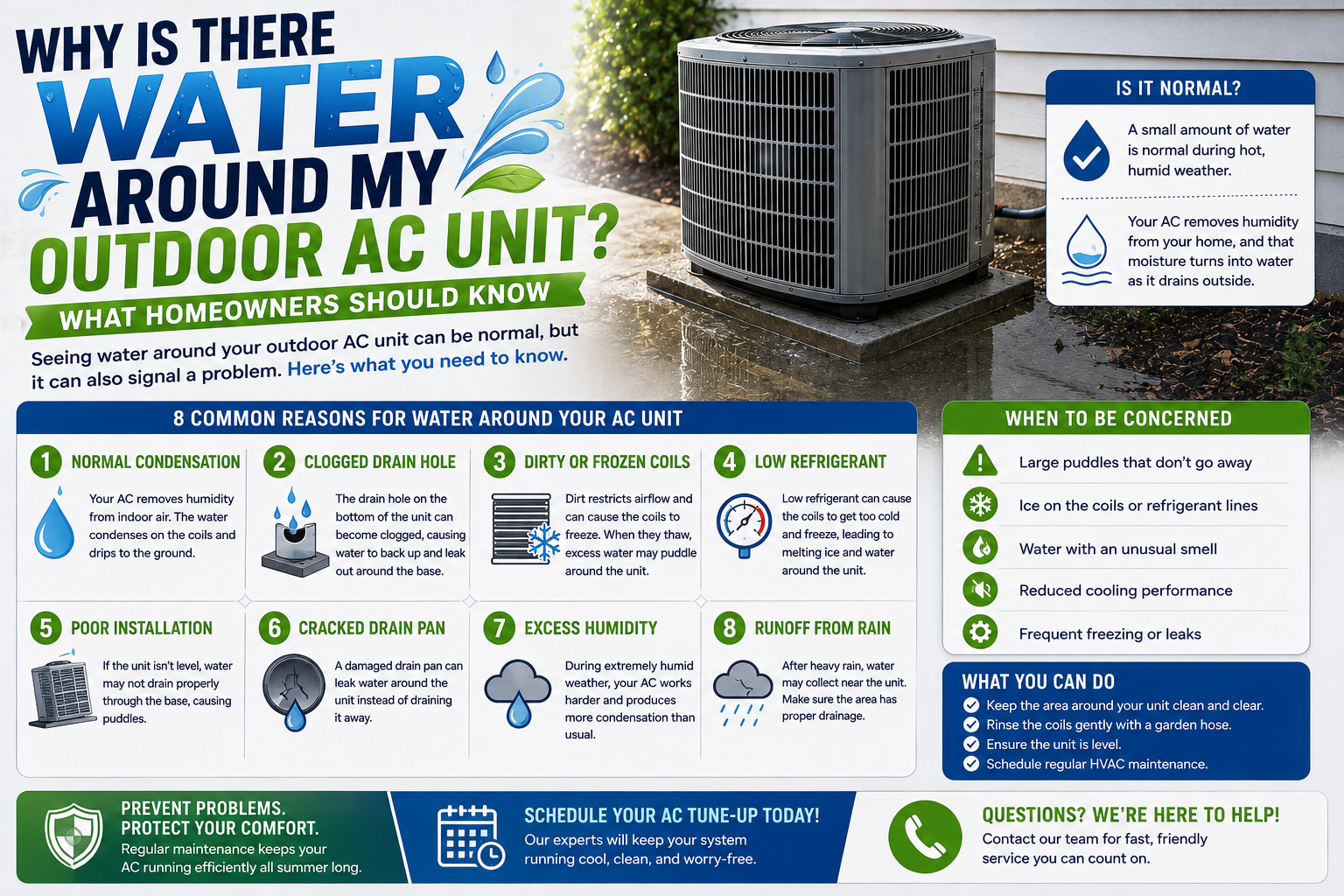
You Walk Outside and Find Water Around Your Air Conditioner
You go into the backyard and notice something you haven’t seen before.
There’s water on the concrete near your outdoor air conditioning unit.
Maybe it’s a small puddle.
Maybe one of the refrigerant lines looks wet.
Or maybe there’s enough water that you’re wondering:
“Is my air conditioner leaking?”
Seeing water around HVAC equipment can be confusing because air conditioning systems naturally remove moisture from indoor air.
But where that water appears — and why — matters.
Some moisture around HVAC components can be normal.
Other situations can indicate a drainage, airflow, freezing, or equipment problem.
Let’s look at what homeowners should know before assuming the worst.
First: Why Does an Air Conditioner Produce Water?
Your air conditioner doesn’t just lower indoor temperature.
It can also remove moisture from indoor air.
Warm household air moves across the cold indoor evaporator coil.
When that air cools, moisture can condense on the coil.
It’s similar to what happens when you take a cold drink outside.
Water droplets form on the outside of the glass.
Inside your HVAC system, that moisture should collect and leave through the condensate drainage system.
So yes:
Water production can be a normal part of air conditioning operation.
The question is whether that water is appearing where it’s supposed to.
The Outdoor AC Unit Usually Isn’t Where Indoor Condensate Is Created
This is an important distinction.
During normal cooling operation, most condensation is created at the indoor evaporator coil, not the outdoor condenser.
That water normally travels through a condensate drain.
So if you see water around the outdoor unit, don’t automatically assume the condenser itself is “leaking water.”
The moisture may be coming from somewhere else.
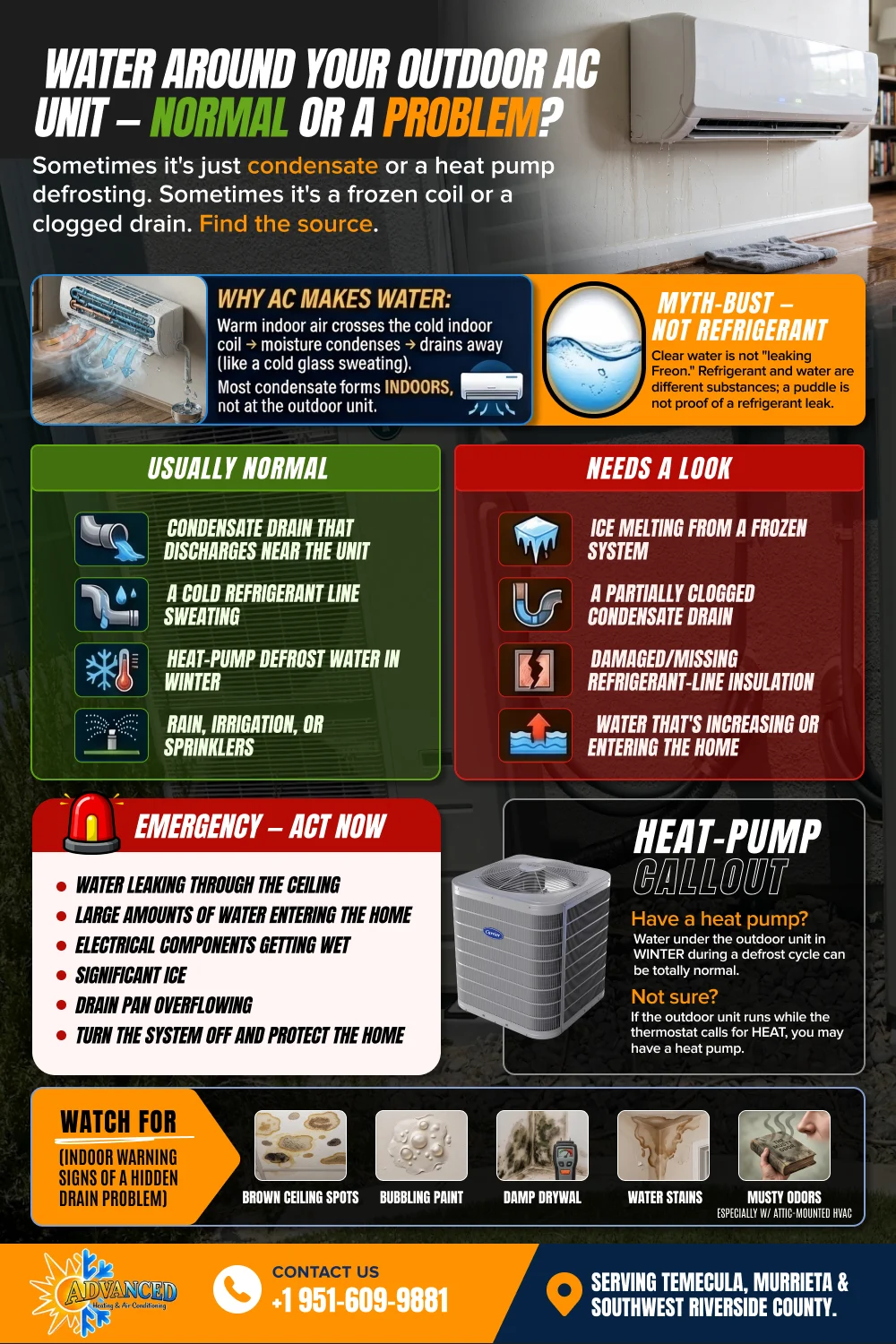
1. Condensate Drainage May Terminate Nearby
Depending on how the home was built, an HVAC condensate drain may discharge outdoors.
If that drain terminates near the outdoor equipment, you may notice water in the area while the AC operates.
This can sometimes be completely normal.
Look for a drain pipe nearby and observe where the water is actually coming from.
If water is flowing from the intended condensate drain during cooling operation, that may simply mean the AC is removing moisture from indoor air.
2. The Refrigerant Suction Line Can Sweat
One of the refrigerant lines running between your indoor and outdoor HVAC equipment becomes cold during normal air conditioning operation.
This larger line is usually insulated.
If insulation is:
- Missing
- Damaged
- Deteriorated
- Pulled away
moisture from surrounding air may condense on the cold pipe.
The line can then appear to be “leaking” even though the moisture is actually condensation forming on its surface.
Damaged refrigerant-line insulation should be corrected.
3. Ice May Be Melting From a Frozen System
This is more concerning.
If part of the HVAC system has frozen, ice may eventually melt and create unexpected water.
Possible reasons an AC system can freeze include:
- Dirty air filter
- Restricted airflow
- Blower problem
- Dirty evaporator coil
- Refrigerant-related issue
- Other system problems
If you see ice on the refrigerant line or HVAC equipment, the solution isn’t simply wiping away the water.
You need to determine why the system froze.
4. The Water May Not Be Coming From the AC at All
Before assuming there’s an HVAC failure, look at the surrounding area.
Possible water sources include:
- Irrigation
- Sprinklers
- Rain
- Roof drainage
- Garden hoses
- Pool equipment
- Landscaping
- Nearby plumbing
Water naturally collects around outdoor equipment because the condenser often sits on a concrete or composite pad.
Trace the moisture to its actual source whenever possible.
5. A Nearby Condensate Drain Could Be Partially Restricted
Your air conditioning system may produce a significant amount of condensate during cooling operation.
If the drain system becomes partially restricted, water may not flow as intended.
Depending on the home’s drainage configuration, symptoms can appear in different locations.
Possible warning signs of a condensate problem include:
- Water near indoor HVAC equipment
- Full drain pan
- Ceiling stains
- AC shutting off unexpectedly
- Musty odor
- Unusual drainage outside
Condensate drainage problems should be addressed before they cause property damage.
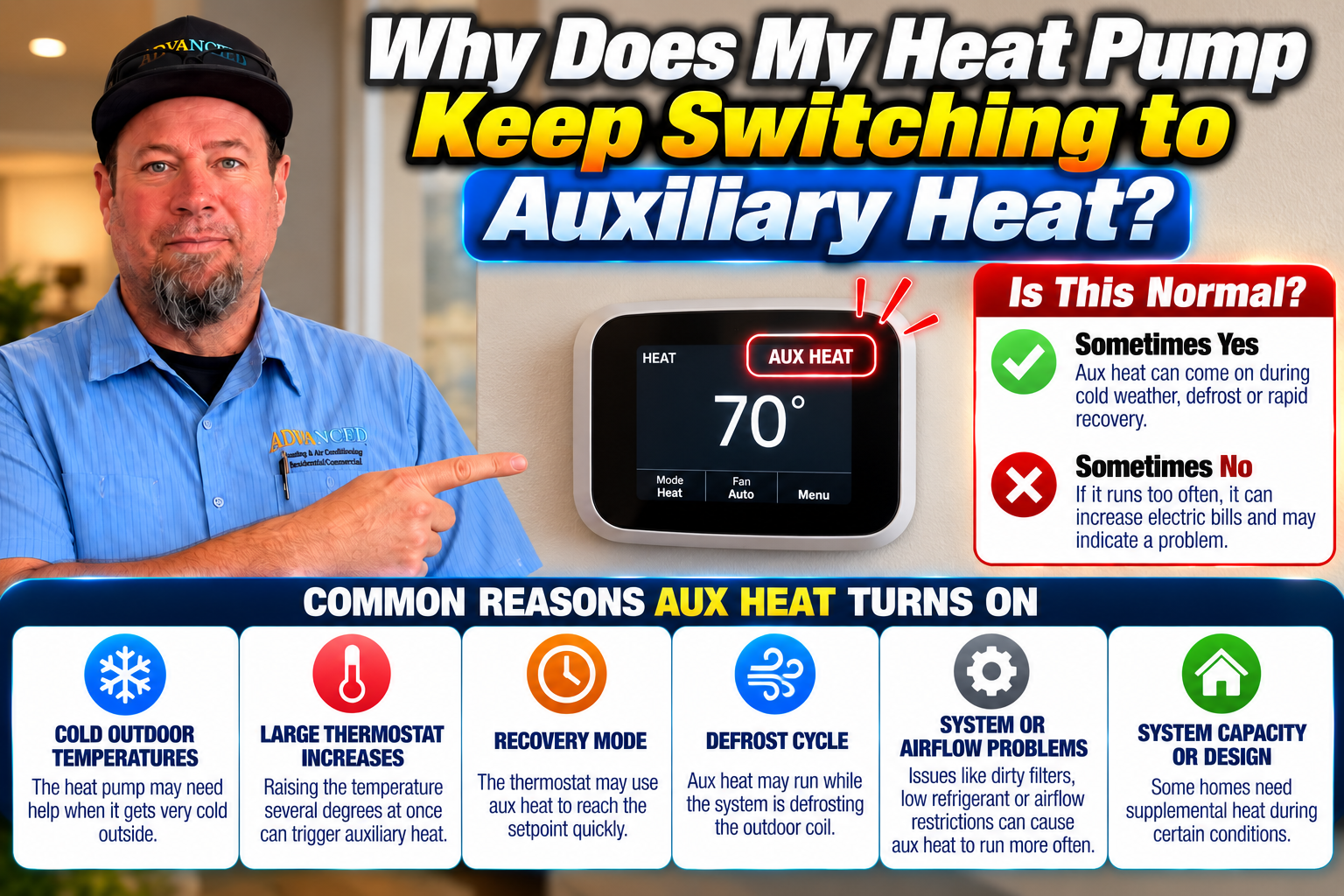
6. The Outdoor Unit May Produce Water During Heating Mode
If you have a heat pump, the situation changes during winter heating operation.
Heat pumps can develop frost on the outdoor coil under certain conditions.
The system periodically enters a defrost cycle to remove that frost.
When the frost melts, water can drain from the outdoor unit.
So if your heat pump is heating the home and you see water underneath the outdoor equipment:
That may be completely normal.
This is one of the reasons it’s important to know whether you have a conventional air conditioner or a heat pump.
Wait — My Outdoor Unit Can Produce Water in Winter?
Yes, if it’s a heat pump.
During heating operation, the outdoor coil becomes cold.
Under the right temperature and humidity conditions, frost may develop.
The heat pump’s defrost system temporarily changes operation to remove that frost.
When the ice melts, you’ll see water underneath or around the outdoor unit.
That isn’t necessarily a refrigerant leak or plumbing problem.
It’s part of normal heat pump operation.
How Do I Know If I Have a Heat Pump?
Homeowners often aren’t sure.
One simple clue is to observe the outdoor unit during winter.
If the outdoor HVAC unit operates while the thermostat is calling for heat, you may have a heat pump.
However, dual-fuel and other HVAC configurations can make things more complicated.
Equipment model information or a professional inspection can confirm what type of system you have.
Can Refrigerant Leak Out as Water?
No.
HVAC refrigerant isn’t water.
A refrigerant leak and a water leak are different problems.
If you see clear water around HVAC equipment, you’re not watching refrigerant turn into a puddle.
Refrigerant leaks generally require specialized equipment and professional diagnosis.
Don’t assume visible water means the system is “leaking Freon.”
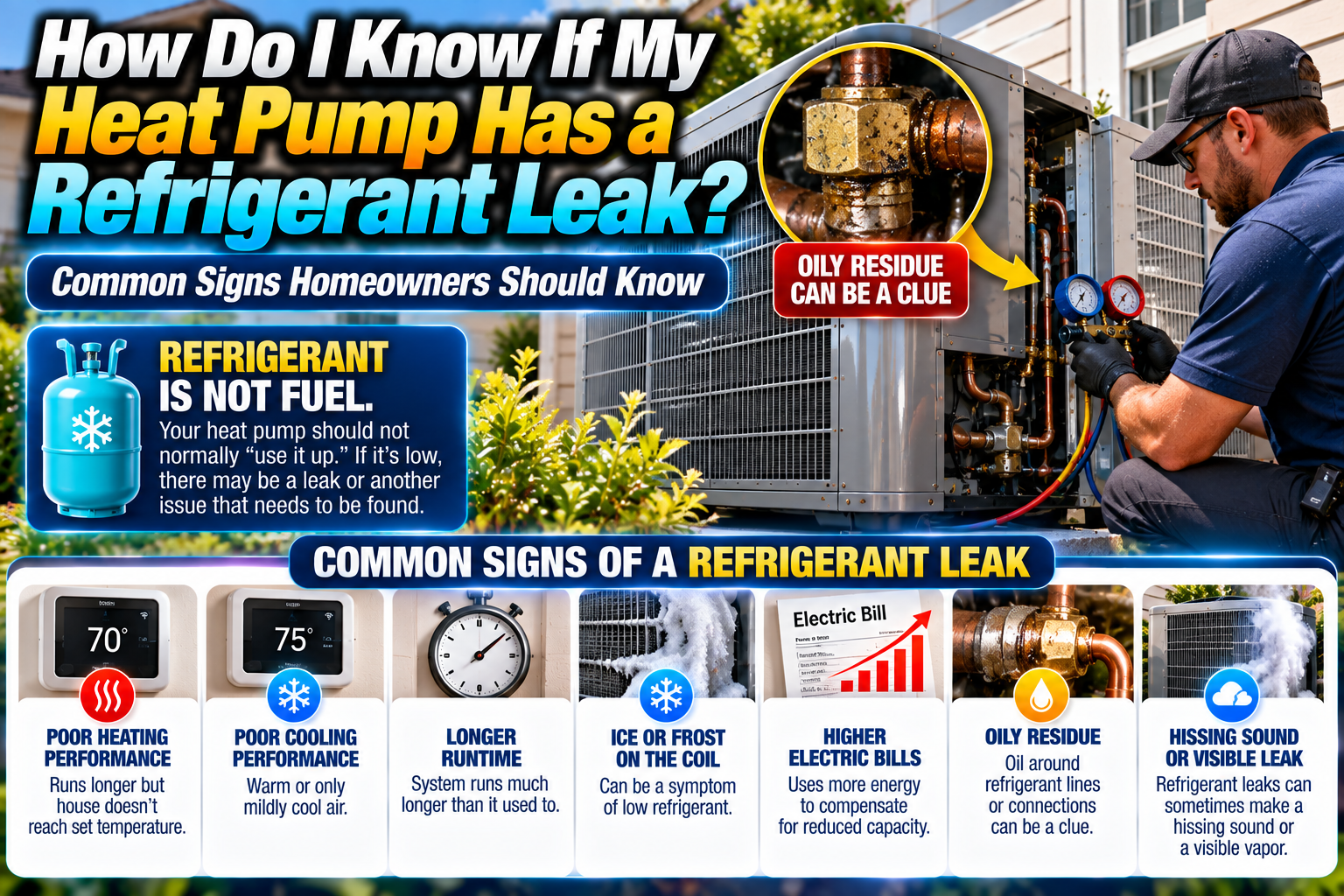
What Does a Refrigerant Leak Look Like?
Refrigerant leaks aren’t reliably diagnosed by looking for a puddle of water.
Possible symptoms of a refrigerant-related HVAC problem can include:
- Reduced cooling
- Longer system operation
- Ice formation
- Abnormal system pressures
- Reduced performance
A technician may use specialized testing methods to determine whether a leak exists.
Visible water by itself isn’t proof.
Is Condensation on the Large Copper Line Normal?
Some condensation on the cold refrigerant line can occur, especially if insulation is damaged or missing.
The larger refrigerant line is typically insulated because it operates at a low temperature during cooling.
Proper insulation helps:
- Reduce unwanted heat gain
- Control condensation
- Protect system performance
If large portions of the insulation are deteriorated, replacement may be appropriate.
Why Is There Ice on My Outdoor Refrigerant Line?
Ice on the refrigerant line during normal air conditioning operation isn’t something to ignore.
Possible causes can include:
- Low airflow
- Dirty filter
- Indoor blower problem
- Refrigerant-related problem
- Dirty indoor coil
- Other system conditions
If the system is frozen, continuing to operate it may worsen the problem.
Turn the cooling system off and have the cause evaluated.
What Happens When a Frozen AC Thaws?
A surprising amount of water can appear.
Ice may have accumulated on:
- Evaporator coil
- Refrigerant piping
- Nearby components
As the ice melts, water can overflow or appear in places homeowners don’t normally see moisture.
That’s why a puddle may sometimes appear after the AC has been turned off.
The water is a symptom.
The freezing is the real problem.
Can a Dirty Filter Really Cause Water Problems?
Yes, indirectly.
A severely dirty filter can restrict airflow across the evaporator coil.
If airflow becomes too low, the coil temperature may become excessively cold.
Under certain conditions, moisture on the coil can freeze.
Eventually, that ice melts.
Now you may have a water problem in addition to the original airflow problem.
This is another reason filter maintenance matters.
Can a Clogged Condensate Drain Damage My Home?
Yes.
The amount of water produced by an air conditioner can be significant under certain conditions.
If the drainage system can’t remove it properly, water may overflow into:
- Attic
- Ceiling
- Walls
- Flooring
- HVAC closet
Homes with attic-mounted HVAC equipment deserve particular attention because a drainage problem above the ceiling can cause substantial property damage.
What Is a Secondary Drain Pan?
HVAC equipment installed above finished living space may have additional drainage protection depending on the installation.
A secondary drain pan can help collect water if the primary drainage system has a problem.
Some systems also use:
- Float switches
- Overflow switches
- Secondary drains
These safety measures can help prevent water damage.
If your AC suddenly stops and the thermostat appears normal, a condensate safety switch may have interrupted operation because water accumulated where it shouldn’t.
Why Is Water Coming From a Pipe Near My Roofline?
Some homes have secondary condensate drains positioned where dripping water will be noticeable.
The idea is simple:
If you suddenly see water coming from a place that normally stays dry, pay attention.
That water may be warning you that the primary condensate drainage system isn’t operating correctly.
Don’t simply redirect or plug the drain.
Have the system inspected.
Should I Be Worried About a Small Amount of Water?
Not every puddle is an emergency.
Consider:
- Where the water originates
- Whether you have a heat pump
- Whether the AC is cooling normally
- Whether ice is present
- Whether the indoor equipment is wet
- Whether water is entering the home
- Whether the amount of water is increasing
A small amount of normal condensate is very different from water pouring through a ceiling.
When Is Water Around HVAC Equipment an Emergency?
Take immediate action if:
- Water is leaking through the ceiling
- Electrical components are getting wet
- The drain pan is overflowing
- Large amounts of water are entering the home
- You see significant ice
- The HVAC system has stopped cooling
- Water is near exposed electrical equipment
Turn off the HVAC system when appropriate and protect the home from further damage while arranging professional service.
Don’t Ignore Ceiling Stains Near HVAC Equipment
If your HVAC system is located in the attic, pay attention to:
- Brown ceiling spots
- Bubbling paint
- Damp drywall
- Water stains
- Musty odors
These may indicate a drainage or water problem above the ceiling.
Catching a small condensate problem early can prevent a much larger repair later.
How Can HVAC Maintenance Help Prevent Water Problems?
Routine maintenance can provide an opportunity to inspect:
- Condensate drain
- Drain pan
- Indoor coil area
- Filter
- Refrigerant-line insulation
- Equipment operation
- Cooling performance
Maintenance can’t guarantee a drain will never clog.
But regular inspection can identify certain problems before they become obvious water damage.
Frequently Asked Questions About Water Around an AC Unit
Is it normal to see water around my outdoor AC?
Sometimes. The source may be normal condensate drainage, refrigerant-line condensation, heat-pump defrost water, rain, or another nearby source.
Does an outdoor air conditioner produce condensation?
Most cooling-mode condensate forms at the indoor evaporator coil. However, cold refrigerant piping may develop surface condensation.
Why is my AC copper pipe dripping water?
The cold suction line can develop condensation, particularly where insulation is missing or damaged.
Why is there ice on my AC line?
Ice can be associated with airflow restrictions, refrigerant-related problems, blower issues, dirty components, or other conditions that require diagnosis.
Does water under a heat pump mean something is wrong?
Not necessarily. During heating-season defrost cycles, water underneath an outdoor heat pump can be normal.
Is water leaking from my AC actually refrigerant?
No. Refrigerant and water are different substances. A visible puddle of water isn’t refrigerant.
Can a clogged AC drain cause ceiling damage?
Yes. Condensate drainage problems can lead to water damage, particularly when HVAC equipment is installed above finished living areas.
Should I turn my AC off if it’s leaking water?
If water is overflowing, entering the home, affecting electrical components, or associated with significant ice or abnormal operation, turning the system off and arranging service is appropriate.
AC Water and Drainage Problems in the Temecula Valley
Air conditioners throughout Temecula, Murrieta, Menifee, Lake Elsinore, Winchester, Hemet, Anza, and surrounding Southern California communities can operate for long periods during summer.
That means the indoor HVAC system may also be removing moisture for many hours.
Homeowners often focus on the compressor and refrigerant but forget about something much simpler:
The water has to go somewhere.
A properly operating condensate drainage system is an important part of reliable air conditioning.
The Bottom Line
Water around HVAC equipment doesn’t automatically mean your air conditioner is broken.
It could be:
- Normal condensate drainage
- Condensation on a cold refrigerant line
- Heat-pump defrost water
- Rain or irrigation
But it could also be related to:
- A frozen AC system
- A clogged drain
- Damaged insulation
- An HVAC performance problem
The most important step is determining where the water is actually coming from.
And if water is appearing inside your home, overflowing from HVAC equipment, or accompanied by ice or poor cooling, don’t wait for the damage to get worse.
Seeing Water Around Your HVAC Equipment?
If you’re unsure whether HVAC condensation is normal or your air conditioner has a drainage or freezing problem, Advanced Heating & Air Conditioning can inspect the system and identify the source.
Our team provides professional AC repair, HVAC maintenance, heat pump service, and condensate drainage service throughout Temecula, Murrieta, Menifee, Lake Elsinore, Winchester, Hemet, Anza, and surrounding Southern California communities.
Contact Advanced Heating & Air Conditioning to schedule professional HVAC service before a small water problem becomes expensive property damage.