


Why Does My Air Conditioner Keep Turning On and Off? Causes of AC Short Cycling
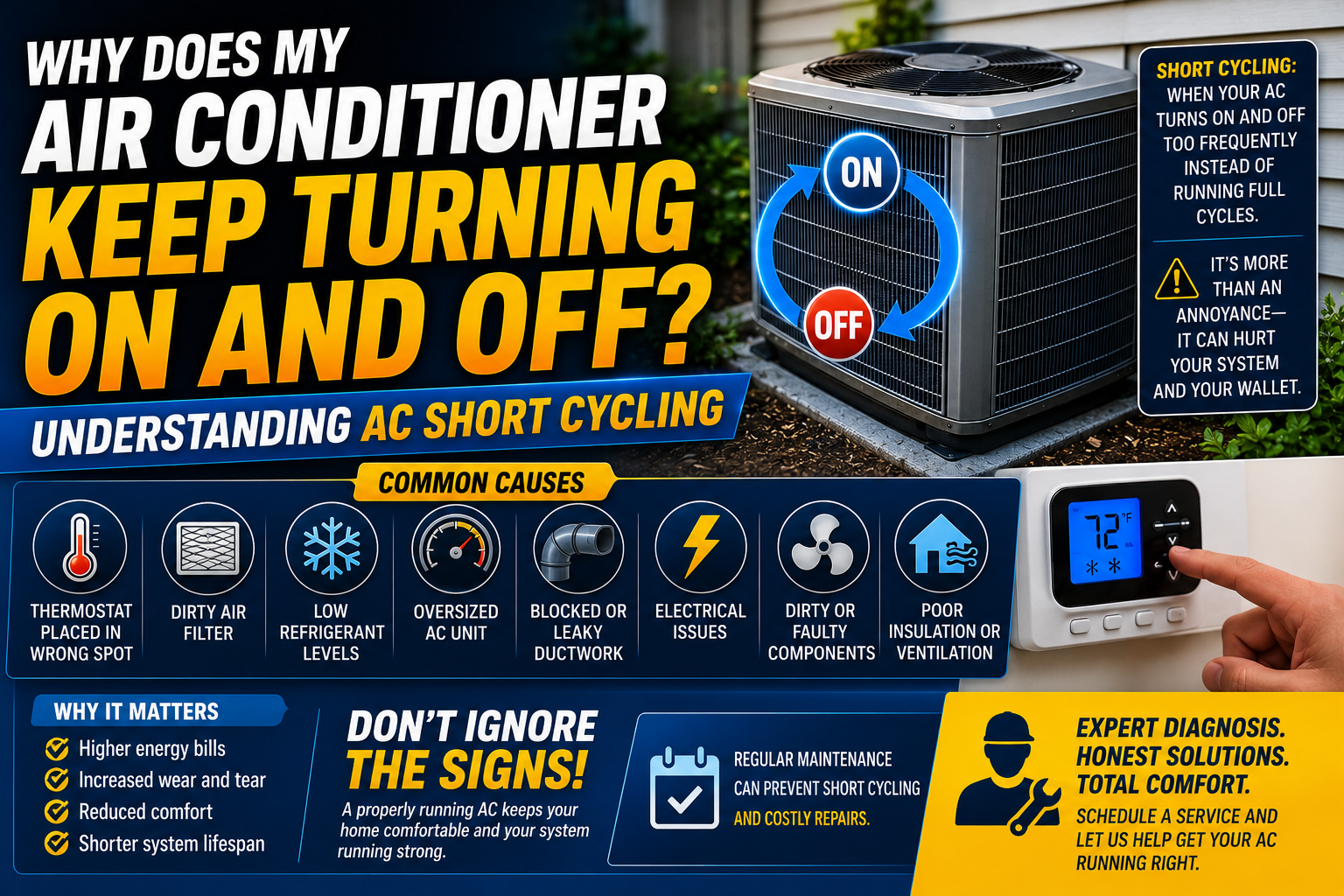
Why Does My Air Conditioner Keep Turning On and Off? Understanding AC Short Cycling
Key Takeaways
- Short cycling occurs when an air conditioner turns on and off before completing a normal cooling cycle.
- Dirty air filters, thermostat problems, refrigerant issues, oversized systems, and electrical failures are common causes.
- Short cycling increases wear on your HVAC system, reduces efficiency, and can lead to expensive repairs if ignored.
- Identifying the underlying cause early can often prevent additional damage and improve comfort.
Table of Contents
- What Is AC Short Cycling?
- Why Short Cycling Is a Problem
- Common Causes of Short Cycling
- What Homeowners Can Check
- When to Call an HVAC Professional
- Frequently Asked Questions
- From the Field
- Summary
What Is AC Short Cycling?
When your air conditioner is working properly, it should run long enough to cool your home evenly before shutting off.
A normal cooling cycle often lasts between 10 and 20 minutes, depending on outdoor temperatures, humidity, and your home’s insulation.
Short cycling happens when the system starts, runs for only a few minutes—or sometimes just seconds—and shuts off before reaching the thermostat setting.
Then it starts again.
And again.
This constant starting and stopping is hard on the equipment and usually means something isn’t operating as intended.
Why Short Cycling Shouldn’t Be Ignored
Many homeowners think:
“At least it’s still running.”
The truth is that short cycling is one of the quickest ways to increase wear on your HVAC system.
Every time the compressor starts, it draws a large amount of electrical current. Air conditioners are designed to start a limited number of times each day—not every few minutes.
Over time, excessive cycling can shorten the life of expensive components and reduce your system’s ability to cool your home efficiently.
1. Dirty Air Filter
This is one of the first things our technicians check.
A clogged air filter restricts airflow across the evaporator coil. As airflow decreases, the coil can become too cold and begin freezing. Safety controls may shut the system down to protect it, only for it to restart once temperatures change.
It’s a simple problem that can create symptoms homeowners mistake for a major mechanical failure.
2. Thermostat Problems
Sometimes the issue isn’t the air conditioner at all.
If the thermostat is:
- Installed in direct sunlight
- Located near a supply vent
- Malfunctioning
- Improperly calibrated
…it may incorrectly sense the home’s temperature and shut the system off too soon.
We’ve seen situations where moving the thermostat or replacing a faulty one completely solved the problem.
3. Low Refrigerant
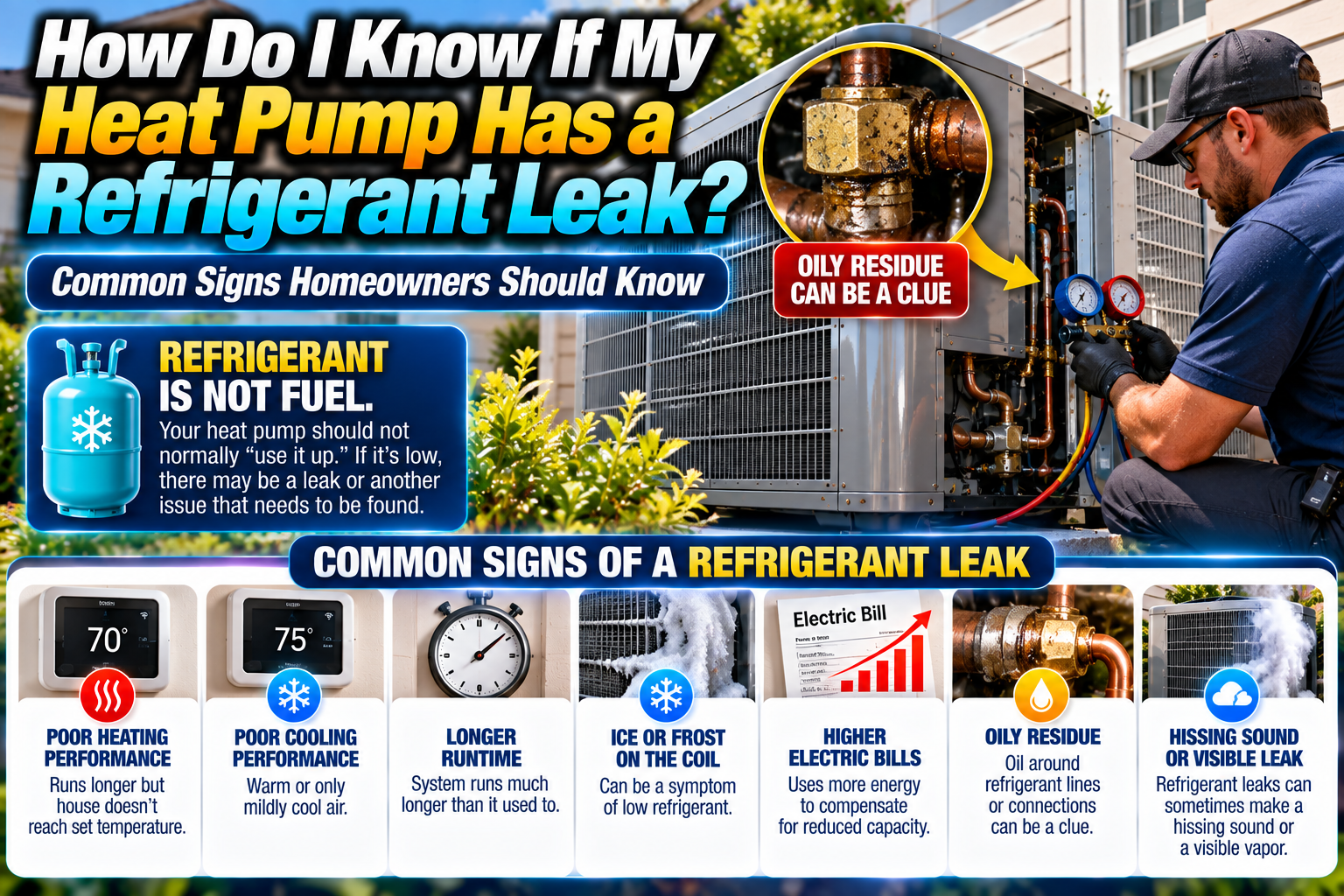
Your air conditioner relies on the correct refrigerant charge to absorb and move heat.
When refrigerant is low because of a leak, the system may experience abnormal pressures or freeze the evaporator coil. This can cause the unit to cycle on and off repeatedly.
Refrigerant doesn’t get “used up.” If levels are low, the leak should be located and repaired rather than simply adding more refrigerant.
4. Oversized Air Conditioner
Many homeowners assume that a bigger air conditioner will cool the house faster and better.
In reality, an oversized system can cool the thermostat area so quickly that it shuts off before the rest of the home reaches a comfortable temperature.
The result is:
- Frequent starts and stops
- Poor humidity control
- Uneven temperatures
- Increased wear on equipment
Proper system sizing is based on a detailed load calculation—not just the square footage of your home.
5. Dirty Condenser Coil
Your outdoor condenser releases heat collected from inside your home.
When the coil is covered with dirt, leaves, or debris, the system can’t release heat efficiently. This can increase operating pressures and contribute to irregular cycling.
Keeping the outdoor unit clean helps maintain proper performance.
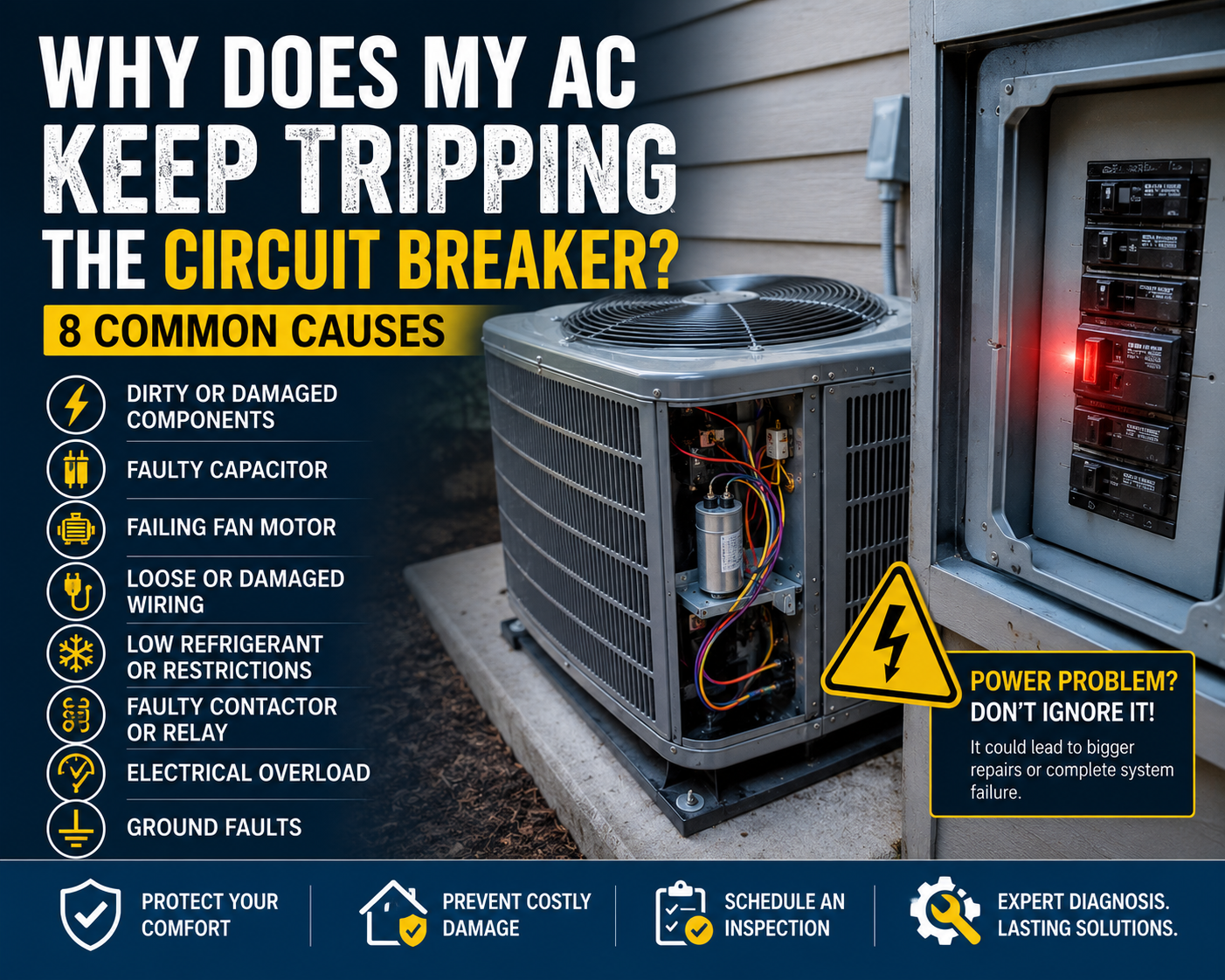
6. Electrical Component Failures
Modern HVAC systems rely on capacitors, contactors, relays, and control boards to operate correctly.
If one of these components begins to fail, the system may:
- Start unexpectedly
- Shut off prematurely
- Fail to complete a cooling cycle
Electrical issues require professional diagnosis because multiple components can produce similar symptoms.
7. Frozen Evaporator Coil
A frozen evaporator coil is often the result of restricted airflow or low refrigerant.
As ice builds on the coil, cooling performance drops. Safety controls may stop the compressor, then restart it after the ice begins to melt, creating repeated short cycles.
If you see ice on the refrigerant lines, turn the thermostat to OFF, switch the fan to ON, and allow the system to thaw before scheduling service.
What Homeowners Can Check
Before calling for service, there are several safe steps you can take:
- Replace a dirty air filter.
- Confirm the thermostat is set to Cool and Auto.
- Check that supply and return vents aren’t blocked by furniture or rugs.
- Make sure the outdoor unit has at least two feet of clearance from shrubs or debris.
- Listen for unusual noises that may indicate mechanical issues.
- Look for ice on the refrigerant lines.
If the system continues short cycling after these checks, professional diagnosis is recommended.
Comparison Table: Normal Cycling vs. Short Cycling
- Runs 10–20 minutes (normal) → runs only a few minutes (short cycling)
- Even cooling (normal) → uneven temperatures (short cycling)
- Reaches thermostat setting (normal) → struggles to reach set temperature (short cycling)
- Normal energy use (normal) → higher utility bills (short cycling)
- Normal equipment wear (normal) → increased wear on compressor and motors (short cycling)
From the Field: What We See Most Often
One of the first questions we ask homeowners is:
“When was the last time you changed your air filter?”
You’d be surprised how often the answer is, “I don’t remember.”
During summer service calls, it’s common to find systems short cycling because of restricted airflow. In many cases, replacing a heavily clogged filter and correcting the underlying airflow issue restores proper operation without the need for major repairs.
Other times, we discover a thermostat mounted in direct afternoon sunlight. The thermostat cools quickly, shuts the system off, and then calls for cooling again just a few minutes later.
These are good reminders that short cycling isn’t always caused by an expensive component failure—but it is always worth investigating.
Frequently Asked Questions
Can short cycling damage my air conditioner?
Yes. Frequent starts place additional stress on the compressor and electrical components, potentially shortening the system’s lifespan.
Will changing my air filter fix short cycling?
If restricted airflow is the cause, replacing the filter may improve performance. However, short cycling can also result from thermostat issues, refrigerant leaks, electrical problems, or improper system sizing.
Is short cycling dangerous?
While not usually dangerous, it should be addressed promptly because it reduces efficiency and increases wear on your HVAC system.
How long should my AC run during a normal cycle?
Many systems run between 10 and 20 minutes per cycle, though run times vary with outdoor temperatures, humidity, and home insulation.
In Summary
An air conditioner that constantly turns on and off is telling you that something isn’t right.
Whether it’s a dirty filter, thermostat issue, low refrigerant, or an oversized system, identifying the cause early can help protect your equipment, improve comfort, and reduce operating costs.
Ignoring short cycling allows unnecessary wear to continue—and what starts as a small issue can become a much larger repair over time.
Why Trust Advanced Heating & Air Conditioning?
Since 2008, Advanced Heating & Air Conditioning has helped homeowners and businesses throughout Temecula, Murrieta, Menifee, Winchester, Lake Elsinore, Hemet, Wildomar, French Valley, and surrounding communities diagnose and solve heating and cooling problems.
Our approach is simple: provide honest recommendations, quality workmanship, and the education homeowners need to make informed decisions about their HVAC systems.
Related Articles
- Why Is My Air Conditioner Running Constantly?
- Why Is My Air Conditioner Freezing Up?
- Why Is My Air Conditioner Blowing Warm Air?
- How Often Should You Change Your HVAC Air Filter?
- How Long Does an Air Conditioner Last?
- Should I Repair or Replace My Air Conditioner?
- How Often Should You Have Your HVAC System Serviced?