


Why Is My Furnace Blowing Cold Air? 10 Common Causes Every Homeowner Should Know
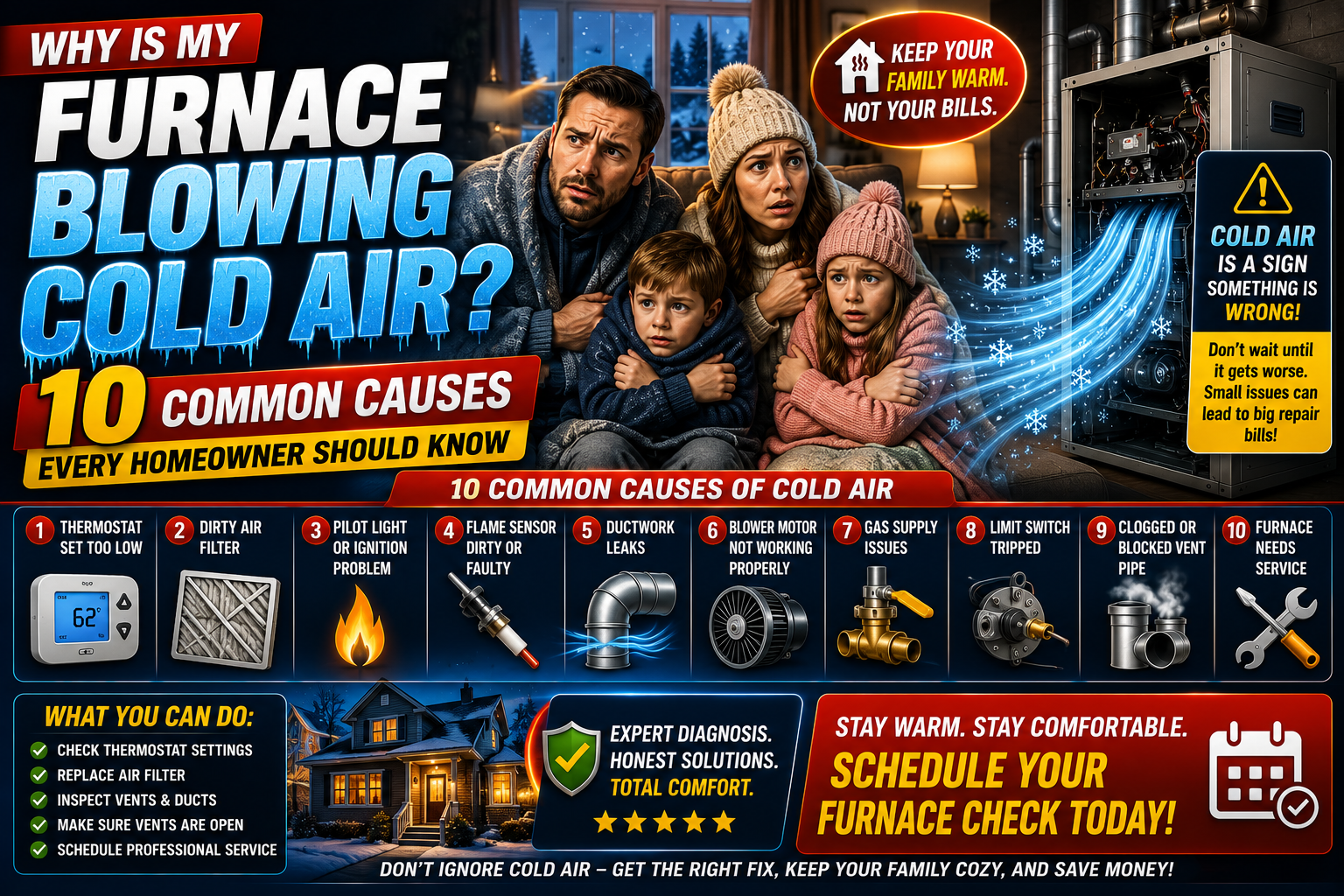
Why Is My Furnace Blowing Cold Air? 10 Common Causes Every Homeowner Should Know
Key Takeaways
- A furnace blowing cold air doesn’t always mean it has failed.
- Many heating issues are caused by dirty filters, thermostat settings, flame sensor problems, or airflow restrictions.
- Some issues are simple homeowner fixes, while others require professional diagnosis.
- Addressing problems early can help prevent larger repairs and improve system efficiency.
Table of Contents
- Is It Really Blowing Cold Air?
- Common Reasons Your Furnace Isn’t Heating
- What You Can Check Yourself
- When to Call an HVAC Professional
- Frequently Asked Questions
- From the Field
- Summary
Why Is My Furnace Blowing Cold Air?
Few things are more frustrating than turning on your heater on a cold morning only to feel cool air coming from the vents.
Before assuming the worst, it’s important to know that this is one of the most common heating concerns we receive throughout Temecula, Murrieta, Menifee, Winchester, Lake Elsinore, Hemet, Wildomar, French Valley, and surrounding communities.
The good news?
A furnace blowing cool air isn’t always a major repair.
Sometimes the cause is surprisingly simple.
Other times, it’s your furnace telling you that something needs attention before it becomes a bigger problem.
Let’s look at the most common causes.
1. Your Furnace Is in the Startup Cycle
This catches many homeowners by surprise.
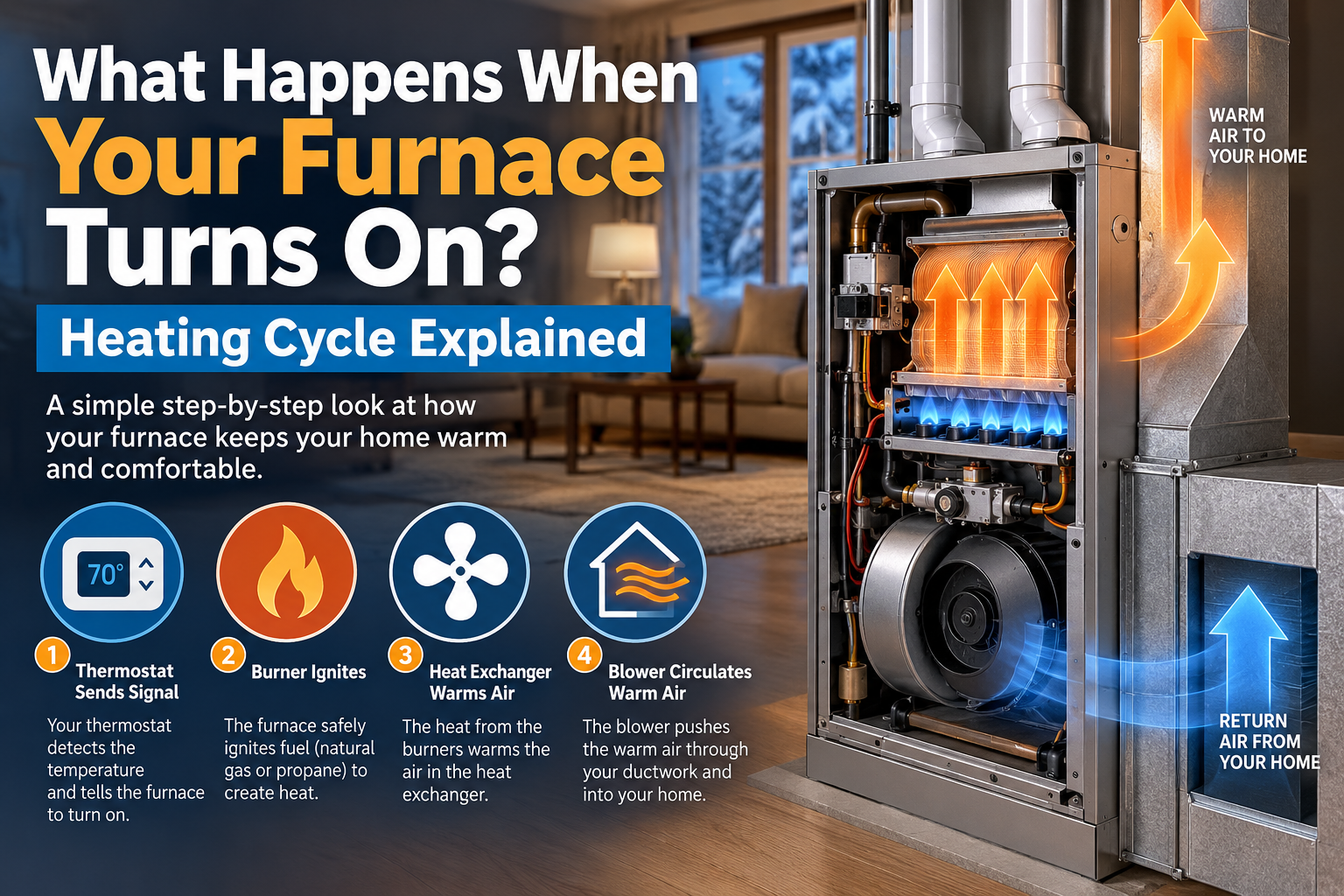
When your thermostat calls for heat, the furnace doesn’t immediately blow warm air.
Instead, it follows a sequence:
- Thermostat calls for heat.
- Inducer motor starts.
- Igniter heats up.
- Burners ignite.
- Heat exchanger warms.
- Blower motor starts.
This process can take a minute or two.
If you feel cool air only briefly at startup, this is completely normal.
2. Thermostat Fan Set to “ON”
This is one of the easiest problems to solve.
Many thermostats have two fan settings:
- AUTO
- ON
When set to ON, the blower runs continuously—even when the burners aren’t producing heat.
That means the system continues circulating room-temperature air through your home.
For most homeowners, AUTO is the preferred setting because the blower only operates during heating cycles.
3. Dirty Air Filter
A dirty filter restricts airflow through your furnace.
As airflow decreases:
- The furnace gets hotter.
- Safety switches may shut off the burners.
- The blower continues running.
- You feel cool air from the vents.
This safety feature protects the furnace from overheating.
Replacing a clogged filter is one of the simplest maintenance tasks homeowners can perform and can help prevent unnecessary heating problems.
4. Dirty Flame Sensor
The flame sensor is one of the most common causes of furnace service calls.
Its job is to verify that the burners have successfully ignited.
If the sensor becomes coated with carbon buildup, it may fail to detect the flame.
The furnace then shuts the burners off as a safety precaution while the blower continues to run.
Common symptoms include:
- Furnace starts then shuts off.
- Heat lasts only a few seconds.
- Cold air follows.
- Repeated attempts to restart.
Fortunately, cleaning or replacing a flame sensor is often a straightforward repair for a qualified technician.
5. Overheated Furnace
Your furnace contains safety switches that monitor internal temperatures.
If airflow becomes restricted because of:
- Dirty filters
- Closed vents
- Blocked return air
- Blower problems
…the furnace may overheat.
When that happens, the burners shut off while the blower continues running to cool the system.
The result feels like cold air coming from the vents.
6. Igniter Problems
Modern gas furnaces use electronic igniters instead of pilot lights.
If the igniter fails:
- The burners never ignite.
- The blower may still operate.
- No heat is produced.
A faulty igniter is a common repair, especially on older furnaces.
7. Gas Supply Issues
Without fuel, your furnace can’t produce heat.
Potential causes include:
- Closed gas valve
- Utility interruption
- Faulty gas valve
- Gas pressure issues
Because gas appliances involve safety considerations, these issues should always be diagnosed by a qualified professional.
8. Blower Motor Problems
Sometimes the burners are operating correctly, but the blower isn’t moving enough warm air through the home.
Blower motor issues may include:
- Weak airflow
- Intermittent operation
- Loud noises
- Complete blower failure
A professional inspection can determine whether the motor, capacitor, or another component is responsible.
9. Ductwork Problems
Your furnace may be producing plenty of heat, but damaged or disconnected ductwork can prevent warm air from reaching your living spaces.
Common duct issues include:
- Air leaks in the attic
- Disconnected ducts
- Poorly sealed joints
- Crushed flexible ductwork
These problems reduce efficiency and often create uneven heating throughout the home.
10. Aging Furnace Components
As furnaces age, multiple components begin wearing out.
A system nearing the end of its expected lifespan may experience:
- Frequent repairs
- Inconsistent heating
- Longer heating cycles
- Declining efficiency
Sometimes repairing the furnace makes sense.
Other times, replacing the equipment becomes the better long-term investment.
What Homeowners Can Check Before Calling for Service
Before scheduling an appointment, safely inspect the following:
- ✔ Verify the thermostat is set to HEAT.
- ✔ Set the fan to AUTO.
- ✔ Replace the air filter if it’s dirty.
- ✔ Make sure the furnace switch is on.
- ✔ Check the circuit breaker.
- ✔ Ensure supply and return vents aren’t blocked.
- ✔ Listen for unusual sounds during startup.
If the furnace still blows cold air after these checks, professional diagnosis is recommended.
Comparison Table
- Cold air all the time — Possible cause: igniter or gas issue. Professional service recommended? Yes.
- Cold air after several minutes — Possible cause: overheating. Professional service recommended? Yes.
- Furnace starts then stops — Possible cause: flame sensor. Professional service recommended? Usually.
- Weak warm airflow — Possible cause: dirty filter or blower issue. Professional service recommended? Often.
- Rooms heating unevenly — Possible cause: ductwork. Professional service recommended? Yes.
- Fan never shuts off — Possible cause: thermostat setting. Professional service recommended? Sometimes.
From the Field
One of the first things our technicians check during a “no heat” service call isn’t the furnace itself—it’s the thermostat and air filter.
You might be surprised how often homeowners accidentally switch the fan to ON instead of AUTO, causing the blower to circulate room-temperature air between heating cycles. We also find clogged filters that restrict airflow so severely the furnace overheats and shuts its burners off to protect itself.
On the other hand, we’ve also diagnosed cracked igniters, dirty flame sensors, and failing blower motors that required professional repairs.
The lesson is simple: don’t assume the worst, but don’t ignore the symptoms either. A furnace that’s blowing cold air is letting you know something isn’t working as intended.
Frequently Asked Questions
Why is my furnace running but not heating?
Common causes include thermostat settings, dirty filters, flame sensor issues, igniter failures, or overheating caused by restricted airflow.
Can a dirty filter really make my furnace blow cold air?
Yes. Reduced airflow can cause the furnace to overheat, triggering a safety switch that shuts off the burners while the blower continues running.
Is it normal to feel cool air when the furnace first starts?
Yes. During startup, the blower usually waits for the heat exchanger to warm. A brief period of cooler airflow can be normal.
Should I keep resetting my furnace?
No. If your furnace repeatedly shuts down or requires frequent resets, it’s best to have it inspected. Repeated resetting can delay proper diagnosis and may allow a more serious issue to worsen.
In Summary
A furnace blowing cold air isn’t always a sign that it needs to be replaced. In many cases, the cause is something relatively simple, such as a thermostat setting, dirty air filter, or flame sensor that needs cleaning.
The key is identifying the root cause rather than guessing. Addressing heating issues early can improve comfort, reduce energy use, and help avoid more costly repairs down the road.
Why Trust Advanced Heating & Air Conditioning?
Since 2008, Advanced Heating & Air Conditioning has helped homeowners and businesses throughout Temecula, Murrieta, Menifee, Winchester, Lake Elsinore, Hemet, Wildomar, French Valley, and surrounding communities stay comfortable year-round.
Our technicians take the time to diagnose heating problems thoroughly, explain what they find, and recommend solutions based on your system’s condition—not sales pressure. Whether your furnace needs a simple repair or you’re exploring replacement options, we’re here to provide honest guidance and dependable service.
Related Articles
- Is It Better to Repair or Replace Your Furnace? A Homeowner’s Complete Guide
- How Often Should You Have Your HVAC System Serviced?
- How Often Should You Change Your HVAC Air Filter?
- Does Closing Air Vents Save Money?
- Why Does My Air Conditioner Keep Turning On and Off?
- Why Is My Air Conditioner Running Constantly?
- Should I Repair or Replace My Air Conditioner?