


Heat Pump Myths: What Homeowners Really Need to Know
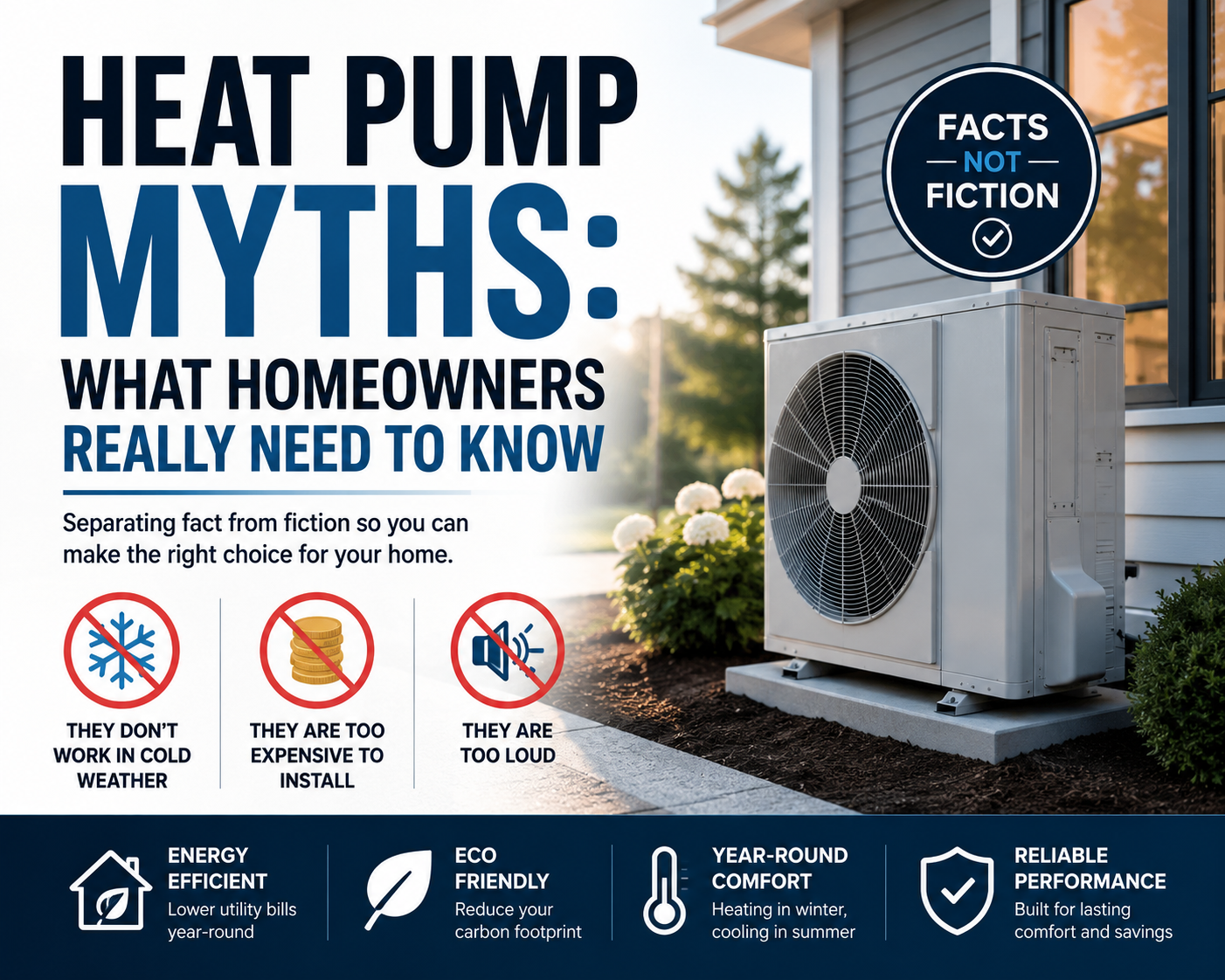
Heat Pump Myths: Separating Fact From Fiction
Heat pumps have become an increasingly popular option for homeowners looking for an efficient way to heat and cool their homes.
But as more homeowners hear about heat pumps, we also hear more misconceptions.
Some people believe heat pumps only provide heat. Others think they don’t work when temperatures get cold. Some homeowners assume a heat pump is simply another name for an air conditioner.
So what’s actually true?
At Advanced Heating & Air Conditioning, we believe homeowners should understand their options before making a major HVAC decision.
Let’s break down some of the most common heat pump myths.
Myth #1: Heat Pumps Only Heat Your Home
Despite the name, a heat pump can provide both heating and cooling.
During the summer, a heat pump operates similarly to an air conditioning system. It removes heat from inside your home and transfers it outdoors.
During colder weather, the process reverses.
The system extracts available heat from the outdoor air and transfers it into your home.
That means one HVAC system can provide:
- Cooling during hot Southern California summers
- Heating during cooler winter weather
- Year-round indoor comfort
For many homeowners, this versatility is one of the biggest advantages of installing a heat pump.
Myth #2: Heat Pumps Don’t Work When It’s Cold Outside
This is one of the most common misconceptions about heat pumps.
Modern heat pump technology has improved significantly.
A heat pump doesn’t need warm outdoor temperatures to operate. Heat energy can still be present in outdoor air even when the temperature feels cold to us.
The system is designed to capture that heat and transfer it indoors.
Performance depends on the specific equipment, system design, outdoor conditions, and installation.
Here in Temecula, Murrieta, Menifee, Lake Elsinore, Winchester, and surrounding Southern California communities, our generally moderate winters can make heat pumps an attractive option for many homes.
Myth #3: Heat Pumps Are Just Air Conditioners
Heat pumps and traditional air conditioners share some similarities, but they aren’t exactly the same.
A standard central air conditioner primarily cools your home.
A heat pump can reverse the refrigeration cycle, allowing the same system to provide both cooling and heating.
Think of it this way:
Air conditioner: primarily moves heat out of your home.
Heat pump: can move heat either out of or into your home.
That reversing capability is what makes a heat pump different.
Myth #4: Heat Pumps Can’t Handle Southern California Summers
Homeowners sometimes worry that a heat pump won’t provide enough cooling when temperatures climb.
A properly selected and installed heat pump can provide effective air conditioning.
The key phrase is properly selected and installed.
HVAC equipment should be matched to the needs of the home.
Factors that can affect system performance include:
- Home size
- Insulation
- Ductwork
- Window exposure
- Air leakage
- Ceiling height
- Equipment efficiency
- System sizing
- Installation quality
Simply installing the largest system available isn’t the answer.
Proper HVAC design matters.
Myth #5: Bigger Heat Pumps Are Always Better
This misconception applies to air conditioners, furnaces, and heat pumps.
Bigger is not automatically better.
An oversized HVAC system may reach the thermostat setting too quickly and shut down before completing an ideal operating cycle.
This can contribute to issues such as short cycling, inconsistent temperatures, unnecessary system wear, and comfort problems.
An undersized system can create problems as well because it may struggle to keep up with the home’s heating or cooling demand.
That’s why proper system sizing is so important.
A professional HVAC contractor should evaluate the home before recommending equipment.
Myth #6: Heat Pumps Use Too Much Electricity
Heat pumps do use electricity, but that doesn’t automatically mean they’re inefficient.
Unlike equipment that generates heat primarily through electric resistance, a heat pump typically works by moving heat from one location to another.
That’s an important distinction.
The actual operating cost of any HVAC system depends on many variables, including:
- Equipment efficiency
- Electricity rates
- Thermostat settings
- Home insulation
- Outdoor temperature
- Duct condition
- System maintenance
- Household comfort preferences
Rather than assuming one system will always cost less to operate, homeowners should compare the complete HVAC options available for their particular home.
Myth #7: Heat Pumps Are Noisy
Older HVAC equipment may have contributed to this reputation.
Modern heat pumps can operate relatively quietly when the equipment is properly selected, installed, and maintained.
However, unusual sounds should never simply be ignored.
Grinding, rattling, banging, screeching, or other new noises can indicate that something needs attention.
If your heat pump suddenly becomes noticeably louder, scheduling an HVAC inspection can help determine the cause.
Myth #8: Heat Pumps Don’t Need Maintenance
Heat pumps still require routine maintenance.
In fact, because a heat pump can operate during both heating and cooling seasons, regular maintenance is especially important.
Professional maintenance may include inspecting components, checking electrical connections, evaluating system operation, checking airflow, inspecting the outdoor unit, and looking for developing problems.
Homeowners should also pay attention to their air filters.
A dirty filter can restrict airflow and make it harder for the HVAC system to operate properly.
Regular maintenance doesn’t guarantee that a system will never need repairs, but it can help keep equipment operating properly and allow potential problems to be identified earlier.
Myth #9: Every Home Should Have a Heat Pump
Heat pumps can be an excellent choice, but that doesn’t mean every homeowner should automatically replace their existing HVAC equipment with one.
The right recommendation depends on the home.
Before choosing a new system, consider:
- Your existing HVAC equipment
- Age of your current system
- Condition of your ductwork
- Home size
- Comfort concerns
- Energy usage
- Budget
- Long-term plans for the home
- Available equipment options
A reputable HVAC contractor should explain your choices rather than automatically pushing one type of equipment.
Myth #10: All Heat Pump Installations Are Basically the Same
The equipment itself is only part of an HVAC installation.
Installation quality matters tremendously.
A high-quality system installed incorrectly may never perform the way it was designed to.
Proper installation can involve evaluating:
- Equipment sizing
- Refrigerant lines
- Electrical requirements
- Airflow
- Ductwork
- Drainage
- Thermostat compatibility
- Equipment placement
- Manufacturer installation requirements
Choosing the right contractor is just as important as choosing the right equipment.
What Are the Benefits of a Heat Pump?
Depending on the home and equipment selected, a heat pump may provide several advantages.
One System for Heating and Cooling
Instead of separate equipment performing completely different heating and cooling functions, a heat pump can provide both.
Energy-Efficient Operation
Heat pumps transfer heat rather than relying solely on generating it, which can make them an efficient HVAC option.
Year-Round Comfort
The same system can cool your home during summer and provide heat when temperatures drop.
Modern HVAC Technology
Today’s heat pumps offer advanced technology and efficiency options that weren’t available on many older HVAC systems.
Should You Replace Your Current HVAC System With a Heat Pump?
You don’t necessarily need to replace a functioning HVAC system simply because heat pumps are becoming more popular.
However, if your current system is getting older or you’re already considering replacement, it’s worth learning about your options.
You may want to discuss replacement if you’re experiencing:
- Frequent HVAC repairs
- Increasing energy bills
- Uneven temperatures
- Poor cooling performance
- Poor heating performance
- Excessive system noise
- An aging HVAC system
- Major component failure
The goal should be to determine which system makes the most sense for your home, not simply install whatever happens to be popular.
Heat Pumps in Temecula and Southwest Riverside County
Southern California presents unique HVAC demands.
Our summers can be extremely hot, while winters are generally much milder than many areas of the country.
That’s why homeowners in communities such as Temecula, Murrieta, Menifee, Lake Elsinore, Winchester, Hemet, and surrounding areas may want to consider heat pump technology when evaluating their next HVAC system.
Every home is different, however.
Equipment selection should be based on the actual needs of the property.
Frequently Asked Questions About Heat Pumps
Can a heat pump replace both my furnace and air conditioner?
Depending on the system design and the needs of your home, a heat pump can provide both heating and cooling. An HVAC professional can evaluate your existing system and explain the appropriate options.
Does a heat pump cool as well as an air conditioner?
A properly sized and installed heat pump can provide effective home cooling. The right equipment depends on factors such as home size, insulation, ductwork, and cooling requirements.
Are heat pumps good for Temecula homes?
Heat pumps can be a good option for many Southern California homes because they provide both heating and cooling. The best choice depends on the individual property and homeowner’s needs.
How long does a heat pump last?
Heat pump lifespan varies based on equipment quality, installation, usage, climate, maintenance, and other factors. Regular professional maintenance can help keep the system operating properly throughout its service life.
Do heat pumps still need air filters?
Yes. Maintaining proper airflow is important for heat pump performance. Homeowners should inspect and replace or clean their filters according to the filter type, household conditions, and equipment requirements.
Are heat pumps worth the investment?
They can be for many homeowners. The answer depends on your existing HVAC system, energy costs, equipment choices, installation costs, and long-term plans.
The Bottom Line
Heat pumps are sometimes misunderstood.
They aren’t simply heaters, and they aren’t exactly the same as traditional air conditioners.
Modern heat pumps can provide both heating and cooling from one system, making them an option worth considering for many Southern California homeowners.
The most important thing is choosing the right equipment for the home and making sure it’s properly installed.
If you’re considering replacing an older HVAC system, don’t make the decision based on myths.
Get the facts, compare your options, and choose the system that makes the most sense for your home.
Need Help Deciding if a Heat Pump Is Right for Your Home?
Advanced Heating & Air Conditioning helps homeowners understand their HVAC options without making the process complicated.
Whether you’re considering a heat pump, replacing an aging air conditioner, upgrading your heating system, or simply trying to determine whether your existing equipment has more life left, our team can evaluate your system and explain your options.
We proudly serve homeowners throughout Temecula, Murrieta, Menifee, Lake Elsinore, Winchester, Hemet, and surrounding communities.
Advanced Heating & Air Conditioning — serving the Temecula Valley and surrounding communities with professional heating and air conditioning services.
Contact our team to schedule an HVAC evaluation or request an estimate.