


Should I Repair or Replace My Air Conditioner?
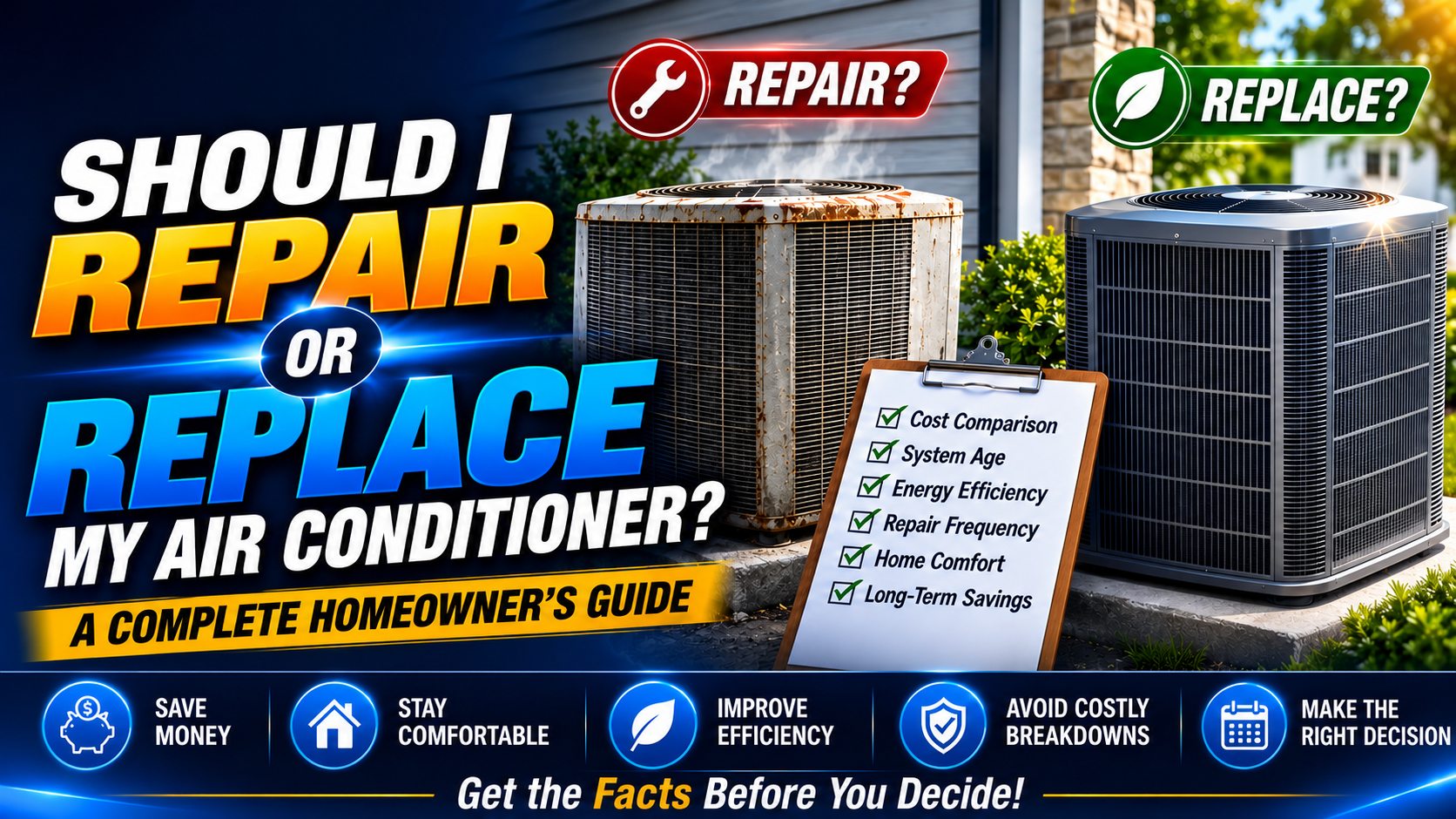
Should I Repair or Replace My Air Conditioner? A Complete Homeowner’s Guide
When your air conditioner stops working on a hot summer day, one of the first questions that comes to mind is:
“Should I repair it, or is it finally time to replace it?”
It’s one of the most common questions homeowners ask, and the answer isn’t always straightforward.
Sometimes, a simple repair can restore your system for years to come. Other times, continuing to invest in an aging unit can end up costing more than replacing it.
At Advanced Heating & Air Conditioning, we’ve helped homeowners throughout Temecula, Murrieta, Menifee, Lake Elsinore, Winchester, Hemet, and surrounding communities evaluate this decision. Every home and every HVAC system is different, so understanding the factors involved can help you make the right choice.
In this guide, we’ll explain:
- When repairing your AC makes sense
- When replacement may be the better investment
- The factors professionals consider
- How newer systems compare to older equipment
- Frequently asked questions homeowners ask before making a decision
There Isn’t a One-Size-Fits-All Answer
Many homeowners assume that once an air conditioner breaks, it automatically needs to be replaced.
Others continue repairing the same system year after year because they hope to get “just one more summer” out of it.
The reality usually falls somewhere in the middle.
A qualified HVAC technician will typically evaluate:
- Age of the system
- Overall condition
- Repair history
- Energy efficiency
- Type of refrigerant
- Cost of repair
- Expected remaining lifespan
- Homeowner’s long-term goals
These factors help determine whether repairing or replacing your equipment makes the most financial sense.
When Repairing Your Air Conditioner Makes Sense
In many situations, repairing your existing air conditioner is the smartest decision.
Your System Is Less Than 10 Years Old
Modern HVAC equipment is designed to provide many years of reliable service when properly maintained.
If your unit is relatively new and has been regularly serviced, repairing a failed component may restore it to normal operation.
The Repair Is Minor
Not every repair is expensive.
Examples of smaller repairs may include:
- Capacitor replacement
- Contactor replacement
- Thermostat replacement
- Electrical connection repairs
- Condensate drain cleaning
- Blower wheel cleaning
These repairs are often much less expensive than replacing an entire HVAC system.
Your System Has Been Reliable
If your air conditioner has only needed one or two repairs over many years of operation, there’s a good chance it still has useful life remaining.
A history of dependable performance is usually a positive sign.
Energy Bills Are Still Reasonable
If your home cools comfortably and your utility bills haven’t increased dramatically, your system may still be operating efficiently.
When Replacement May Be the Better Choice
There are situations where replacing your system deserves serious consideration.
Your System Is 15 Years Old or Older
Many residential air conditioners operate for 15 to 20 years, depending on maintenance, usage, and environmental conditions.
As equipment ages:
- Parts wear out
- Efficiency decreases
- Repairs become more frequent
- Replacement parts may become harder to find
Older systems often require larger investments to keep operating.
Frequent Repairs
If your air conditioner requires service every summer, the costs can add up quickly.
While each repair may seem manageable on its own, repeated expenses over several years can approach the cost of a new, more efficient system.
Your Utility Bills Keep Increasing
A noticeable increase in energy usage may indicate your HVAC system is working harder than it should.
Newer systems are generally more energy efficient than equipment installed 15 or 20 years ago.
Improved efficiency can reduce operating costs while improving indoor comfort.
Your Home Isn’t Comfortable
If some rooms are always too warm while others feel comfortable, your HVAC system may no longer be performing as effectively as it once did.
Comfort issues may be caused by:
- Aging equipment
- Improper sizing
- Airflow problems
- Ductwork issues
- Declining system performance
A professional evaluation can help determine the underlying cause.
Your System Uses R-22 Refrigerant
Many older air conditioners were designed to use R-22 refrigerant, which is no longer manufactured for new equipment.
While existing systems can still be repaired in some cases, R-22 has become increasingly expensive and less available.
If an older R-22 system develops a significant refrigerant leak, replacement may be a more practical long-term solution.
Understanding the “50% Rule”
You may have heard of the “50% Rule.”
This is a general guideline—not a strict rule.
It suggests that if the cost of a repair approaches half the value of an older system, it’s worth evaluating whether replacement offers better long-term value.
Every situation is different.
The right decision depends on:
- Equipment condition
- Expected lifespan
- Repair history
- Budget
- Long-term plans for the home
Advantages of Today’s HVAC Systems
Modern air conditioning systems offer significant improvements compared to equipment installed 15 or 20 years ago.
Depending on the model, newer systems may provide:
- Higher energy efficiency
- Quieter operation
- Better humidity control
- Improved airflow
- Variable-speed technology
- Smart thermostat compatibility
- More consistent temperatures
- Enhanced indoor comfort
These improvements can contribute to both comfort and energy savings.
Questions to Ask Before Making a Decision
Before choosing between repair and replacement, consider asking:
- How old is my system?
- What caused the current problem?
- Has this issue occurred before?
- How much longer is my equipment expected to last?
- Are replacement parts readily available?
- Will this repair improve reliability?
- How efficient is my current system?
- What are the long-term operating costs?
A trustworthy HVAC contractor should explain your options clearly and answer your questions without pressure.
Frequently Asked Questions
Is it worth repairing a 15-year-old air conditioner?
It depends on the condition of the equipment, the repair needed, and how well the system has been maintained. Some older systems continue operating reliably, while others may benefit from replacement.
How long should an air conditioner last?
Many central air conditioning systems last between 15 and 20 years when properly maintained.
Will a new air conditioner lower my electric bill?
Modern systems are generally more energy efficient than older equipment. Depending on your current system, replacing it may reduce energy consumption.
Can I replace just the outdoor unit?
In many situations, indoor and outdoor equipment is designed to operate together. A qualified HVAC professional can determine whether replacing one component is appropriate.
Should I replace my furnace and air conditioner at the same time?
If both systems are older and nearing the end of their expected lifespan, replacing them together may provide compatibility benefits and reduce future labor costs. However, every situation is unique.
Why Professional Evaluations Matter
Choosing between repairing and replacing an HVAC system is a significant decision.
A professional evaluation should include:
- Overall equipment condition
- Airflow testing
- Refrigerant inspection
- Electrical testing
- Temperature measurements
- Efficiency assessment
- Repair recommendations
- Replacement options when appropriate
The goal is to provide homeowners with accurate information so they can make the decision that best fits their needs and budget.
Conclusion
There is no universal answer to whether you should repair or replace your air conditioner.
For some homeowners, a simple repair restores years of dependable performance. For others, replacing an aging system may improve comfort, reduce operating costs, and provide greater long-term reliability.
Understanding the age of your equipment, repair history, energy efficiency, and overall condition can help guide that decision.
If you’re unsure which option makes the most sense, a professional HVAC inspection can provide the information you need to make a confident choice.
Why Trust Advanced Heating & Air Conditioning?
Since 2008, Advanced Heating & Air Conditioning has helped homeowners and businesses throughout Temecula, Murrieta, Menifee, Lake Elsinore, Winchester, Hemet, and surrounding communities solve heating and cooling challenges.
Our goal is simple: provide honest recommendations, quality workmanship, and educational resources that help homeowners make informed decisions about their comfort systems.