


Why Is My Air Conditioner Making a Loud Noise? 10 Common AC Sounds
Why Is My Air Conditioner Suddenly Making Noise?
Your air conditioner isn’t completely silent.
You may normally hear air moving through the vents, the outdoor unit starting, or the indoor blower operating.
But you know what your HVAC system normally sounds like.
When it suddenly starts buzzing, banging, rattling, screeching, grinding, clicking, or humming, it’s worth paying attention.
A new or unusually loud noise can sometimes be an early warning that a component is loose, worn, damaged, or beginning to fail.
Ignoring the sound could allow a relatively small problem to become a larger repair.
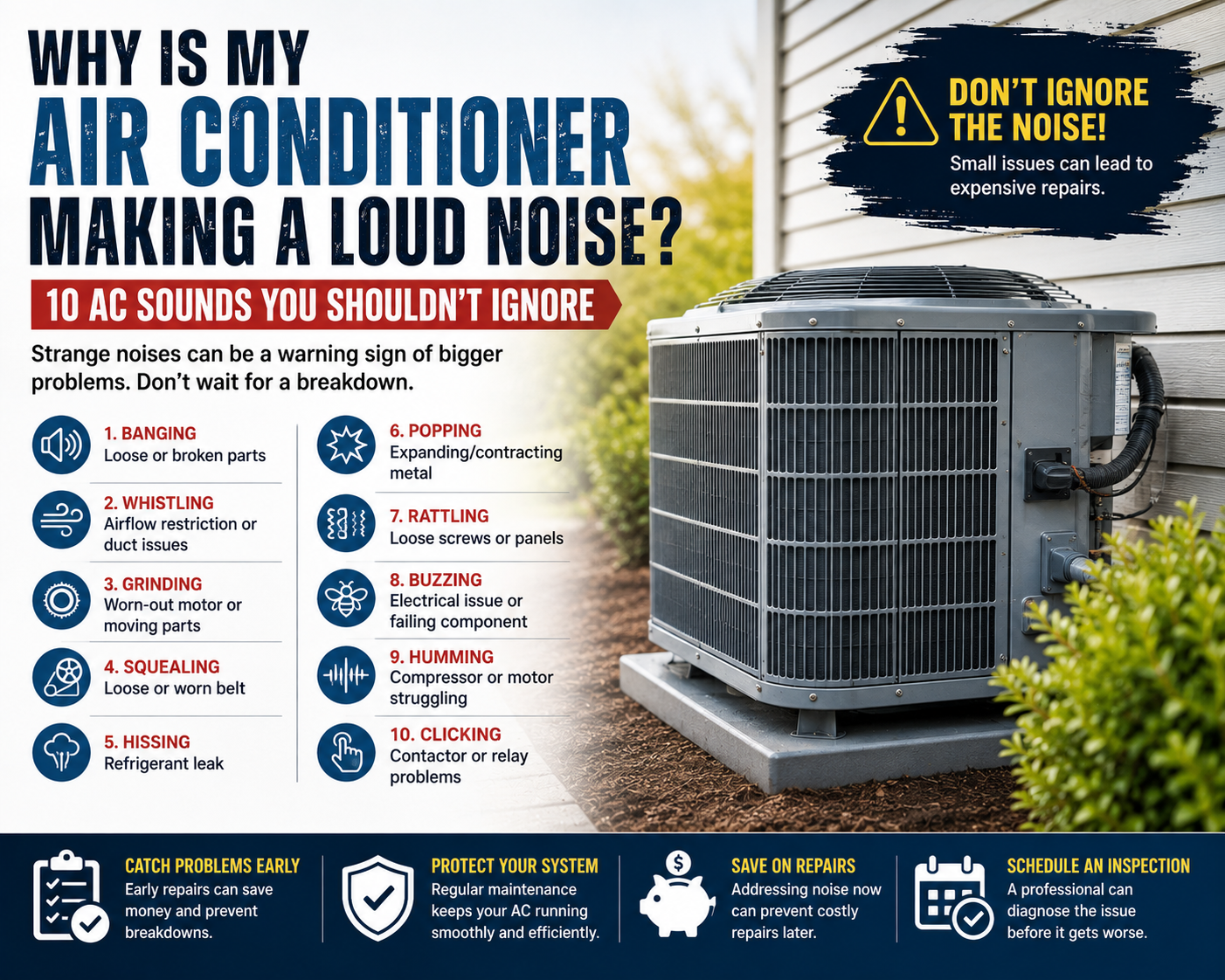
Here are 10 common AC noises homeowners may hear and what they could mean.
1. Buzzing
A buzzing sound can have several possible causes.
Depending on where the noise is coming from, possibilities may include:
- Loose electrical connections
- Contactor problems
- Capacitor issues
- Fan motor problems
- Compressor problems
- Loose components
- Electrical vibration
A brief sound when equipment starts isn’t necessarily the same as continuous loud buzzing.
If your outdoor AC unit suddenly begins buzzing loudly or the system isn’t starting properly, it should be inspected.
Electrical components inside HVAC equipment can remain hazardous even after the system is turned off.
Don’t remove electrical panels or attempt electrical repairs yourself.
2. Rattling
A rattling air conditioner may have something as simple as a loose panel.
But rattling can also indicate a developing mechanical problem.
Possible causes include:
- Loose screws
- Loose access panels
- Debris in the outdoor unit
- Worn motor components
- Fan problems
- Loose internal parts
Outdoor condensers are exposed to wind, leaves, dirt, landscaping debris, and weather.
If you hear rattling from the outdoor equipment, visually check the surrounding area for obvious debris — but don’t reach into the equipment.
If the sound continues, schedule an inspection.
3. Screeching or Squealing
A high-pitched screeching sound usually gets a homeowner’s attention quickly.
Possible sources can include:
- Blower motor
- Condenser fan motor
- Bearings
- Other moving components
Some HVAC equipment may make a brief sound during startup, but a new, persistent, or extremely loud screeching noise shouldn’t be considered normal.
A motor-related problem may become worse if the system continues operating.
4. Grinding
Grinding is a sound you generally don’t want to ignore.
It can indicate that moving mechanical components aren’t operating correctly.
Possible issues may involve:
- Motor bearings
- Blower assembly
- Fan motor
- Other mechanical components
Continuing to operate equipment that’s making a severe grinding sound could potentially cause additional damage.
If the noise is loud or persistent, turn the system off and have it inspected.
5. Banging
A banging sound may indicate that something has become loose or damaged inside the HVAC equipment.
Possible causes can include:
- Loose fan components
- Blower problems
- Motor problems
- Damaged internal components
- Compressor-related problems
The location and timing of the sound matter.
Does it happen when the system starts?
Does it continue while the AC runs?
Is it coming from the indoor equipment or outdoor condenser?
Providing these details to your HVAC technician can help with diagnosis.
6. Clicking
A single click when your air conditioner starts or stops can be normal.
Repeated clicking is different.
If you hear continuous clicking or the system repeatedly attempts to start, possibilities may include:
- Electrical control problems
- Contactor issues
- Thermostat problems
- Wiring issues
- Failed starting components
If the AC isn’t starting and you hear repeated clicking, avoid repeatedly adjusting the thermostat in an attempt to force the equipment to run.
Have the system checked.
7. Humming
HVAC equipment naturally produces some vibration and operating noise.
However, a loud new humming sound may indicate a problem.
Possible causes include:
- Electrical issues
- Capacitor problems
- Motor problems
- Contactor problems
- Compressor trouble
- A component struggling to start
One important clue is whether the system is actually running.
If the outdoor unit hums but the fan isn’t spinning or the system isn’t cooling, turn the equipment off and contact an HVAC professional.
8. Whistling
Whistling is often related to airflow.
Possible causes can include:
- Dirty air filter
- Restricted airflow
- Duct issues
- Air leaks
- Register or grille restrictions
If the whistling changes when doors are opened or when certain vents are adjusted, airflow may be involved.
Start by checking the air filter.
If the filter is clean and the noise continues, the duct system or airflow should be evaluated.
9. Hissing
A hissing sound can have several possible explanations.
Sometimes it’s simply air escaping through a small duct leak.
In other cases, hissing around HVAC equipment may require professional diagnosis.
Possible sources include:
- Duct leakage
- Airflow restrictions
- Refrigerant-related issues
- Pressure equalization after shutdown
Refrigerant systems shouldn’t be diagnosed based on sound alone.
If your AC is hissing and isn’t cooling properly, schedule professional service.
10. Bubbling or Gurgling
Bubbling or gurgling sounds can sometimes be associated with condensate drainage.
Air conditioning systems remove moisture from indoor air.
That moisture needs to drain properly.
If a condensate drain becomes partially blocked or another drainage issue develops, unusual water-related sounds may occur.
Other symptoms can include:
- Water near the indoor unit
- Overflowing drain pan
- AC shutting off
- Musty odors
- Water stains
Water around HVAC equipment should be investigated before it damages flooring, ceilings, walls, or surrounding materials.
Which AC Noises Are the Most Serious?
It’s impossible to diagnose an HVAC problem accurately from sound alone.
However, certain noises deserve prompt attention.
These include:
- Loud grinding
- Metal-on-metal sounds
- Severe screeching
- Repeated electrical buzzing
- Loud banging
- Hissing combined with poor cooling
- Any noise accompanied by a burning smell
- Any noise followed by the circuit breaker tripping
If the equipment sounds severely abnormal, turning it off until it can be inspected may help prevent additional damage.
Why Did My AC Suddenly Become Loud?
HVAC equipment contains many components that operate together.
As equipment ages, parts can:
- Loosen
- Wear
- Overheat
- Become dirty
- Lose lubrication where applicable
- Develop electrical problems
- Experience mechanical failure
Sometimes the noise begins gradually.
Other times, a component fails suddenly.
This is one reason homeowners should pay attention when their HVAC system starts sounding different.
Your system may be giving you an early warning.
Can a Dirty Air Filter Make My AC Noisy?
It can contribute to airflow-related noise.
When a filter becomes excessively dirty, the HVAC system may have difficulty moving the amount of air it was designed to handle.
You might notice:
- Whistling
- Increased airflow noise
- Reduced airflow from vents
- Longer operating cycles
- Comfort problems
Check your filter regularly and replace or clean it as appropriate for the type of filter your system uses.
Can Dirty Outdoor Equipment Cause Noise?
Potentially.
Leaves, sticks, or other debris can sometimes enter or interfere with outdoor equipment.
Outdoor condenser coils can also become dirty over time.
Homeowners can keep the area around the condenser clear of vegetation and obvious debris.
However, don’t remove equipment panels or reach into the condenser.
If something appears to be inside the unit or the fan is making unusual noises, have it professionally inspected.
Should I Turn My AC Off If It’s Making a Loud Noise?
That depends on the sound.
A slight new rattle may not require the same response as severe grinding or banging.
However, if the system is making a very loud, abnormal mechanical or electrical noise, shutting it off until it can be inspected can be the safer choice.
Turn the system off and call for professional help if you notice:
- Grinding
- Loud banging
- Severe screeching
- Burning smell
- Smoke
- Electrical arcing
- Breaker repeatedly tripping
- Fan striking another component
Continuing to run damaged equipment can sometimes turn one failed component into multiple damaged components.
Can AC Maintenance Prevent Strange Noises?
Maintenance can’t prevent every possible HVAC failure.
But routine professional inspections can help identify certain developing problems.
During maintenance, a technician may inspect:
- Motors
- Electrical components
- Capacitors
- Wiring connections
- Blower components
- Outdoor equipment
- Indoor equipment
- Drainage
- Airflow
- Overall system operation
A loose connection or worn component may sometimes be identified before it causes a complete breakdown.
Why AC Noises Often Show Up During Temecula Valley Summers
Hot Southern California weather puts significant demand on air conditioning equipment.
During periods of high temperatures, your AC may run for extended periods throughout the day.
That extra operating time can expose weaknesses in aging components.
A motor that’s beginning to fail may become louder.
A loose component may start rattling.
An electrical component may begin buzzing.
A struggling system may suddenly produce noises you’ve never heard before.
That’s why unusual AC sounds during summer shouldn’t automatically be dismissed as “the system working hard.”
Frequently Asked Questions About Noisy Air Conditioners
Why is my AC making a loud buzzing noise?
Buzzing can be associated with electrical components, motors, capacitors, contactors, compressors, or loose parts. If the buzzing is new, loud, or accompanied by poor cooling, the system should be professionally inspected.
Why is my outside AC unit making a rattling sound?
Possible causes include loose panels, debris, fan issues, motor problems, or loose internal components. Keep the area around the condenser clear and schedule service if the noise continues.
Why does my AC make a loud noise when it starts?
Startup noises can sometimes involve electrical starting components, motors, the compressor, or loose equipment. A technician can determine whether the sound is normal for the equipment or indicates a problem.
Is a noisy AC compressor bad?
Not every compressor sound means the compressor has failed. However, a sudden change in compressor noise, especially grinding, banging, or unusually loud humming, should be evaluated.
Why is my AC whistling?
Whistling often points toward an airflow issue. Check the air filter first. If the filter is clean, the duct system, registers, return airflow, and equipment may need inspection.
Can I continue running my AC if it’s making noise?
It depends on the noise and cause. Mild airflow sounds aren’t the same as severe grinding, banging, electrical buzzing, or screeching. If the sound is severe or accompanied by burning odors, smoke, or electrical problems, shut the system off and seek professional assistance.
Does a Noisy Air Conditioner Mean I Need a New System?
Not necessarily.
Many noises can be caused by repairable components.
The decision to repair or replace an air conditioner should consider the entire system, including:
- Age
- Overall condition
- Repair history
- Cost of the current repair
- Equipment efficiency
- Availability of appropriate replacement components
- Comfort problems
- Long-term plans for the home
A noisy system should first be properly diagnosed.
Once you know what’s actually wrong, you can make an informed repair-or-replacement decision.
AC Repair in Temecula, Murrieta and Surrounding Communities
When your air conditioner starts making a sound you’ve never heard before, don’t ignore it and hope it disappears.
Advanced Heating & Air Conditioning provides professional air conditioning service throughout:
- Temecula
- Murrieta
- Menifee
- Lake Elsinore
- Winchester
- Hemet
- Anza
- And surrounding communities
Whether you’re dealing with a buzzing condenser, rattling equipment, poor airflow, an AC that isn’t cooling, or a complete system breakdown, proper diagnosis is the first step.
The Bottom Line
Your air conditioner will naturally make some noise while operating.
But new, unusually loud, or persistent sounds deserve attention.
Buzzing may point toward an electrical problem.
Rattling may indicate something is loose.
Whistling may suggest an airflow issue.
Grinding or banging can signal a more serious mechanical problem.
The sound itself is a clue — not a complete diagnosis.
If something sounds wrong, have the system inspected before a developing problem becomes a major repair.
Hearing a Strange AC Noise? We Can Help.
If your air conditioner is buzzing, rattling, grinding, screeching, humming, clicking, or simply doesn’t sound right, Advanced Heating & Air Conditioning can diagnose the problem.
Our team provides professional AC repair, maintenance, installation, and HVAC replacement services throughout the Temecula Valley and surrounding communities.
We’ll evaluate the system, explain what we find, and help you understand your repair or replacement options.
Contact Advanced Heating & Air Conditioning to schedule HVAC service.
Why Is My Air Conditioner Suddenly Making Noise?
Your air conditioner isn’t completely silent.
You may normally hear air moving through the vents, the outdoor unit starting, or the indoor blower operating.
But you know what your HVAC system normally sounds like.
When it suddenly starts buzzing, banging, rattling, screeching, grinding, clicking, or humming, it’s worth paying attention.
A new or unusually loud noise can sometimes be an early warning that a component is loose, worn, damaged, or beginning to fail.
Ignoring the sound could allow a relatively small problem to become a larger repair.
Here are 10 common AC noises homeowners may hear and what they could mean.
1. Buzzing
A buzzing sound can have several possible causes.
Depending on where the noise is coming from, possibilities may include:
- Loose electrical connections
- Contactor problems
- Capacitor issues
- Fan motor problems
- Compressor problems
- Loose components
- Electrical vibration
A brief sound when equipment starts isn’t necessarily the same as continuous loud buzzing.
If your outdoor AC unit suddenly begins buzzing loudly or the system isn’t starting properly, it should be inspected.
Electrical components inside HVAC equipment can remain hazardous even after the system is turned off.
Don’t remove electrical panels or attempt electrical repairs yourself.
2. Rattling
A rattling air conditioner may have something as simple as a loose panel.
But rattling can also indicate a developing mechanical problem.
Possible causes include:
- Loose screws
- Loose access panels
- Debris in the outdoor unit
- Worn motor components
- Fan problems
- Loose internal parts
Outdoor condensers are exposed to wind, leaves, dirt, landscaping debris, and weather.
If you hear rattling from the outdoor equipment, visually check the surrounding area for obvious debris — but don’t reach into the equipment.
If the sound continues, schedule an inspection.
3. Screeching or Squealing
A high-pitched screeching sound usually gets a homeowner’s attention quickly.
Possible sources can include:
- Blower motor
- Condenser fan motor
- Bearings
- Other moving components
Some HVAC equipment may make a brief sound during startup, but a new, persistent, or extremely loud screeching noise shouldn’t be considered normal.
A motor-related problem may become worse if the system continues operating.
4. Grinding
Grinding is a sound you generally don’t want to ignore.
It can indicate that moving mechanical components aren’t operating correctly.
Possible issues may involve:
- Motor bearings
- Blower assembly
- Fan motor
- Other mechanical components
Continuing to operate equipment that’s making a severe grinding sound could potentially cause additional damage.
If the noise is loud or persistent, turn the system off and have it inspected.
5. Banging
A banging sound may indicate that something has become loose or damaged inside the HVAC equipment.
Possible causes can include:
- Loose fan components
- Blower problems
- Motor problems
- Damaged internal components
- Compressor-related problems
The location and timing of the sound matter.
Does it happen when the system starts?
Does it continue while the AC runs?
Is it coming from the indoor equipment or outdoor condenser?
Providing these details to your HVAC technician can help with diagnosis.
6. Clicking
A single click when your air conditioner starts or stops can be normal.
Repeated clicking is different.
If you hear continuous clicking or the system repeatedly attempts to start, possibilities may include:
- Electrical control problems
- Contactor issues
- Thermostat problems
- Wiring issues
- Failed starting components
If the AC isn’t starting and you hear repeated clicking, avoid repeatedly adjusting the thermostat in an attempt to force the equipment to run.
Have the system checked.
7. Humming
HVAC equipment naturally produces some vibration and operating noise.
However, a loud new humming sound may indicate a problem.
Possible causes include:
- Electrical issues
- Capacitor problems
- Motor problems
- Contactor problems
- Compressor trouble
- A component struggling to start
One important clue is whether the system is actually running.
If the outdoor unit hums but the fan isn’t spinning or the system isn’t cooling, turn the equipment off and contact an HVAC professional.
8. Whistling
Whistling is often related to airflow.
Possible causes can include:
- Dirty air filter
- Restricted airflow
- Duct issues
- Air leaks
- Register or grille restrictions
If the whistling changes when doors are opened or when certain vents are adjusted, airflow may be involved.
Start by checking the air filter.
If the filter is clean and the noise continues, the duct system or airflow should be evaluated.
9. Hissing
A hissing sound can have several possible explanations.
Sometimes it’s simply air escaping through a small duct leak.
In other cases, hissing around HVAC equipment may require professional diagnosis.
Possible sources include:
- Duct leakage
- Airflow restrictions
- Refrigerant-related issues
- Pressure equalization after shutdown
Refrigerant systems shouldn’t be diagnosed based on sound alone.
If your AC is hissing and isn’t cooling properly, schedule professional service.
10. Bubbling or Gurgling
Bubbling or gurgling sounds can sometimes be associated with condensate drainage.
Air conditioning systems remove moisture from indoor air.
That moisture needs to drain properly.
If a condensate drain becomes partially blocked or another drainage issue develops, unusual water-related sounds may occur.
Other symptoms can include:
- Water near the indoor unit
- Overflowing drain pan
- AC shutting off
- Musty odors
- Water stains
Water around HVAC equipment should be investigated before it damages flooring, ceilings, walls, or surrounding materials.
Which AC Noises Are the Most Serious?
It’s impossible to diagnose an HVAC problem accurately from sound alone.
However, certain noises deserve prompt attention.
These include:
- Loud grinding
- Metal-on-metal sounds
- Severe screeching
- Repeated electrical buzzing
- Loud banging
- Hissing combined with poor cooling
- Any noise accompanied by a burning smell
- Any noise followed by the circuit breaker tripping
If the equipment sounds severely abnormal, turning it off until it can be inspected may help prevent additional damage.
Why Did My AC Suddenly Become Loud?
HVAC equipment contains many components that operate together.
As equipment ages, parts can:
- Loosen
- Wear
- Overheat
- Become dirty
- Lose lubrication where applicable
- Develop electrical problems
- Experience mechanical failure
Sometimes the noise begins gradually.
Other times, a component fails suddenly.
This is one reason homeowners should pay attention when their HVAC system starts sounding different.
Your system may be giving you an early warning.
Can a Dirty Air Filter Make My AC Noisy?
It can contribute to airflow-related noise.
When a filter becomes excessively dirty, the HVAC system may have difficulty moving the amount of air it was designed to handle.
You might notice:
- Whistling
- Increased airflow noise
- Reduced airflow from vents
- Longer operating cycles
- Comfort problems
Check your filter regularly and replace or clean it as appropriate for the type of filter your system uses.
Can Dirty Outdoor Equipment Cause Noise?
Potentially.
Leaves, sticks, or other debris can sometimes enter or interfere with outdoor equipment.
Outdoor condenser coils can also become dirty over time.
Homeowners can keep the area around the condenser clear of vegetation and obvious debris.
However, don’t remove equipment panels or reach into the condenser.
If something appears to be inside the unit or the fan is making unusual noises, have it professionally inspected.
Should I Turn My AC Off If It’s Making a Loud Noise?
That depends on the sound.
A slight new rattle may not require the same response as severe grinding or banging.
However, if the system is making a very loud, abnormal mechanical or electrical noise, shutting it off until it can be inspected can be the safer choice.
Turn the system off and call for professional help if you notice:
- Grinding
- Loud banging
- Severe screeching
- Burning smell
- Smoke
- Electrical arcing
- Breaker repeatedly tripping
- Fan striking another component
Continuing to run damaged equipment can sometimes turn one failed component into multiple damaged components.
Can AC Maintenance Prevent Strange Noises?
Maintenance can’t prevent every possible HVAC failure.
But routine professional inspections can help identify certain developing problems.
During maintenance, a technician may inspect:
- Motors
- Electrical components
- Capacitors
- Wiring connections
- Blower components
- Outdoor equipment
- Indoor equipment
- Drainage
- Airflow
- Overall system operation
A loose connection or worn component may sometimes be identified before it causes a complete breakdown.
Why AC Noises Often Show Up During Temecula Valley Summers
Hot Southern California weather puts significant demand on air conditioning equipment.
During periods of high temperatures, your AC may run for extended periods throughout the day.
That extra operating time can expose weaknesses in aging components.
A motor that’s beginning to fail may become louder.
A loose component may start rattling.
An electrical component may begin buzzing.
A struggling system may suddenly produce noises you’ve never heard before.
That’s why unusual AC sounds during summer shouldn’t automatically be dismissed as “the system working hard.”
Frequently Asked Questions About Noisy Air Conditioners
Why is my AC making a loud buzzing noise?
Buzzing can be associated with electrical components, motors, capacitors, contactors, compressors, or loose parts. If the buzzing is new, loud, or accompanied by poor cooling, the system should be professionally inspected.
Why is my outside AC unit making a rattling sound?
Possible causes include loose panels, debris, fan issues, motor problems, or loose internal components. Keep the area around the condenser clear and schedule service if the noise continues.
Why does my AC make a loud noise when it starts?
Startup noises can sometimes involve electrical starting components, motors, the compressor, or loose equipment. A technician can determine whether the sound is normal for the equipment or indicates a problem.
Is a noisy AC compressor bad?
Not every compressor sound means the compressor has failed. However, a sudden change in compressor noise, especially grinding, banging, or unusually loud humming, should be evaluated.
Why is my AC whistling?
Whistling often points toward an airflow issue. Check the air filter first. If the filter is clean, the duct system, registers, return airflow, and equipment may need inspection.
Can I continue running my AC if it’s making noise?
It depends on the noise and cause. Mild airflow sounds aren’t the same as severe grinding, banging, electrical buzzing, or screeching. If the sound is severe or accompanied by burning odors, smoke, or electrical problems, shut the system off and seek professional assistance.
Does a Noisy Air Conditioner Mean I Need a New System?
Not necessarily.
Many noises can be caused by repairable components.
The decision to repair or replace an air conditioner should consider the entire system, including:
- Age
- Overall condition
- Repair history
- Cost of the current repair
- Equipment efficiency
- Availability of appropriate replacement components
- Comfort problems
- Long-term plans for the home
A noisy system should first be properly diagnosed.
Once you know what’s actually wrong, you can make an informed repair-or-replacement decision.
AC Repair in Temecula, Murrieta and Surrounding Communities
When your air conditioner starts making a sound you’ve never heard before, don’t ignore it and hope it disappears.
Advanced Heating & Air Conditioning provides professional air conditioning service throughout:
- Temecula
- Murrieta
- Menifee
- Lake Elsinore
- Winchester
- Hemet
- Anza
- And surrounding communities
Whether you’re dealing with a buzzing condenser, rattling equipment, poor airflow, an AC that isn’t cooling, or a complete system breakdown, proper diagnosis is the first step.
The Bottom Line
Your air conditioner will naturally make some noise while operating.
But new, unusually loud, or persistent sounds deserve attention.
Buzzing may point toward an electrical problem.
Rattling may indicate something is loose.
Whistling may suggest an airflow issue.
Grinding or banging can signal a more serious mechanical problem.
The sound itself is a clue — not a complete diagnosis.
If something sounds wrong, have the system inspected before a developing problem becomes a major repair.
Hearing a Strange AC Noise? We Can Help.
If your air conditioner is buzzing, rattling, grinding, screeching, humming, clicking, or simply doesn’t sound right, Advanced Heating & Air Conditioning can diagnose the problem.
Our team provides professional AC repair, maintenance, installation, and HVAC replacement services throughout the Temecula Valley and surrounding communities.
We’ll evaluate the system, explain what we find, and help you understand your repair or replacement options.
Contact Advanced Heating & Air Conditioning to schedule HVAC service.