


Why Is My Air Conditioner Leaking Water? 8 Common Causes Explained
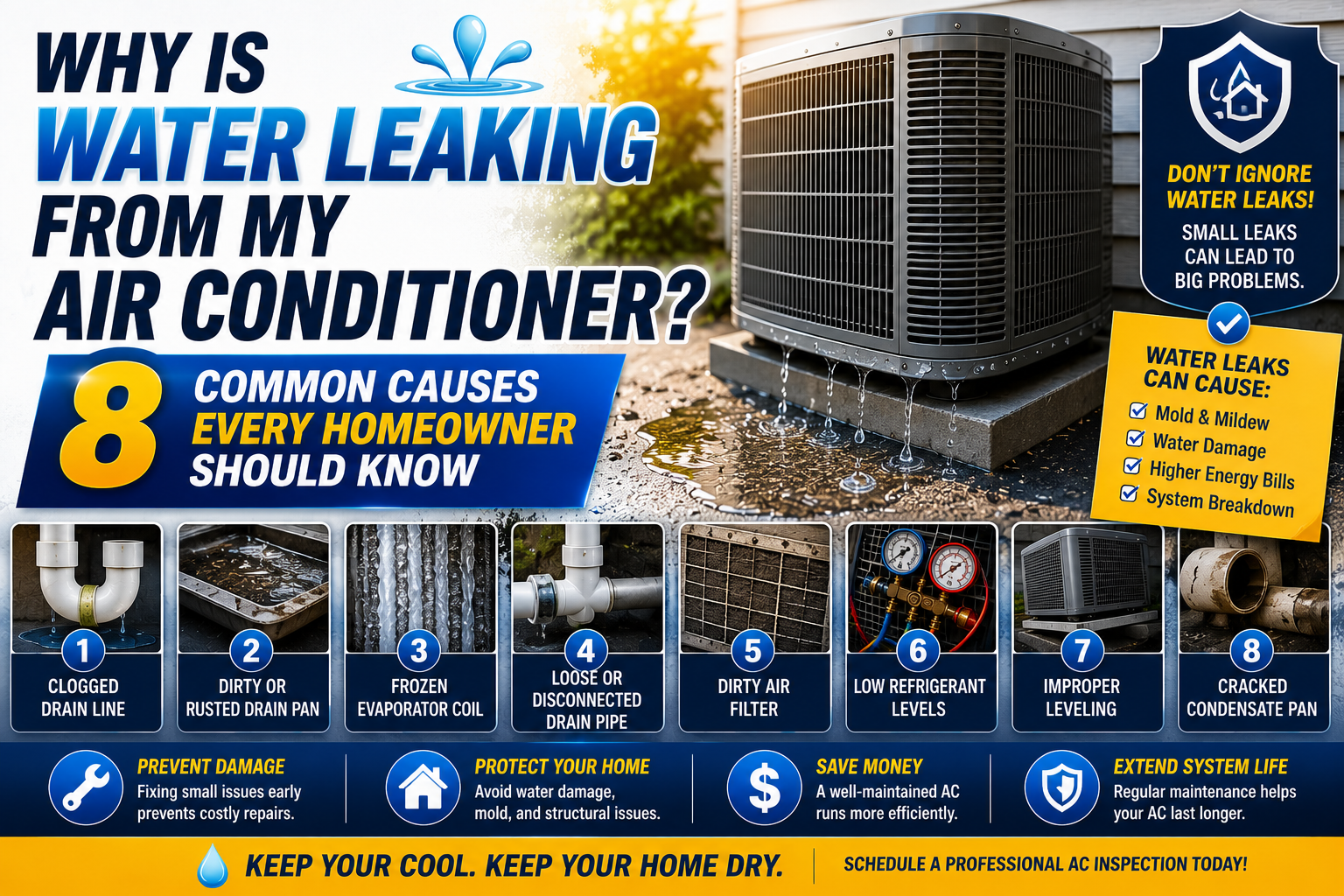
Why Is Water Leaking From My Air Conditioner? 8 Common Causes Every Homeowner Should Know
Key Takeaways
- Water leaking from your air conditioner is never something to ignore.
- A clogged condensate drain line is one of the most common causes.
- Dirty air filters can cause the evaporator coil to freeze and leak water.
- Some leaks are simple maintenance issues, while others require professional repair.
- Routine HVAC maintenance can prevent many water-related problems before they damage your home.
Table of Contents
- Why Air Conditioners Produce Water
- Is Water Ever Normal?
- Eight Common Causes of AC Water Leaks
- What Homeowners Can Check
- When Water Damage Becomes Serious
- Frequently Asked Questions
- From the Field
- Summary
Why Is My Air Conditioner Leaking Water?
Discovering water around your indoor air conditioner can be alarming.
Many homeowners immediately assume something major has failed.
Fortunately, that’s not always the case.
In fact, water leaks are one of the most common HVAC service calls we receive throughout Temecula, Murrieta, Menifee, Winchester, Lake Elsinore, Wildomar, French Valley, Hemet, and surrounding communities.
Some causes are relatively simple, while others require professional diagnosis.
Understanding why your system is leaking can help you respond quickly and potentially prevent costly water damage to ceilings, walls, flooring, or cabinetry.
Why Does an Air Conditioner Produce Water?
Many homeowners don’t realize that producing water is actually a normal part of the cooling process.
Here’s why.
As warm indoor air passes across the cold evaporator coil, moisture in the air condenses into water—just like water droplets forming on the outside of a cold drink on a hot day.
That condensation drips into a drain pan.
From there, it flows through a condensate drain line and safely exits your home.
When everything works correctly…
You should never notice the water.
Leaks occur when something interrupts that drainage process.
Is It Ever Normal to See Water Around Your AC?
The answer depends on where the water is located.
Normal
- ✔ Water draining outside your home
- ✔ Moisture on outdoor refrigerant lines during humid weather
- ✔ Condensation around the outdoor condenser
Not Normal
- ❌ Water dripping from the indoor unit
- ❌ Wet ceilings
- ❌ Water around the furnace or air handler
- ❌ Standing water inside the utility closet
- ❌ Water stains on drywall
These situations should be investigated.
1. Clogged Condensate Drain Line
This is by far the most common cause of indoor AC leaks.
Over time, the drain line can become clogged with:
- Dust
- Dirt
- Slime
- Mold
- Algae
- Debris
Once the blockage becomes severe enough, water backs up into the drain pan.
Eventually it overflows into your home.
Common signs include:
- Water around the furnace
- Wet floor
- Musty odor
- AC still cooling normally
Fortunately, clogged drain lines can often be cleared before significant damage occurs.
2. Dirty Air Filter
Many homeowners are surprised to learn that a dirty air filter can eventually lead to a water leak.
Here’s how.
Restricted airflow causes the evaporator coil to become excessively cold.
Instead of simply removing humidity, the coil begins freezing.
When the system cycles off…
The ice melts.
Large amounts of water suddenly drain into the pan, sometimes faster than it can handle.
The result?
Water around your indoor unit.
3. Frozen Evaporator Coil
A frozen coil deserves its own section because it can develop for several reasons.
Including:
- Dirty air filter
- Low refrigerant
- Blower motor problems
- Dirty evaporator coil
- Blocked airflow
As the ice melts, homeowners often discover puddles beneath the equipment.
Many assume the drain line is clogged when the actual issue is the frozen coil.
4. Cracked or Rusted Drain Pan
Older HVAC systems sometimes develop rust inside the condensate pan.
Over years of use:
- Corrosion develops
- Small cracks appear
- Water slowly leaks
Instead of flowing into the drain line…
It leaks directly into your home.
Older systems are especially susceptible to this issue.
5. Low Refrigerant
Low refrigerant doesn’t directly create water.
However…
It often causes the evaporator coil to freeze.
Once that ice melts, excessive water enters the drain system.
If refrigerant is low, there is usually a leak somewhere in the sealed refrigeration system that should be professionally diagnosed and repaired.
6. Broken Condensate Pump
Some homes use a condensate pump instead of relying on gravity to move water outside.
If that pump fails:
- Water remains inside the reservoir
- The reservoir overflows
- Water leaks around the indoor unit
Fortunately, condensate pumps are relatively straightforward to test and replace when necessary.
7. Improper Installation
Although less common, installation issues can also contribute to water leaks.
Examples include:
- Drain line installed incorrectly
- Improper equipment leveling
- Poor drain slope
- Loose drain fittings
Even a small installation issue can affect how water drains from the system.
8. Extremely High Humidity
Southern California occasionally experiences periods of elevated humidity, especially during monsoon conditions.
Higher humidity means your air conditioner removes more moisture from the indoor air.
That increases the amount of condensation flowing through the drain system.
If the drain line is already partially restricted, these conditions can make a leak more noticeable.
Why You Should Never Ignore a Water Leak
Many homeowners place a towel under the leak and continue using the system.
Unfortunately, that can allow hidden damage to develop.
Water leaks may eventually damage:
- Drywall
- Wood flooring
- Cabinets
- Baseboards
- Insulation
- Carpeting
- Ceiling materials
Moisture can also contribute to mold growth if not addressed promptly.
What Homeowners Can Safely Check
If you notice water around your indoor HVAC equipment, there are several things you can safely inspect before calling for service.
These simple checks may help identify the cause and prevent additional water damage.
1. Inspect the Air Filter
A clogged air filter is one of the most common contributors to frozen evaporator coils and water leaks.
Remove the filter and look for:
- Heavy dust buildup
- Pet hair
- Discoloration
- Reduced airflow through the filter
If the filter appears dirty, replace it with the correct size and type recommended for your HVAC system.
Changing the filter regularly is one of the easiest ways to protect your equipment.
2. Look for Ice
Inspect the refrigerant lines and indoor evaporator coil if visible.
Signs of freezing include:
- Ice on copper refrigerant lines
- Frost on the indoor coil
- Ice inside the air handler
If ice is present, turn the thermostat to OFF and switch the fan to ON. Running the fan helps thaw the ice before a technician arrives.
Never chip or scrape ice off the coil, as this can damage delicate aluminum fins and refrigerant tubing.
3. Check Around the Indoor Unit
Look for:
- Water beneath the furnace
- Water around the air handler
- Wet insulation
- Damp drywall
- Water stains
- Rust around the drain pan
These clues help determine how long the leak has been occurring.
4. Locate the Drain Line
Many homes have a white PVC condensate drain line near the indoor unit.
Look for:
- Water dripping where it shouldn’t
- Standing water
- Visible algae
- Signs of blockage
If you notice water backing up, avoid attempting to force the clog deeper into the line.
What You Should NOT Do
Water leaks may appear simple, but several common mistakes can create larger problems.
Avoid:
- ❌ Continuing to operate a frozen system
- ❌ Pouring harsh chemicals into the drain
- ❌ Opening sealed refrigerant components
- ❌ Ignoring recurring leaks
- ❌ Assuming the leak will stop on its own
- ❌ Waiting until water damages drywall or flooring
The earlier a leak is addressed, the easier it often is to correct.
Air Conditioner Leak Troubleshooting Guide
- Water around furnace — Possible cause: clogged drain line. Professional service recommended? Usually.
- Ice on refrigerant line — Possible cause: low airflow or refrigerant issue. Professional service recommended? Yes.
- Wet ceiling — Possible cause: drain blockage or installation issue. Professional service recommended? Yes.
- Water only during cooling — Possible cause: condensate drainage problem. Professional service recommended? Often.
- Water after AC shuts off — Possible cause: frozen coil melting. Professional service recommended? Yes.
- Musty odor — Possible cause: standing water in drain system. Professional service recommended? Recommended.
- Overflowing drain pan — Possible cause: blocked drain or pump failure. Professional service recommended? Yes.
- Water near condensate pump — Possible cause: pump malfunction. Professional service recommended? Usually.
How Routine Maintenance Helps Prevent Water Leaks
Many causes of indoor water leaks develop gradually over months or even years.
During a professional maintenance visit, technicians typically inspect:
- Condensate drain line
- Drain pan condition
- Evaporator coil
- Airflow
- Blower motor
- Refrigerant charge
- Temperature split
- Float safety switch
- Condensate pump (if equipped)
- Air filter condition
Routine maintenance helps identify drainage issues before they become water damage inside your home.
From the Field: What We See Most Often
One of the most common summertime service calls begins with a homeowner saying:
“There was a puddle next to the furnace this morning.”
In many of these cases, the air conditioner is still cooling the home normally.
The real problem is a clogged condensate drain line that has slowly become blocked by dust, algae, or debris over time.
We also frequently find frozen evaporator coils caused by dirty air filters. As the ice melts, homeowners often believe the unit has suddenly started leaking, when the actual problem began days or even weeks earlier.
The good news is that many of these issues can be identified during routine maintenance before they cause water damage.
Why Professional Diagnosis Matters
Several different HVAC problems can produce nearly identical symptoms.
For example:
A puddle beneath your indoor unit could be caused by:
- A clogged drain line
- A frozen evaporator coil
- Low refrigerant
- A cracked drain pan
- A failed condensate pump
- Improper installation
Without a thorough inspection, replacing parts based solely on the leak can lead to unnecessary repairs.
Professional testing helps identify the actual source of the problem.
Frequently Asked Questions
Is it normal for my air conditioner to drip water outside?
Yes.
Condensation draining outside is completely normal during the cooling season.
Why is my AC leaking water inside the house?
Common causes include clogged drain lines, frozen evaporator coils, dirty air filters, cracked drain pans, or condensate pump failures.
Can I still run my air conditioner if it’s leaking?
If the leak is minor, the system may continue operating, but doing so can increase the risk of water damage. If you notice ice on the system, turn the cooling off and run the fan to allow the coil to thaw before having it inspected.
Can a dirty air filter really cause water leaks?
Yes.
Restricted airflow can cause the evaporator coil to freeze. When the ice melts, large amounts of water can overwhelm the drainage system.
How often should the condensate drain be cleaned?
During annual HVAC maintenance, technicians typically inspect and clean the condensate drain as needed. Homes in dusty environments or with heavy AC use may benefit from more frequent inspections.
Homeowner Tips to Help Prevent Water Leaks
- Replace air filters every 1–3 months.
- Schedule professional HVAC maintenance each year.
- Keep the condensate drain line clear.
- Address airflow issues promptly.
- Watch for signs of ice on refrigerant lines.
- Don’t ignore small puddles around the indoor unit.
- Install a float safety switch if your system doesn’t already have one.
- Respond quickly to water stains or musty odors.
In Summary
While your air conditioner naturally produces condensation, water should never leak into your home.
Most indoor leaks are caused by clogged drain lines, frozen evaporator coils, dirty filters, or drainage system problems.
Understanding these common causes can help homeowners recognize warning signs early and reduce the risk of expensive water damage.
Routine maintenance, timely filter changes, and prompt attention to leaks all play an important role in protecting both your HVAC system and your home.
Why Trust Advanced Heating & Air Conditioning?
Since 2008, Advanced Heating & Air Conditioning has proudly served homeowners and businesses throughout Temecula, Murrieta, Menifee, Winchester, Lake Elsinore, Hemet, Wildomar, French Valley, and surrounding communities.
Our experienced technicians believe homeowners deserve honest recommendations and clear explanations—not confusing technical jargon. Whether you’re dealing with a leaking air conditioner, poor cooling performance, or planning preventative maintenance, we’re committed to helping you make informed decisions about your comfort system.
Related Articles
Continue learning with these helpful resources from our HVAC Learning Center:
- Why Is My Air Conditioner Freezing Up? 7 Common Causes Every Homeowner Should Know
- Why Is My Air Conditioner Blowing Warm Air? 10 Common Causes Every Homeowner Should Know
- Why Is My Air Conditioner Running Constantly? 10 Reasons Your AC Won’t Shut Off
- Why Is My Air Conditioner So Loud? 9 Noises You Should Never Ignore
- Should I Repair or Replace My Air Conditioner? A Complete Homeowner’s Guide
- How Often Should You Have Your HVAC System Serviced?
- How Long Does an Air Conditioner Last? A Homeowner’s Guide to HVAC Life Expectancy