


Why Is My Air Conditioner So Loud? 9 AC Noises You Should Never Ignore
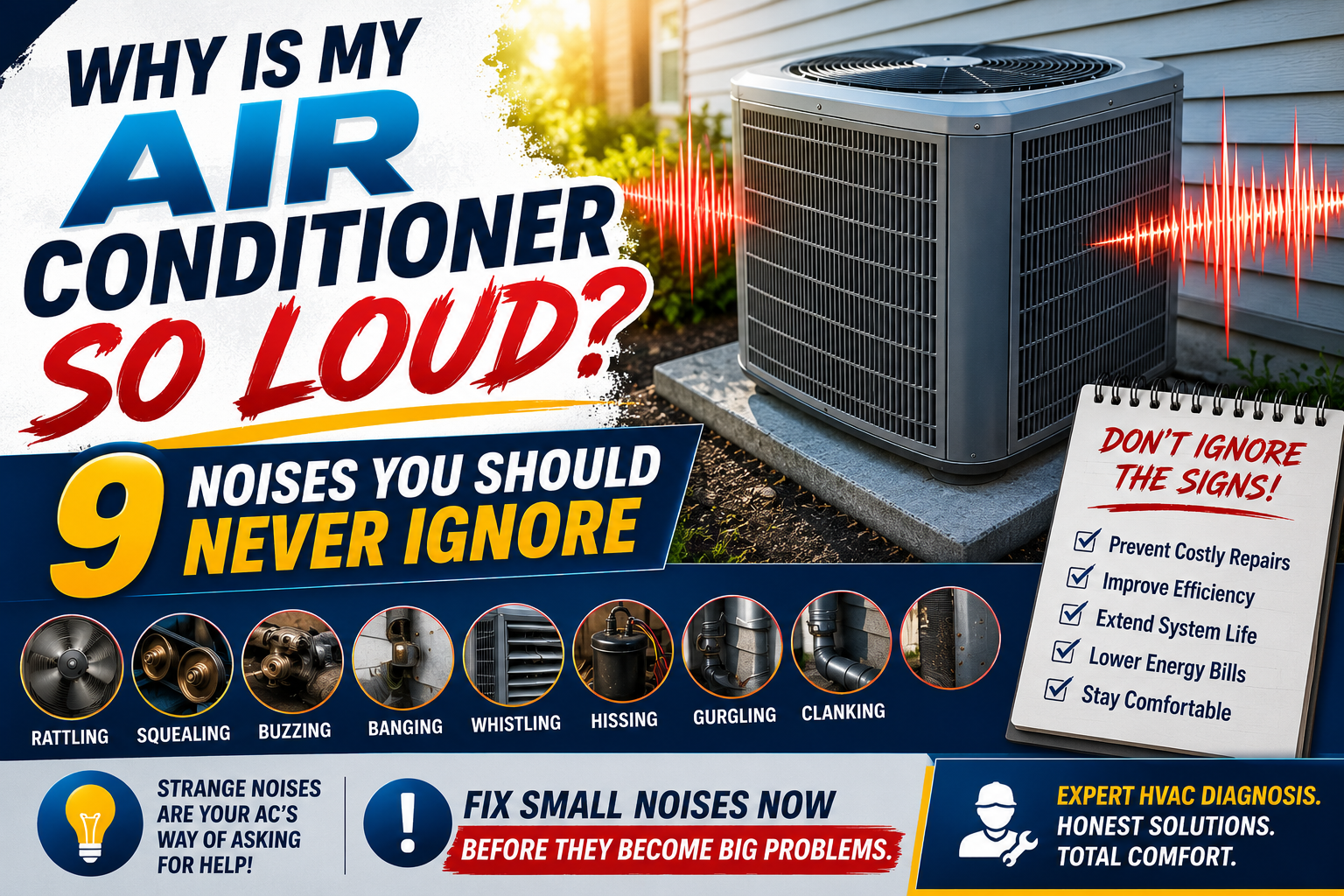
Why Is My Air Conditioner So Loud? 9 Noises You Should Never Ignore
Key Takeaways
- Some HVAC noises are completely normal, while others may indicate a developing mechanical or electrical issue.
- Banging, grinding, screeching, and hissing should never be ignored.
- Dirty components, loose parts, airflow restrictions, and worn bearings are among the most common causes of loud air conditioners.
- Addressing unusual noises early may help prevent more extensive repairs.
- Annual HVAC maintenance can often identify small issues before they become larger problems.
Table of Contents
- Why Air Conditioners Make Noise
- When HVAC Sounds Are Normal
- Nine Common AC Noises Explained
- What Homeowners Can Check
- When It’s Time to Call a Professional
- Frequently Asked Questions
- From the Field
- Summary
Why Is My Air Conditioner So Loud?
Your air conditioner isn’t supposed to be completely silent.
Every HVAC system makes some level of noise while operating. You may hear the fan start, the compressor engage, or the gentle movement of air through your ductwork.
These are all perfectly normal.
But when your air conditioner suddenly begins making loud banging, buzzing, squealing, grinding, or rattling noises, it’s trying to tell you something.
Ignoring unusual sounds can allow small problems to become much larger—and potentially more expensive—repairs.
At Advanced Heating & Air Conditioning, unusual HVAC noises are one of the most common reasons homeowners throughout Temecula, Murrieta, Menifee, Winchester, Lake Elsinore, Wildomar, French Valley, Hemet, and surrounding communities schedule service.
Fortunately, many of these sounds have recognizable causes.
Let’s break down what each one may mean.
How Your Air Conditioner Normally Sounds
Before discussing problem noises, it’s helpful to understand what’s considered normal.
A properly operating air conditioner typically produces:
- A gentle rush of air from the vents
- A low humming sound from the outdoor unit
- A soft click when the thermostat starts or stops a cooling cycle
- A brief compressor startup sound
These noises should be relatively consistent and shouldn’t become dramatically louder over time.
If your system suddenly sounds different than it did last month, it’s worth paying attention.
Why HVAC Systems Become Noisy
Air conditioners contain dozens of moving parts.
- Motors
- Bearings
- Fan blades
- Electrical contactors
- Compressors
- Blower wheels
- Belts (on some commercial systems)
As these components age, loosen, wear, or become dirty, they often begin making sounds before they fail completely.
Think of unusual noises as your HVAC system’s early warning system.
Catching problems early can often reduce repair costs and minimize downtime.
1. Banging or Clanking Sounds
A loud banging noise is one of the most concerning sounds homeowners report.
Possible causes include:
- Loose blower wheel
- Broken fan blade
- Damaged compressor components
- Loose motor mounts
- Internal compressor failure
Sometimes the problem is as simple as loose hardware.
Other times, it can indicate significant mechanical wear.
If you hear repeated metal-on-metal banging, it’s best to turn the system off and schedule an inspection.
2. Buzzing Sounds
Buzzing is extremely common.
Possible causes include:
- Loose electrical connections
- Weak contactor
- Failing capacitor
- Dirty condenser coil
- Loose access panels
- Debris touching the fan
Electrical components naturally wear over time.
While a buzzing sound doesn’t always indicate an emergency, it shouldn’t be ignored.
3. Clicking Sounds
A single click when your thermostat starts the cooling cycle is completely normal.
Repeated clicking, however, may indicate:
- Faulty thermostat
- Electrical relay issues
- Failing contactor
- Control board problems
If the unit repeatedly clicks but never starts, professional diagnosis is recommended.
4. Hissing Sounds
A hissing sound can have several causes.
Sometimes it’s simply refrigerant moving through the system.
Other times, it may indicate:
- Refrigerant leak
- Leaking valve
- High-pressure leak
- Duct leakage
Because refrigerant systems operate under pressure, any suspected leak should be inspected by a qualified HVAC technician.
5. Screeching or Squealing
High-pitched squealing usually points to moving mechanical components.
Common causes include:
- Worn motor bearings
- Failing blower motor
- Indoor fan motor problems
- Belt wear (on systems equipped with belts)
Ignoring these sounds may eventually lead to complete motor failure.
Replacing worn bearings early can often prevent more extensive repairs.
6. Grinding Sounds
Grinding is never considered normal.
This sound often indicates:
- Motor bearing failure
- Blower motor damage
- Compressor wear
- Metal components contacting one another
Grinding noises should be inspected as soon as possible because continued operation may cause additional damage.
7. Rattling Sounds
Rattling is one of the most common homeowner complaints.
Potential causes include:
- Loose screws
- Vibrating access panels
- Small debris inside the outdoor unit
- Loose fan components
- Aging equipment
Sometimes tightening hardware solves the problem.
Other times, rattling may indicate a more significant issue that requires professional attention.
8. Humming That Gets Louder
A light humming sound is normal.
However, if humming suddenly becomes much louder, it could indicate:
- Compressor difficulty starting
- Electrical issues
- Capacitor problems
- Fan motor strain
Changes in normal operating sounds are often more important than the volume itself.
9. Popping Noises
Occasional popping can occur as metal ductwork expands and contracts with temperature changes.
Frequent loud popping may indicate:
- Duct pressure issues
- Loose duct connections
- Airflow restrictions
- Static pressure problems
A professional airflow evaluation can help determine the cause.
Why You Shouldn’t Ignore New HVAC Noises
Most air conditioners don’t fail without warning.
Instead, they often give subtle clues that something isn’t quite right.
Addressing unusual noises early may help:
- Prevent more extensive damage
- Improve energy efficiency
- Reduce the likelihood of unexpected breakdowns
- Extend the life of your HVAC system
- Maintain indoor comfort throughout the cooling season
What Homeowners Can Safely Check
If your air conditioner has started making an unusual noise, there are a few simple things you can inspect before scheduling service. These checks are safe for most homeowners and may help identify an obvious issue.
1. Check Your Air Filter
A dirty air filter can restrict airflow and force your HVAC system to work harder than necessary. While it may not directly create loud mechanical noises, restricted airflow can contribute to other problems that eventually lead to unusual sounds.
If your filter looks dirty or clogged, replace it with the correct size and MERV rating recommended for your system.
2. Look Around the Outdoor Unit
Your outdoor condenser needs plenty of airflow to operate efficiently.
Inspect the area for:
- Leaves
- Grass clippings
- Small branches
- Plastic bags
- Toys
- Landscaping growing too close
Even a small object touching the fan guard can create an annoying rattling or buzzing sound.
3. Make Sure All Vents Are Open
Closed supply vents can increase static pressure inside your duct system.
Higher pressure may contribute to:
- Whistling
- Popping ductwork
- Reduced airflow
- Longer run times
Keeping vents open allows your HVAC system to move air the way it was designed.
4. Listen Carefully
Try to determine:
- Is the noise coming from the indoor unit?
- The outdoor condenser?
- Inside the ductwork?
- A specific room?
The location of the sound can provide valuable information during diagnosis.
What You Should NOT Do
While homeowners can perform basic inspections, certain repairs should always be left to trained HVAC professionals.
Avoid:
- ❌ Opening electrical compartments
- ❌ Touching wiring
- ❌ Attempting refrigerant repairs
- ❌ Continuing to run a system making grinding or banging noises
- ❌ Ignoring repeated breaker trips
- ❌ Spraying high-pressure water directly into electrical components
Operating a damaged system can sometimes turn a relatively minor repair into a much larger one.
HVAC Noise Guide
- Banging — Possible cause: loose or broken internal components. Call a professional? Yes.
- Buzzing — Possible cause: electrical issue, capacitor, debris. Call a professional? Usually.
- Clicking — Possible cause: thermostat or electrical relay. Call a professional? If repeated.
- Hissing — Possible cause: refrigerant leak or valve issue. Call a professional? Yes.
- Squealing — Possible cause: motor bearings or blower motor. Call a professional? Yes.
- Grinding — Possible cause: motor or compressor damage. Call a professional? Immediately.
- Rattling — Possible cause: loose hardware or debris. Call a professional? Often.
- Loud Humming — Possible cause: capacitor or compressor issue. Call a professional? Yes.
- Popping — Possible cause: expanding ductwork or airflow issues. Call a professional? Sometimes.
Can HVAC Maintenance Prevent Loud Noises?
In many cases, yes.
Routine maintenance allows technicians to inspect and service components before excessive wear develops.
During a professional maintenance visit, technicians may:
- Tighten electrical connections
- Inspect capacitors
- Check contactors
- Lubricate applicable components
- Inspect blower wheels
- Measure motor amp draw
- Check refrigerant pressures
- Inspect condenser fan motors
- Clean evaporator and condenser coils
- Verify proper airflow
- Test thermostat operation
Small adjustments made during maintenance often prevent larger repairs later.
From the Field: What We See Most Often
One of the most common service calls we receive during the summer starts with a homeowner saying:
“My air conditioner has been making a strange noise for a few weeks, but it was still cooling, so I figured it wasn’t a big deal.”
In many cases, the system continues cooling even though a component is beginning to fail.
We’ve found that unusual sounds often appear before homeowners notice reduced cooling performance.
Loose fan blades, worn capacitors, failing blower motors, dirty coils, and airflow restrictions are all issues that may first show up as a new or unusual noise.
Catching these problems early often allows repairs to be completed before they affect comfort or lead to more extensive damage.
Why Professional Diagnosis Matters
Modern HVAC systems contain electrical, mechanical, and refrigeration components that all work together.
Two air conditioners making the exact same sound may actually have completely different problems.
For example:
A buzzing sound could be:
- A failing capacitor
- Loose wiring
- A worn contactor
- Debris contacting the fan
- Compressor issues
Without proper testing, replacing parts based on the sound alone can lead to unnecessary repairs.
Professional diagnosis helps identify the actual cause before any work is recommended.
Frequently Asked Questions
Is it normal for an air conditioner to make noise?
Yes. Every HVAC system produces some sound while operating. Gentle airflow, compressor startup, and fan operation are all normal.
Why does my AC make a loud banging sound when it starts?
This may indicate loose internal components, damaged fan blades, or compressor issues. If the noise repeats each time the system starts, it should be inspected.
Can a dirty air filter make my AC noisy?
Indirectly, yes. Restricted airflow can increase stress on motors and other components, sometimes leading to additional noises over time.
Should I turn my air conditioner off if it’s making grinding noises?
Yes.
Grinding noises are often associated with motor or bearing failure. Continuing to operate the system may cause additional damage.
Why does my ductwork pop?
Metal ductwork naturally expands and contracts as temperatures change.
Occasional popping is usually normal.
Frequent loud popping may indicate airflow or static pressure problems that should be evaluated.
Homeowner Tips for a Quieter HVAC System
- Replace air filters regularly.
- Keep the outdoor unit free of debris.
- Schedule annual HVAC maintenance.
- Listen for changes in normal operating sounds.
- Don’t ignore new noises that continue over several days.
- Address small repairs before they become major issues.
- Keep furniture from blocking supply and return vents.
- Trim vegetation around the outdoor condenser.
In Summary
While every air conditioner makes some noise, new or unusually loud sounds should never be ignored.
Buzzing, banging, squealing, grinding, hissing, and repeated clicking often indicate that a component needs attention.
Many HVAC problems begin with subtle warning signs long before the system stops cooling.
By recognizing these sounds early and scheduling routine maintenance, homeowners can often reduce repair costs, improve system performance, and extend the life of their HVAC equipment.
Why Trust Advanced Heating & Air Conditioning?
Since 2008, Advanced Heating & Air Conditioning has proudly served homeowners and businesses throughout Temecula, Murrieta, Menifee, Winchester, Lake Elsinore, Hemet, Wildomar, French Valley, and surrounding communities.
Our technicians believe that informed homeowners make better decisions. That’s why we focus on honest recommendations, quality workmanship, and educational resources that help you understand your heating and cooling system—not just fix it.
Whether you’re dealing with an unusual HVAC noise, reduced cooling performance, or planning preventative maintenance, our experienced team is here to help keep your home comfortable year-round.
Related Articles
Continue learning with these homeowner resources from our HVAC Learning Center:
- Why Is My Air Conditioner Freezing Up? 7 Common Causes Every Homeowner Should Know
- Why Is My Air Conditioner Blowing Warm Air? 10 Common Causes Every Homeowner Should Know
- Why Is My Air Conditioner Running Constantly? 10 Reasons Your AC Won’t Shut Off
- How Long Does an Air Conditioner Last? A Homeowner’s Guide to HVAC Life Expectancy
- Should I Repair or Replace My Air Conditioner? A Complete Homeowner’s Guide
- How Often Should You Have Your HVAC System Serviced?