


How Long Does an Air Conditioner Last? Expert HVAC Guide
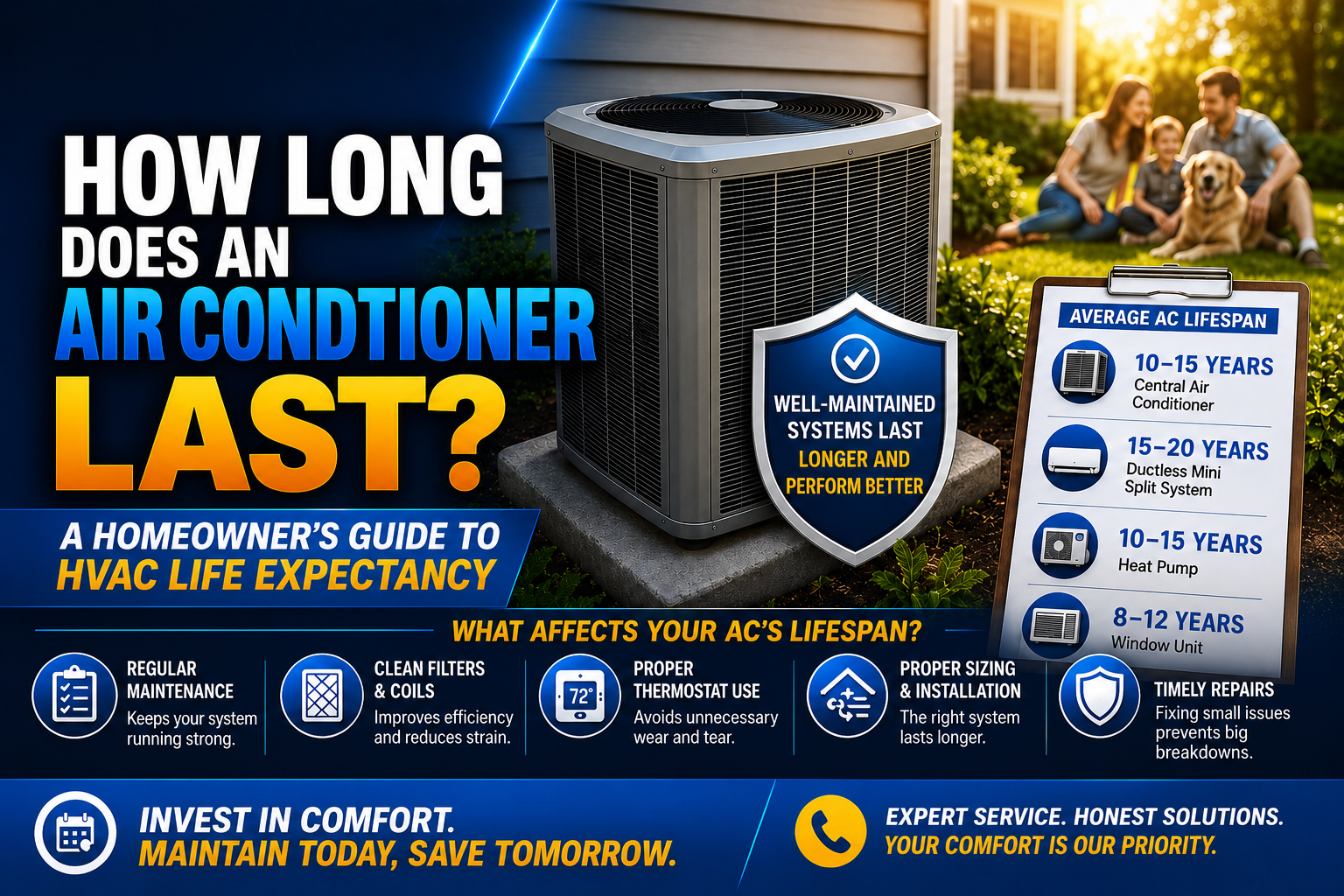
How Long Does an Air Conditioner Last? A Homeowner’s Guide to HVAC Life Expectancy
One of the most common questions homeowners ask is:
“How long should my air conditioner last?”
It’s an important question because your HVAC system is one of the largest investments in your home.
While every system is different, understanding its expected lifespan can help you plan for repairs, maintenance, and eventually replacement before you’re left without cooling during the hottest part of summer.
Homeowners throughout Temecula, Murrieta, Menifee, Lake Elsinore, Winchester, Hemet, Wildomar, French Valley, and surrounding communities often experience long cooling seasons that place additional demands on their air conditioning systems.
In this guide, we’ll explain:
- Average air conditioner lifespan
- What shortens HVAC life
- What helps systems last longer
- Signs your system is nearing the end
- Whether replacing before it breaks down makes sense
The Average Life Expectancy of an Air Conditioner
Most central air conditioning systems last between:
15–20 years
However, that’s only an average.
Some systems fail much earlier.
Others continue operating well beyond twenty years.
The difference usually comes down to:
- Installation quality
- Regular maintenance
- Usage
- Climate
- Airflow
- Repair history
A properly installed and well-maintained system generally lasts much longer than one that’s neglected.
How Long Do Different HVAC Systems Last?
Central Air Conditioner
Average lifespan:
15–20 years
Heat Pump
Average lifespan:
10–15 years
Heat pumps usually operate year-round because they provide both heating and cooling.
That additional operating time often reduces overall lifespan compared to a traditional air conditioner.
Gas Furnace
Average lifespan:
15–25 years
Many furnaces last longer than air conditioners because they operate for fewer months each year.
Mini Split System
Average lifespan:
15–20 years
With proper maintenance, ductless systems often provide many years of reliable operation.
Why Some Air Conditioners Last Much Longer
There isn’t one magic factor.
It’s usually several small things done consistently.
The biggest contributors include:
- Annual maintenance
- Clean air filters
- Proper refrigerant charge
- Correct system sizing
- Good airflow
- Clean coils
- Prompt repairs
These simple practices reduce wear on major components.
What Shortens the Life of an HVAC System?
Skipping Maintenance
The number one reason systems wear out early is neglect.
Without maintenance:
- Dirt builds up
- Components overheat
- Electrical connections loosen
- Motors work harder
- Efficiency declines
Small problems become expensive repairs.
Dirty Air Filters
A clogged filter forces the blower motor to work harder.
Restricted airflow also increases stress on the compressor.
Changing filters regularly is one of the easiest ways to protect your investment.
Low Refrigerant
Air conditioners do not consume refrigerant.
If levels are low, there’s usually a leak.
Running a system low on refrigerant places excessive strain on the compressor.
Oversized Equipment
Many homeowners assume bigger is better.
It isn’t.
An oversized system cools the house too quickly.
That means:
- More frequent starts and stops
- Poor humidity removal
- Increased wear on electrical components
Proper system sizing is essential.
Dirty Outdoor Condenser
The outdoor condenser releases heat.
If airflow becomes blocked by:
- Leaves
- Grass
- Dirt
- Cottonwood
- Landscaping
The compressor works harder.
That additional stress shortens equipment life.
Signs Your Air Conditioner May Be Near the End
Increasing Repair Frequency
If you’re calling for service every summer, your system may be approaching the point where replacement becomes more economical.
Rising Utility Bills
Older systems often lose efficiency.
If cooling costs continue increasing despite routine maintenance, your equipment may be working harder than necessary.
Uneven Cooling
Rooms that never seem comfortable could indicate declining system performance.
Strange Noises
- Grinding
- Buzzing
- Squealing
- Banging
- Rattling
These sounds often indicate worn mechanical components.
Refrigerant Leaks
Older equipment using R-22 refrigerant can become increasingly expensive to repair due to limited refrigerant availability.
Should You Wait Until It Breaks?
Many homeowners do.
However, waiting for complete failure isn’t always the most convenient option.
Emergency replacements often happen:
- During extreme heat
- When contractors are busiest
- With limited scheduling flexibility
Planning ahead allows homeowners to:
- Research options
- Compare equipment
- Schedule installation at a convenient time
- Avoid emergency situations
Can Maintenance Really Extend HVAC Life?
Absolutely.
Routine maintenance helps identify:
- Weak capacitors
- Dirty coils
- Airflow restrictions
- Refrigerant issues
- Loose electrical connections
- Drain line problems
Correcting these issues early reduces unnecessary stress on the system.
Homeowner Tips for Longer HVAC Life
Change Air Filters Regularly
Most homes benefit from changing filters every 1–3 months depending on occupancy, pets, and filter type.
Keep Outdoor Units Clean
Maintain at least two feet of clearance around your outdoor condenser.
Trim vegetation and remove debris.
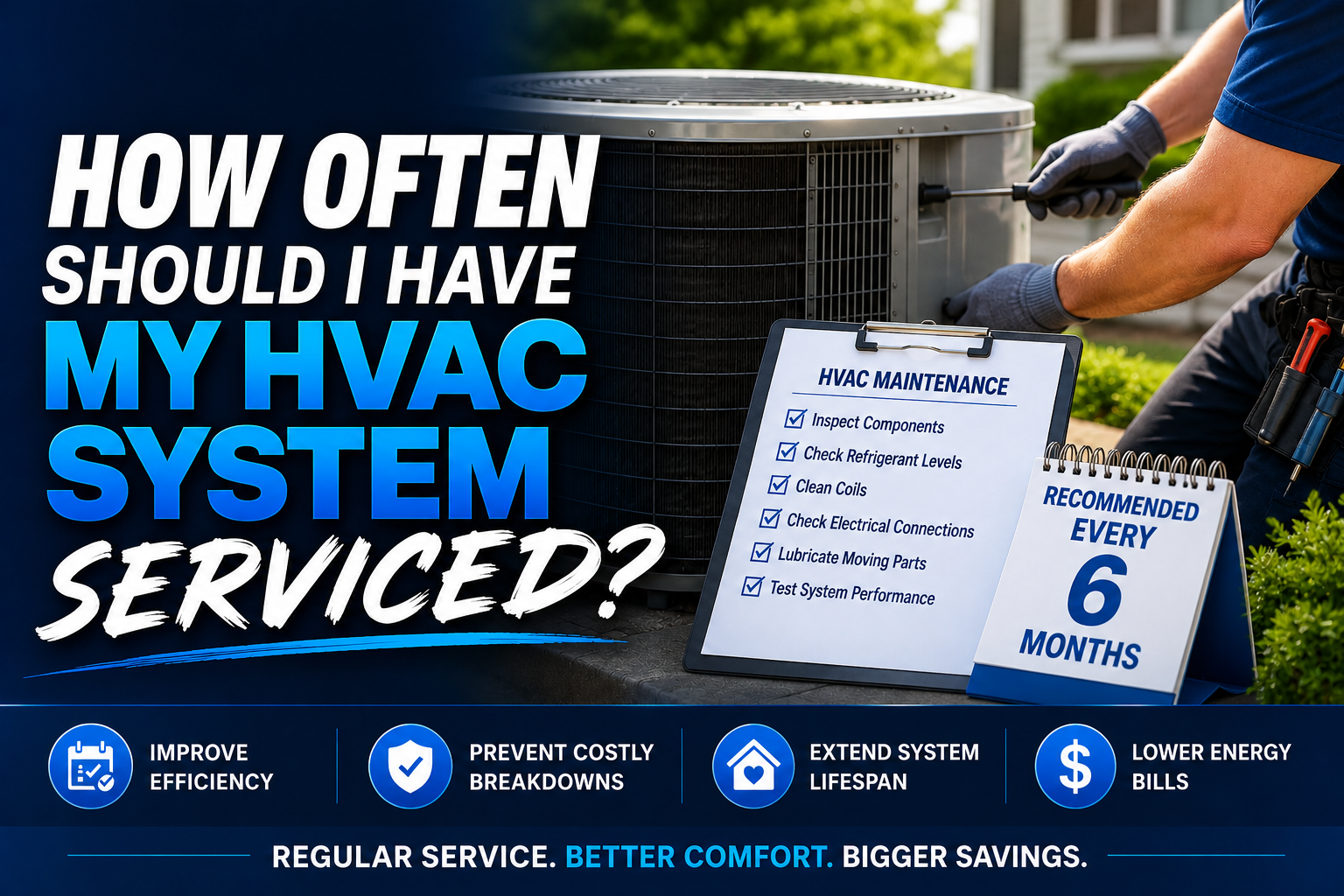
Schedule Annual Maintenance
Professional tune-ups identify problems before they become expensive repairs.
Keep Supply Vents Open
Blocking airflow forces the system to work harder.
Install a Programmable Thermostat
Avoid unnecessary run time while maintaining comfortable indoor temperatures.
Frequently Asked Questions
Can an air conditioner last 25 years?
Some systems do, particularly those that have been well maintained and lightly used. However, efficiency and reliability generally decline with age.
Should I replace my AC after 15 years?
Not necessarily.
Age is only one factor.
Overall condition, repair history, efficiency, and operating costs should all be considered.
Does maintenance really make a difference?
Yes.
Routine maintenance helps improve efficiency, reduce breakdowns, and extend equipment life.
Is it worth repairing an older air conditioner?
It depends on the repair needed, the condition of the equipment, and the expected remaining lifespan.
A professional inspection can help determine the most practical option.
Why Professional Evaluations Matter
Every HVAC system ages differently.
Two systems installed the same year may have very different remaining lifespans depending on maintenance, usage, and operating conditions.
A professional inspection can evaluate:
- Overall condition
- Electrical components
- Refrigerant levels
- Airflow
- Temperature performance
- Repair history
- Remaining life expectancy
This information helps homeowners make informed decisions about future repairs or replacement.
Conclusion
Most air conditioners provide reliable cooling for 15 to 20 years, but proper maintenance, good airflow, clean filters, and prompt repairs all play an important role in reaching that lifespan.
Rather than focusing only on age, consider how your system performs, how often it needs repairs, and whether it continues to keep your home comfortable efficiently.
With regular maintenance and attention to small problems before they become major issues, many HVAC systems can provide dependable comfort for many years.
Why Trust Advanced Heating & Air Conditioning?
Since 2008, Advanced Heating & Air Conditioning has proudly served homeowners and businesses throughout Temecula, Murrieta, Menifee, Winchester, Lake Elsinore, Hemet, Wildomar, French Valley, and the surrounding communities.
Our mission is to provide honest advice, quality workmanship, and educational resources that help homeowners make confident decisions about their heating and cooling systems.