


Why Is My Air Conditioner Blowing Warm Air? 10 Common Causes Every Homeowner Should Know
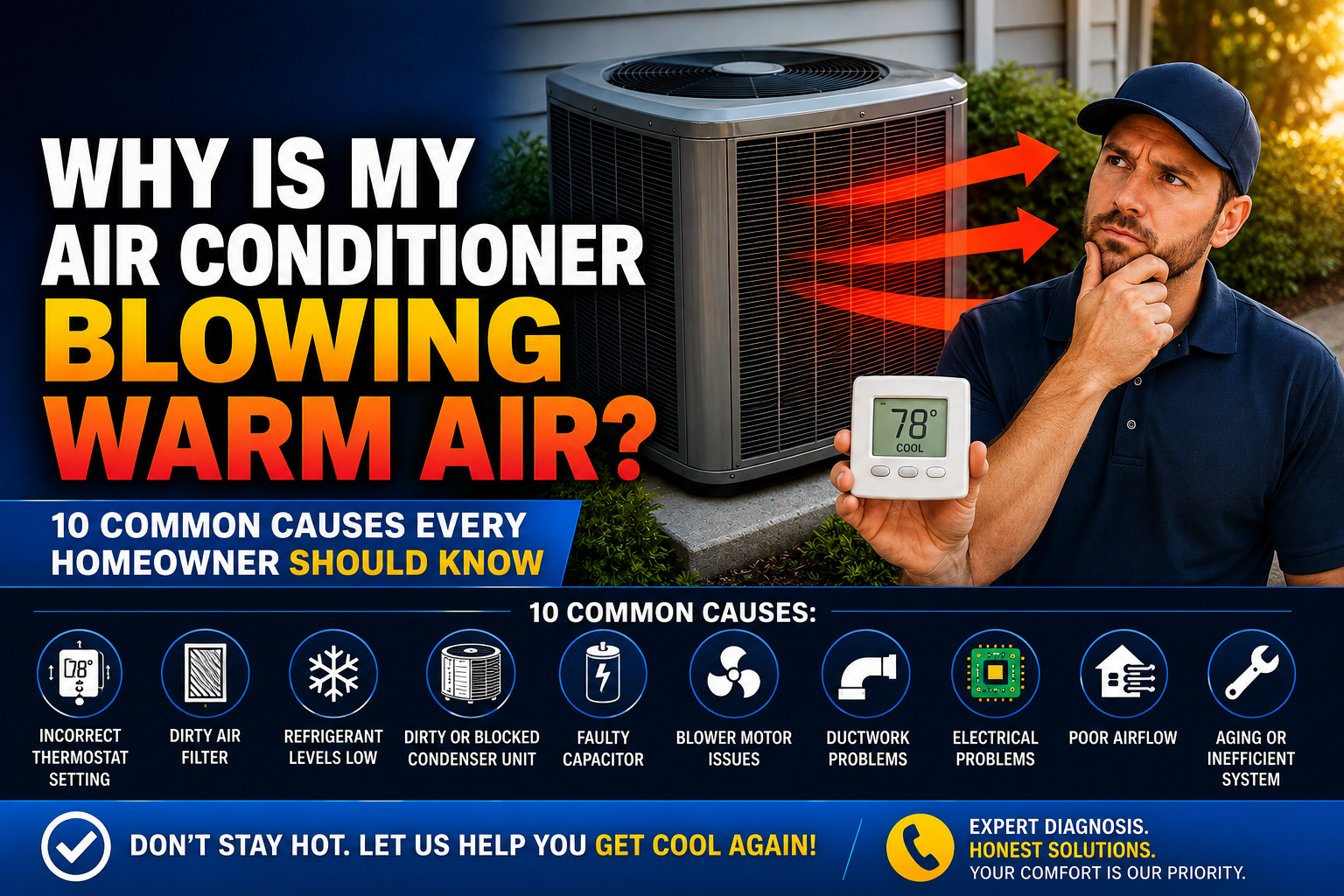
Why Is My Air Conditioner Blowing Warm Air? 10 Common Causes Every Homeowner Should Know
There are few things more frustrating than turning on your air conditioner during a hot summer afternoon only to feel warm air coming from your vents.
This is one of the most common reasons homeowners call an HVAC contractor throughout Temecula, Murrieta, Menifee, Lake Elsinore, Winchester, Hemet, and the surrounding communities.
The good news is that warm air doesn’t always mean you need a new air conditioner. Sometimes the solution is simple. Other times, it requires professional diagnosis.
Understanding the most common causes can help you determine what to check first and when it’s time to call a licensed HVAC technician.
In this guide, we’ll explain the ten most common reasons your air conditioner may be blowing warm air and what you can do about each one.
How Your Air Conditioner Produces Cold Air
Before troubleshooting, it helps to understand how your system works.
Your HVAC system doesn’t actually create cold air.
Instead, it removes heat from inside your home.
Warm indoor air passes across the evaporator coil.
The refrigerant absorbs that heat.
The outdoor unit releases the heat outside.
The cooled air is then circulated back through your home.
If any part of this process is interrupted, your system may begin blowing warm air.
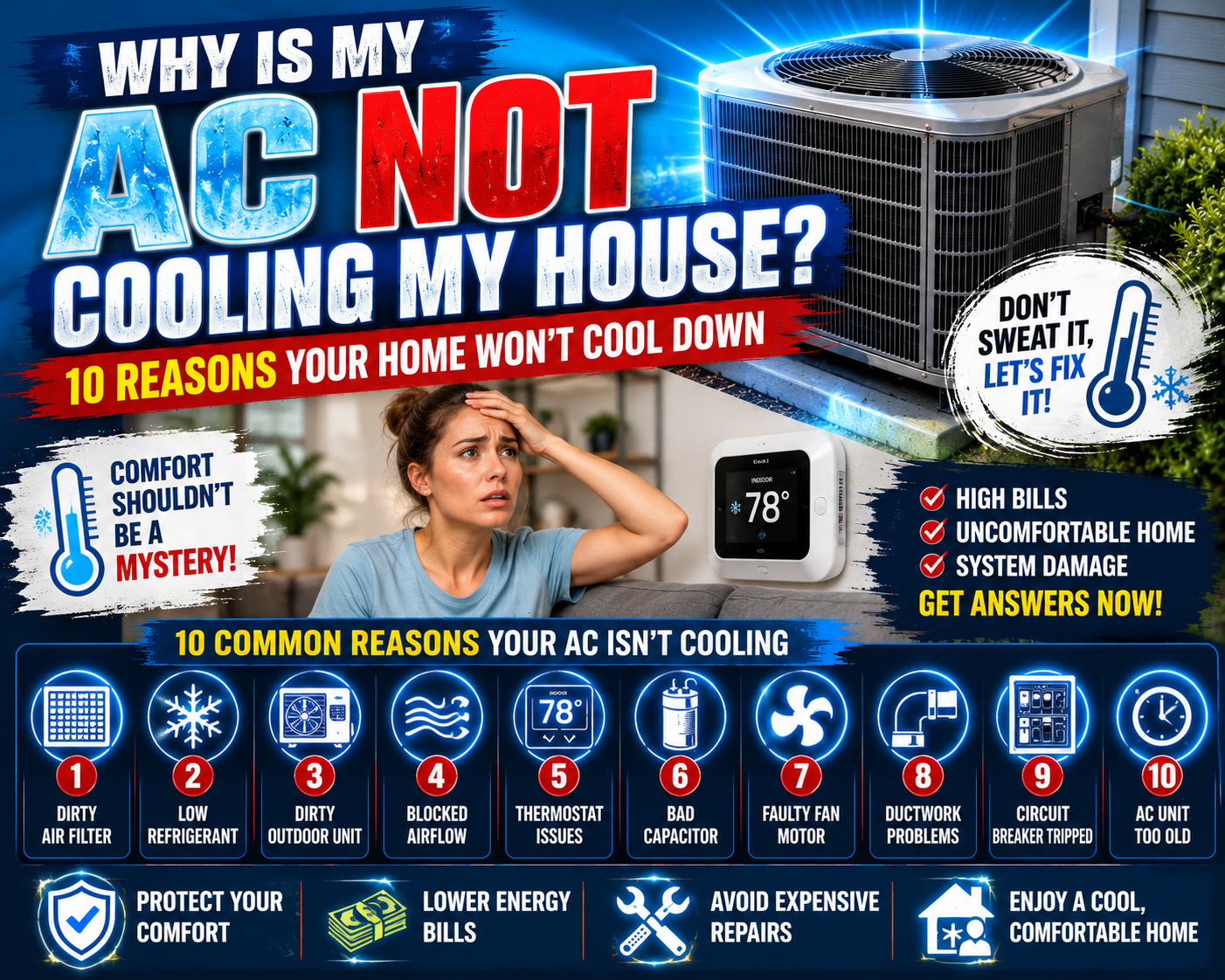
1. Your Thermostat Settings Are Incorrect
It sounds obvious, but this is one of the first things every technician checks.
Verify:
- Thermostat is set to COOL
- Fan is set to AUTO
- Temperature is below room temperature
- Batteries (if applicable) are good
Sometimes the thermostat has accidentally been switched to HEAT or FAN.
When the fan is ON instead of AUTO, it may continue circulating room-temperature air even after the cooling cycle has ended.
2. Dirty Air Filter
A clogged air filter restricts airflow.
Without enough warm air crossing the evaporator coil, cooling efficiency drops dramatically.
Eventually the coil may freeze.
When that happens, your system can begin blowing warm air.
Signs include:
- Weak airflow
- Higher electric bills
- Longer run times
- Ice on refrigerant lines
A clean filter is one of the easiest ways to improve performance.
3. Frozen Evaporator Coil
A frozen evaporator coil cannot absorb heat effectively.
Instead of cooling your home, airflow becomes blocked by ice.
Common causes include:
- Dirty filter
- Low refrigerant
- Blower motor problems
- Dirty evaporator coil
- Blocked vents
If you notice ice on your indoor equipment or refrigerant lines, turn the cooling off and allow the system to thaw before restarting.
4. Low Refrigerant
Refrigerant doesn’t get “used up.”
If your system is low, there’s usually a leak.
Without the proper refrigerant charge:
- Cooling capacity decreases
- Run times increase
- Ice may develop
- Warm air begins coming from the vents
Only a licensed HVAC professional should repair refrigerant leaks and recharge the system.
5. Dirty Outdoor Condenser Coil
Your outdoor condenser is responsible for releasing heat from your home.
If it’s covered with dirt, grass clippings, leaves, or debris, it cannot efficiently release heat.
That causes the entire cooling process to suffer.
Professional cleaning restores airflow and efficiency.
6. Electrical Problems
Modern HVAC systems rely on multiple electrical components.
A failed capacitor, contactor, relay, or damaged wiring can prevent parts of the system from operating correctly.
For example:
- Indoor fan may run
- Outdoor unit may not
- Compressor may not start
This often results in warm air coming from the vents.
7. Tripped Breaker
Your indoor and outdoor units usually have separate electrical circuits.
Sometimes the outdoor breaker trips while the indoor blower continues operating.
The result?
Air blows from the vents—but it isn’t cooled.
Before resetting breakers, inspect for obvious issues. If the breaker trips repeatedly, contact an HVAC professional instead of repeatedly resetting it.
8. Compressor Problems
The compressor is often described as the “heart” of the air conditioning system.
Its job is to circulate refrigerant throughout the system.
If it isn’t operating correctly, your air conditioner cannot remove heat from your home.
Symptoms may include:
- Warm air
- Loud humming
- Clicking
- Frequent breaker trips
- System won’t cool
9. Leaking or Damaged Ductwork
Sometimes your air conditioner is cooling properly, but conditioned air never reaches the rooms.
Leaky ducts can:
- Pull hot attic air into the system
- Lose cooled air before it reaches the vents
- Create uneven temperatures
- Increase utility bills
A professional duct inspection can identify leaks and airflow problems.
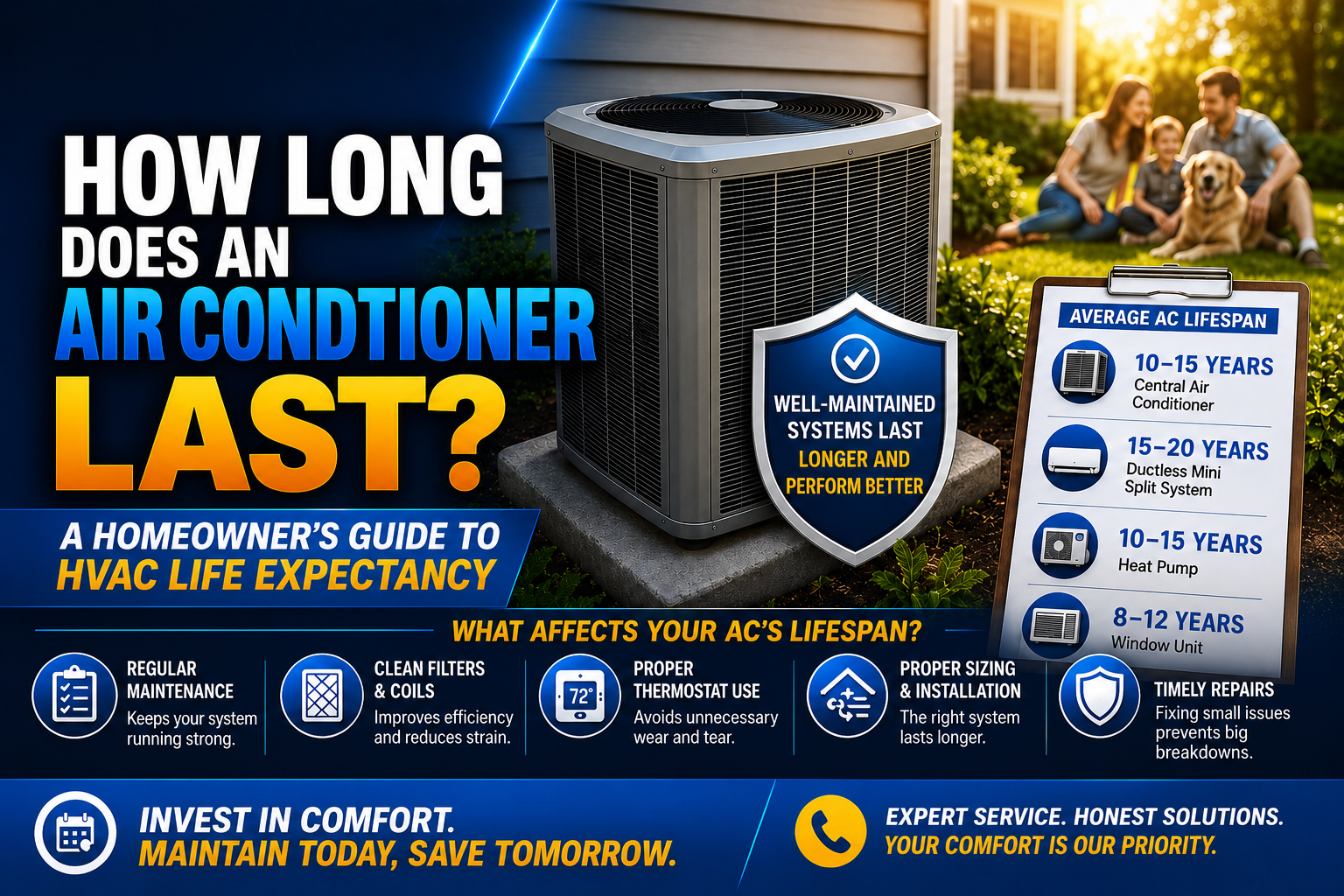
10. Your Air Conditioner Is Aging
Like any mechanical equipment, HVAC systems lose efficiency over time.
As systems age:
- Components wear
- Cooling capacity decreases
- Repairs become more frequent
- Energy consumption increases
If your equipment is approaching 15–20 years old and experiencing repeated cooling issues, it may be time to evaluate replacement options.
What Can Homeowners Check Before Calling for Service?
There are a few safe troubleshooting steps you can perform:
- ✔ Check thermostat settings
- ✔ Replace the air filter
- ✔ Verify breakers haven’t tripped
- ✔ Make sure all supply vents are open
- ✔ Remove debris around the outdoor unit
- ✔ Look for ice on refrigerant lines
If these steps don’t restore cooling, professional diagnosis is recommended.
What You Should NOT Do
Avoid these common mistakes:
- ❌ Continue running a frozen air conditioner
- ❌ Add refrigerant yourself
- ❌ Repeatedly reset breakers
- ❌ Spray high-pressure water into the condenser
- ❌ Ignore unusual noises
These actions can sometimes make the problem worse or create safety risks.
How Preventive Maintenance Helps
Many of the issues listed above can be identified during routine maintenance.
A professional inspection typically includes:
- Refrigerant pressure
- Temperature split
- Capacitor testing
- Electrical inspection
- Airflow testing
- Condenser cleaning
- Evaporator inspection
- Drain cleaning
- Thermostat testing
- Blower inspection
Preventive maintenance helps identify developing problems before they interrupt your comfort.
Frequently Asked Questions
Why is my AC blowing warm air but still running?
This may be caused by low refrigerant, a frozen evaporator coil, compressor problems, thermostat issues, or an outdoor unit that isn’t operating.
Can a dirty filter cause warm air?
Yes. Restricted airflow can reduce cooling performance and even cause the evaporator coil to freeze.
Why does my AC blow warm air during the hottest part of the day?
Extreme outdoor temperatures increase the workload on your HVAC system. If your equipment is dirty, low on refrigerant, or experiencing airflow problems, those issues may become more noticeable during peak heat.
Should I turn my AC off if it’s blowing warm air?
If you notice ice on the system or suspect it’s frozen, turning the cooling off and running the fan can help the unit thaw. If the problem continues after thawing, schedule a professional inspection.
Why Homeowners Trust Advanced Heating & Air Conditioning
Since 2008, Advanced Heating & Air Conditioning has helped homeowners and businesses throughout Temecula, Murrieta, Menifee, Lake Elsinore, Winchester, Hemet, Wildomar, French Valley, and surrounding communities diagnose heating and cooling problems with honest recommendations and quality workmanship.
Whether the issue is a simple thermostat setting or a more complex refrigerant or electrical problem, our goal is to educate homeowners so they can make informed decisions about their HVAC systems.