


Why Is My Furnace Making Loud Noises? Banging, Popping, Screeching & Other Sounds Explained
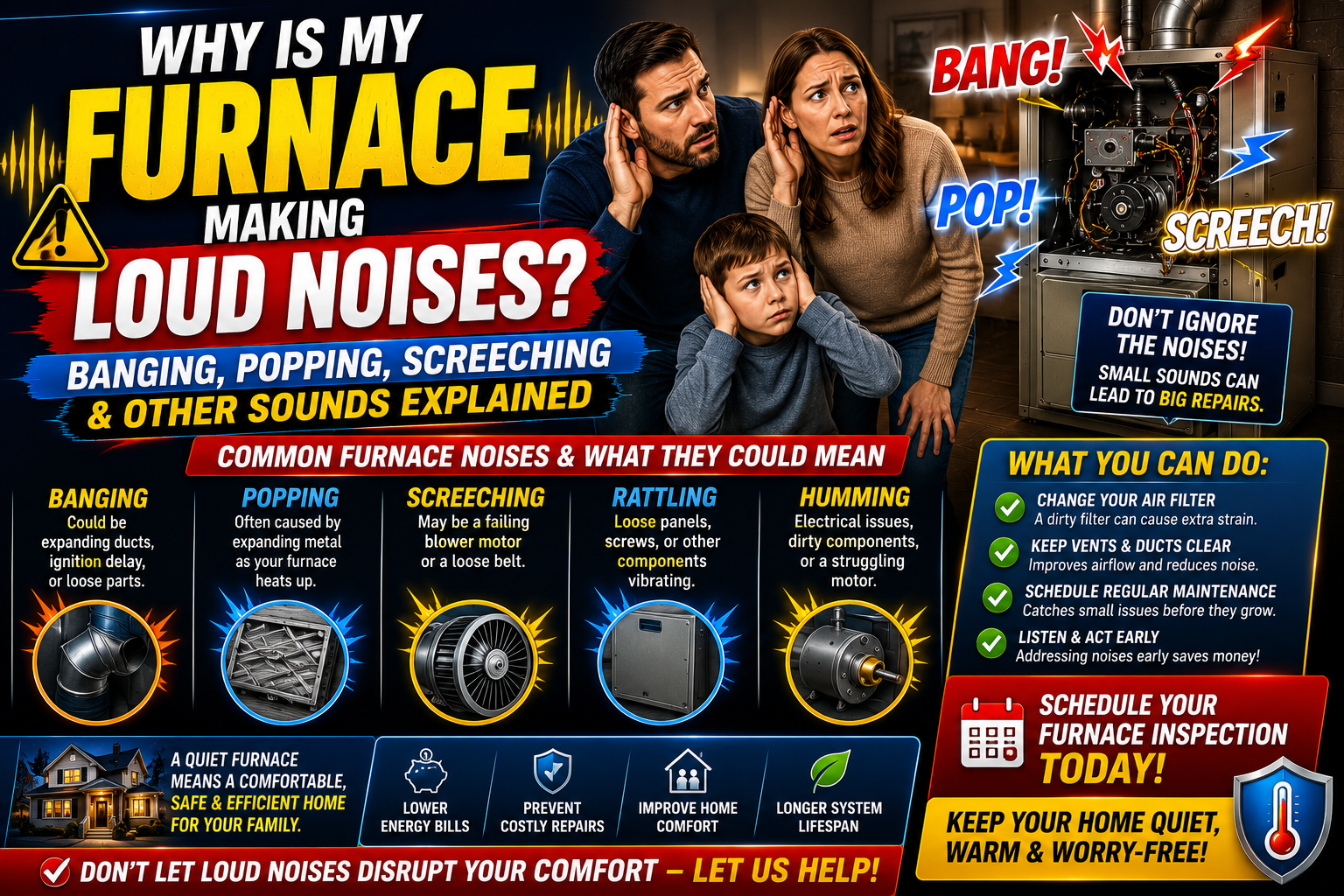
Why Is My Furnace Making Loud Noises? Banging, Popping, Screeching & Other Sounds Explained
Key Takeaways
- Not every furnace noise means a major repair is needed, but unusual sounds should never be ignored.
- Banging, grinding, squealing, and rattling noises often point to different components inside the furnace.
- Early diagnosis can prevent additional damage and more expensive repairs.
- Annual maintenance helps identify worn parts before they fail during the heating season.
Table of Contents
- Are Furnace Noises Normal?
- Common Furnace Sounds and What They Mean
- What You Can Check Yourself
- When to Call an HVAC Professional
- Frequently Asked Questions
- From the Field
- Summary
Should My Furnace Be Loud?
Every furnace makes some noise.
You may hear:
- The thermostat clicking.
- The blower motor starting.
- The burners igniting.
- Air moving through the ductwork.
- A slight “tick” as metal expands and contracts.
These sounds are completely normal.
However, if your furnace suddenly starts making banging, grinding, screeching, rattling, or loud humming noises, it’s trying to tell you something.
One of the biggest mistakes homeowners make is waiting until the furnace completely stops working.
In many cases, unusual sounds begin weeks—or even months—before a component fails.
Listening to those warning signs can often save both time and money.
1. Loud Banging Noise
A loud bang when the furnace starts is one of the most common complaints we hear.
Possible causes include:
- Delayed ignition
- Dirty burners
- Expanding ductwork
- Loose blower components
One concern with repeated loud bangs is delayed ignition.
Instead of lighting immediately, gas builds up briefly before igniting, creating a noticeable “boom.”
Because this involves the burner system, it should be inspected promptly by a qualified HVAC technician.
2. Popping Sounds
Not every popping sound indicates a problem.
As your furnace heats metal ductwork, the metal expands.
When it cools, it contracts.
This expansion and contraction often creates occasional popping noises.
However, if the popping becomes louder than normal or is accompanied by airflow problems, it’s worth having the duct system inspected.
3. Screeching or Squealing
High-pitched squealing usually points toward moving components.
Common causes include:
- Worn blower motor bearings
- Loose blower belt (on older systems)
- Motor problems
- Failing blower assembly
If the noise becomes louder over time, don’t ignore it.
Blower motor repairs are often much less expensive when addressed early.
4. Grinding Noise
Grinding is never considered normal.
Possible causes include:
- Failing blower motor bearings
- Motor damage
- Loose internal components
- Worn mechanical parts
Continuing to operate the furnace while grinding noises are present may cause additional damage.
Professional diagnosis is recommended as soon as possible.
5. Rattling
Rattling can have surprisingly simple causes.
Examples include:
- Loose access panels
- Loose screws
- Vibrating ductwork
- Debris inside the blower compartment
We’ve also found small objects that accidentally fell into return vents and eventually made their way into the duct system.
While some rattles are harmless, others indicate loose components that should be tightened before they cause additional wear.
6. Buzzing
A buzzing sound may originate from electrical components.
Possible causes include:
- Failing capacitor
- Loose wiring
- Contactor issues
- Transformer problems
- Blower motor
Electrical issues often produce similar symptoms, making proper testing important before replacing parts.
7. Humming
A gentle humming sound is often normal.
However, loud humming that wasn’t present before may indicate:
- Motor strain
- Electrical problems
- Capacitor failure
- Blower issues
If the furnace hums but doesn’t start properly, it should be inspected.
8. Clicking
A single click during startup is perfectly normal.
Repeated clicking without ignition may indicate:
- Igniter problems
- Control board issues
- Gas valve concerns
- Flame sensor issues
If the furnace repeatedly attempts to start without producing heat, schedule professional service.
Why Ignoring Furnace Noises Can Become Expensive
One of the biggest misconceptions homeowners have is:
“It’s still heating, so I’ll wait until it breaks.”
Unfortunately, mechanical parts rarely repair themselves.
For example:
A worn blower bearing may begin with a faint squeal.
Weeks later:
- The bearing deteriorates.
- Motor temperature increases.
- Airflow decreases.
- The motor eventually fails.
Replacing worn components early often prevents more extensive repairs.
What Homeowners Can Safely Check
Before scheduling service, inspect the following:
- ✔ Replace a dirty air filter.
- ✔ Tighten any loose access panels.
- ✔ Check for loose supply registers.
- ✔ Remove objects touching ductwork.
- ✔ Verify furniture isn’t blocking return vents.
- ✔ Listen carefully to determine where the sound originates.
If the noise continues, avoid disassembling the furnace yourself.
Comparison Table
- Banging — Possible cause: delayed ignition or duct expansion. Should it be inspected? Yes.
- Grinding — Possible cause: motor bearings. Should it be inspected? Immediately.
- Screeching — Possible cause: blower motor. Should it be inspected? Yes.
- Buzzing — Possible cause: electrical component. Should it be inspected? Yes.
- Clicking — Possible cause: ignition sequence. Should it be inspected? If repeated.
- Popping — Possible cause: duct expansion. Should it be inspected? Sometimes.
- Rattling — Possible cause: loose panel or duct. Should it be inspected? Usually.
- Humming — Possible cause: motor or capacitor. Should it be inspected? If louder than normal.
From the Field
One winter morning, we were called to a home in Murrieta where the homeowner described a “small squeak” that had been getting louder over several weeks. The furnace was still producing heat, so they assumed it could wait until spring.
When we inspected the system, we found the blower motor bearings were wearing out. Because they called before the motor seized completely, we were able to replace the failing component before it caused damage to other parts of the blower assembly.
We’ve also responded to homes where a loud banging noise turned out to be delayed burner ignition. While the furnace was still operating, continuing to ignore the problem could have led to additional wear and unsafe operating conditions.
The takeaway is simple: unusual sounds are your HVAC system’s way of asking for attention. Addressing them early is almost always easier than waiting for a complete breakdown.
Frequently Asked Questions
Is it normal for my furnace to make popping noises?
Occasional popping from expanding ductwork is usually normal. Loud or sudden changes in noise should be evaluated.
Why does my furnace squeal when it starts?
Squealing often points to blower motor bearings or other moving components that may be wearing out.
Should I turn my furnace off if it’s grinding?
Yes. Grinding can indicate serious mechanical wear. Continuing to operate the furnace may increase damage.
Can a dirty filter make my furnace noisy?
Yes. Restricted airflow can cause the blower motor to work harder and contribute to unusual operating sounds.
When should I call an HVAC technician?
If you hear grinding, repeated banging, loud buzzing, persistent squealing, or any new noise that continues after replacing the air filter, it’s a good idea to schedule an inspection.
In Summary
A noisy furnace isn’t always an emergency, but it should never be ignored.
Many unusual sounds begin as small problems that become larger—and more expensive—if left unresolved.
Whether it’s a loose panel, worn blower motor, dirty burners, or an electrical component beginning to fail, identifying the source early can help restore quiet operation, improve reliability, and extend the life of your heating system.
Why Trust Advanced Heating & Air Conditioning?
Since 2008, Advanced Heating & Air Conditioning has proudly served homeowners and businesses throughout Temecula, Murrieta, Menifee, Winchester, Lake Elsinore, Hemet, Wildomar, French Valley, and surrounding communities.
Our experienced technicians take the time to diagnose heating problems thoroughly rather than simply replacing parts. We believe homeowners deserve clear explanations, honest recommendations, and repairs that address the root cause of the issue. Whether your furnace is making unusual noises or you’re preparing for the heating season, we’re here to help keep your home comfortable and your system operating safely.
Related Articles
- Why Is My Air Conditioner So Loud? 9 Noises You Should Never Ignore
- Is It Better to Repair or Replace Your Furnace? A Homeowner’s Complete Guide
- How Often Should You Have Your HVAC System Serviced?
- How Often Should You Change Your HVAC Air Filter?
- Does Closing Air Vents Save Money?
- Why Does My Air Conditioner Keep Turning On and Off?
- Why Is My Upstairs So Much Hotter Than Downstairs?