


Should You Repair or Replace Your Furnace? Full Guide
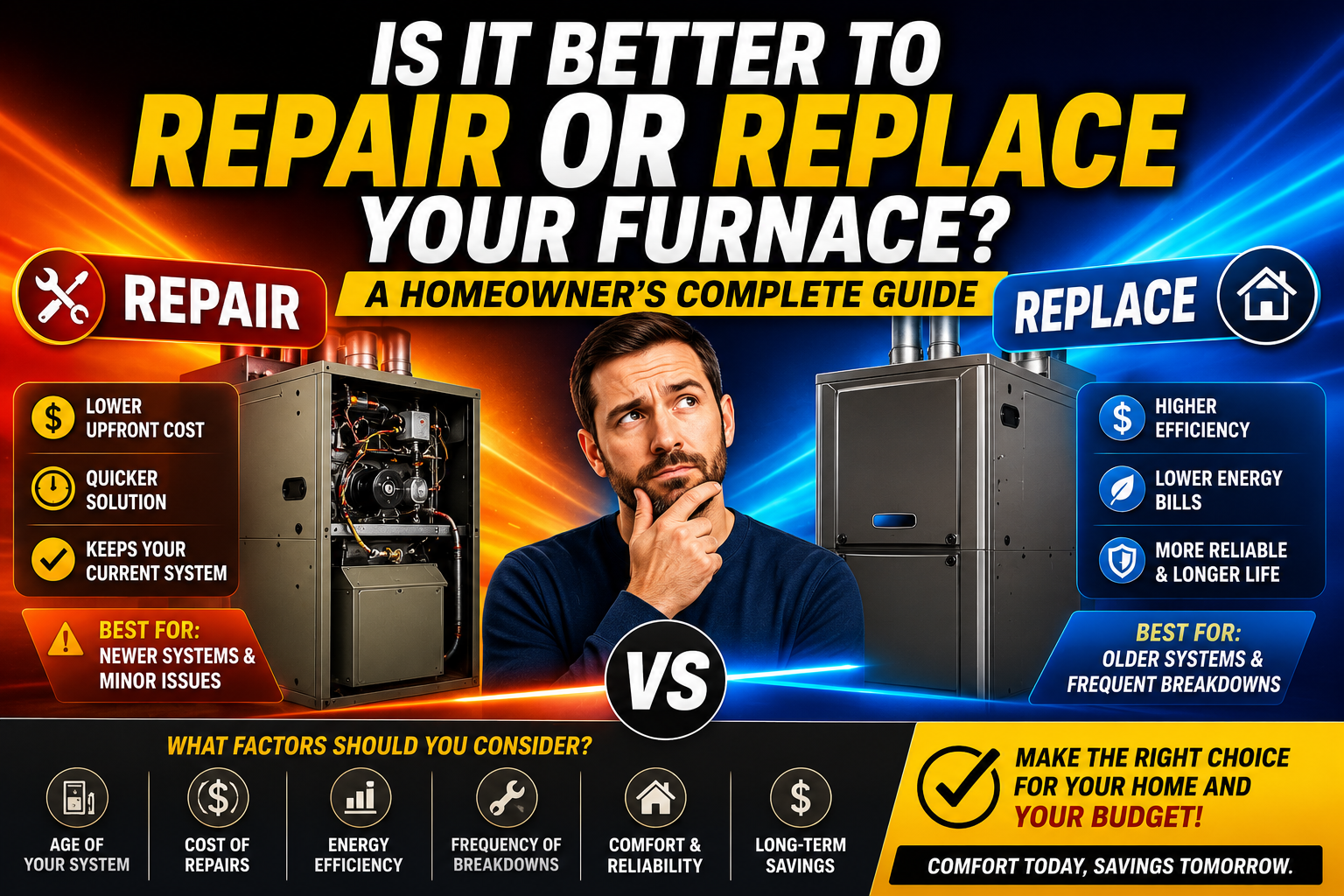
Is It Better to Repair or Replace Your Furnace? A Homeowner’s Complete Guide
Key Takeaways
- Most furnaces last 15–20 years with proper maintenance.
- Frequent breakdowns often make replacement more cost-effective than repeated repairs.
- High utility bills can indicate declining furnace efficiency.
- A professional inspection can determine whether repairing or replacing your furnace makes the most financial sense.
- Modern furnaces are quieter, more efficient, and provide better comfort.
Table of Contents
- How Long Does a Furnace Last?
- When Repair Makes Sense
- Signs It’s Time to Replace
- Comparing Repair vs Replacement
- How New Furnaces Save Money
- Frequently Asked Questions
- From the Field
- Summary
Your Furnace Finally Broke…Now What?
One of the most stressful heating decisions a homeowner faces is whether to repair an aging furnace or invest in a replacement.
It’s a question we hear every winter throughout Temecula, Murrieta, Menifee, Winchester, Lake Elsinore, Hemet, Wildomar, French Valley, and surrounding communities.
Many homeowners assume a furnace that stops working automatically needs to be replaced.
Others continue repairing the same unit year after year because it still turns on.
The truth is that every situation is different.
The right decision depends on the furnace’s age, condition, repair history, efficiency, and the cost of the repair compared to the value of the equipment.
Our goal is never to sell you something you don’t need.
Instead, we help homeowners understand their options so they can make an informed decision.
How Long Does a Furnace Usually Last?
A well-maintained gas furnace typically lasts between:
15–20 years
Some systems continue operating beyond 20 years with routine maintenance, while others require replacement sooner due to lack of maintenance, heavy use, or poor installation.
Several factors influence furnace life:
- Annual maintenance
- Air filter replacement
- Proper airflow
- Installation quality
- Operating conditions
- Frequency of repairs
Just because a furnace is old doesn’t automatically mean it needs replacement.
We still maintain older furnaces that operate safely and reliably every winter.
When Repair Usually Makes Sense
Many heating problems can be repaired without replacing the entire furnace.
Examples include:
Dirty Flame Sensor
A dirty flame sensor is one of the most common heating issues we encounter.
Symptoms include:
- Furnace starts then shuts off
- Short heating cycles
- No heat
Cleaning or replacing the flame sensor often restores normal operation.
Bad Capacitor
Some furnace blower motors rely on a capacitor.
When it fails, the blower may not start correctly.
Fortunately, replacing a capacitor is usually a straightforward repair.
Faulty Igniter
Modern furnaces use electronic igniters instead of pilot lights.
These igniters eventually wear out.
Replacing one is typically much less expensive than replacing the entire furnace.
Thermostat Issues
Sometimes the furnace isn’t the problem.
Incorrect thermostat settings, low batteries, faulty wiring, or thermostat failure can prevent proper heating.
Blower Motor Repairs
Blower motors can often be repaired or replaced without replacing the furnace itself.
When Replacement Starts Making More Sense
Although many repairs are worthwhile, there comes a point where replacement becomes the better long-term investment.
1. The Furnace Is 18–20+ Years Old
Age alone doesn’t determine replacement.
However, older furnaces are more likely to experience:
- Component failures
- Lower efficiency
- Hard-to-find replacement parts
- Higher repair costs
2. Repairs Keep Adding Up
If you’re scheduling service every winter, it’s worth looking at the bigger picture.
A series of repairs over several years may eventually cost more than investing in a dependable, efficient system.
Rather than focusing only on today’s repair bill, consider how often you’re calling for service.
3. Your Energy Bills Keep Rising
Older furnaces often lose efficiency over time.
Even if they continue heating the home, they may use more fuel than necessary.
A new high-efficiency furnace may reduce operating costs, especially during colder months.
Savings vary depending on your current equipment, home insulation, thermostat settings, and usage patterns.
4. Uneven Heating
Do some rooms stay warm while others remain cold?
Uneven heating may result from:
- Aging equipment
- Airflow problems
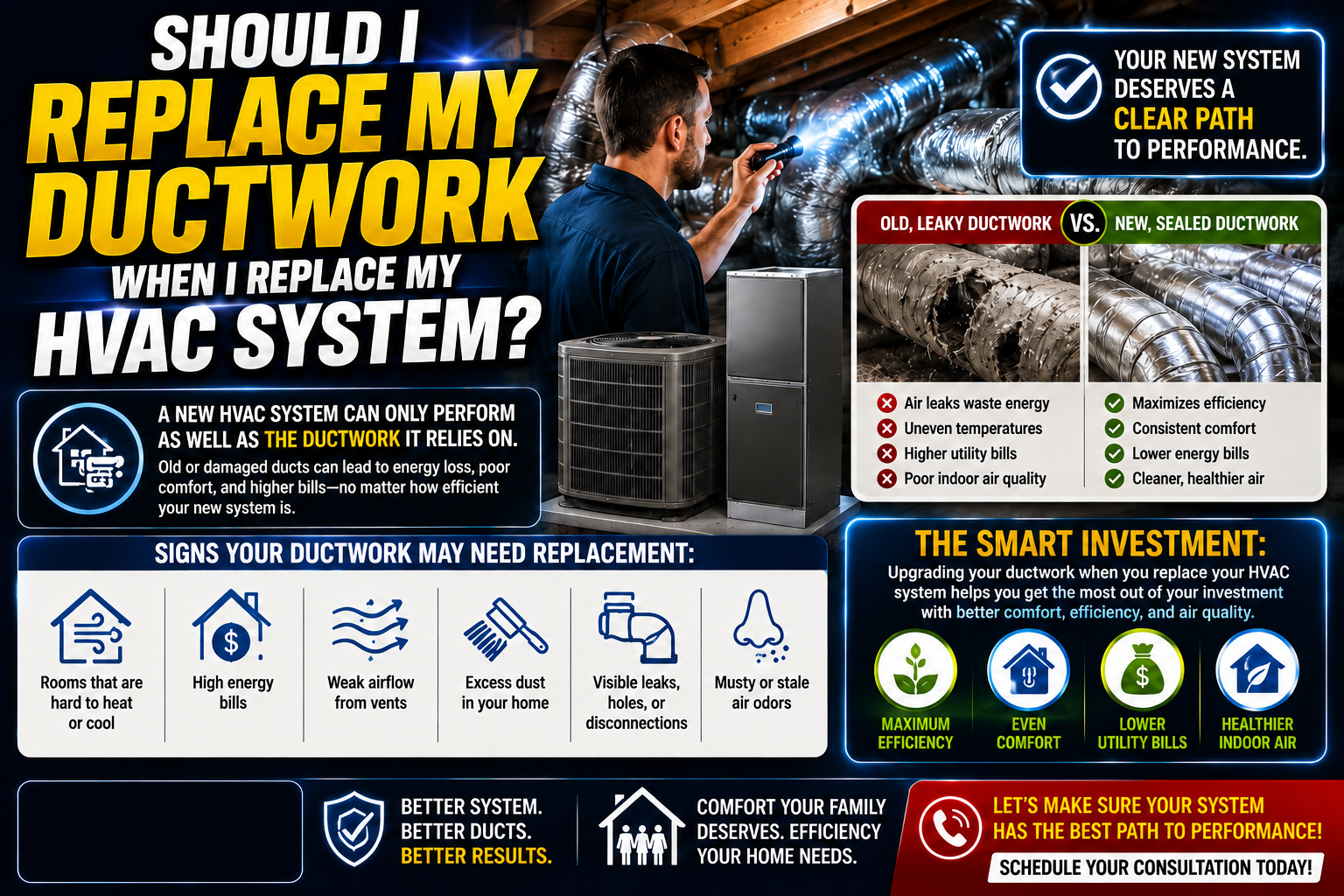
- Duct issues
- Improper system sizing
A professional inspection can determine whether the furnace is the primary cause or whether improvements to the duct system or airflow would be more effective.
5. Major Heat Exchanger Problems
The heat exchanger is one of the furnace’s most important components.
If it becomes damaged, replacement is often the safest and most practical solution because of the cost and complexity involved.
A qualified technician should inspect the furnace and explain the available options.
Repair vs. Replace Comparison
- Furnace under 12 years old (repair may make sense) → furnace over 18–20 years old (replacement may be better)
- First major repair (repair may make sense) → multiple repairs over several seasons (replacement may be better)
- Minor component failure (repair may make sense) → major heat exchanger issue (replacement may be better)
- Good efficiency (repair may make sense) → rising utility bills (replacement may be better)
- Reliable heating (repair may make sense) → frequent breakdowns (replacement may be better)
- Parts readily available (repair may make sense) → replacement parts difficult to obtain (replacement may be better)
Benefits of a New High-Efficiency Furnace
Modern furnaces offer several advantages over older models.
Depending on the equipment you choose, benefits may include:
- Higher energy efficiency
- More consistent temperatures
- Quieter operation
- Improved airflow
- Better humidity control
- Enhanced safety features
- Smart thermostat compatibility
- Manufacturer warranty coverage
For many homeowners, these improvements contribute to greater comfort as well as potential energy savings.
What Homeowners Can Do Before Calling for Service
If your furnace isn’t working properly, check these items first:
- ✔ Verify the thermostat is set to Heat.
- ✔ Replace the thermostat batteries if needed.
- ✔ Check the air filter.
- ✔ Make sure the furnace switch is on.
- ✔ Inspect the circuit breaker.
- ✔ Confirm supply vents are open.
If these basic checks don’t resolve the issue, a professional inspection can help identify the cause.
From the Field
One of the most rewarding parts of our job is helping homeowners avoid unnecessary expenses.
Sometimes we arrive expecting to discuss furnace replacement, only to find that a dirty flame sensor or clogged air filter is preventing the system from operating properly.
Other times, we inspect a furnace that’s more than 20 years old and discover several major components beginning to fail. In those situations, we explain the repair costs, discuss the remaining life expectancy of the equipment, and help the homeowner compare those costs with the benefits of a new system.
Every home is different, which is why we believe in evaluating the entire system before recommending repairs or replacement.
Frequently Asked Questions
How long should a residential furnace last?
Most gas furnaces last between 15 and 20 years, though proper maintenance can help extend their service life.
Is it worth repairing a 20-year-old furnace?
It depends on the condition of the furnace, the cost of the repair, and whether additional repairs are likely in the near future. A professional inspection can help determine the most practical option.
Will a new furnace lower my heating bills?
A modern high-efficiency furnace may reduce energy use compared to an older, less efficient model, but actual savings vary depending on your home, usage habits, and the equipment installed.
Should I replace my furnace if it still works?
Not necessarily. If your furnace is operating safely, heating your home effectively, and repair costs remain reasonable, replacement may not be necessary. It’s often best to evaluate efficiency, reliability, and repair history rather than age alone.
In Summary
Deciding whether to repair or replace your furnace isn’t always straightforward.
Minor issues such as a dirty flame sensor, faulty igniter, or thermostat problem are often worth repairing. On the other hand, if your furnace is nearing the end of its expected lifespan, experiencing frequent breakdowns, or requiring costly repairs, replacement may offer better long-term value.
The most important step is understanding why the furnace isn’t performing properly before making a decision. An experienced HVAC technician can evaluate the entire system, explain your options, and help you choose the solution that best fits your home and budget.
Why Trust Advanced Heating & Air Conditioning?
Since 2008, Advanced Heating & Air Conditioning has proudly served homeowners and businesses throughout Temecula, Murrieta, Menifee, Winchester, Lake Elsinore, Hemet, Wildomar, French Valley, and surrounding communities.
We believe homeowners deserve honest recommendations—not high-pressure sales. Whether your furnace needs a simple repair or it’s time to discuss replacement options, our team takes the time to explain the condition of your system, answer your questions, and recommend solutions based on what makes the most sense for your home.
Related Articles
- Why Is My Electric Bill So High During the Summer?
- Why Does My Air Conditioner Keep Turning On and Off?
- How Often Should You Have Your HVAC System Serviced?
- How Often Should You Change Your HVAC Air Filter?
- Should I Repair or Replace My Air Conditioner?
- How Long Does an Air Conditioner Last?
- Does Closing Air Vents Save Money?