


Why Is My Pilot Light Yellow Instead of Blue? What It Means and When to Be Concerned
Why Is My Pilot Light Yellow Instead of Blue? What It Means and When to Be Concerned
Key Takeaways
- A healthy gas furnace burner flame is typically steady and blue.
- A yellow or orange flame can indicate that the combustion process should be evaluated.
- Dirty burners, restricted airflow, improper gas-to-air mixture, or venting issues are possible causes.
- Furnace combustion should only be inspected and adjusted by qualified HVAC professionals.
Table of Contents
- What Color Should My Furnace Flame Be?
- Why Flames Turn Yellow
- Common Causes
- Is It Dangerous?
- What Homeowners Should Do
- Frequently Asked Questions
- From the Field
- Summary
What Color Should a Furnace Flame Be?
Most homeowners never look inside their furnace.
They simply adjust the thermostat and expect warm air to come from the vents.
But occasionally someone removes the access panel or notices the flame during a maintenance visit and asks:
“Why is my furnace flame yellow?”
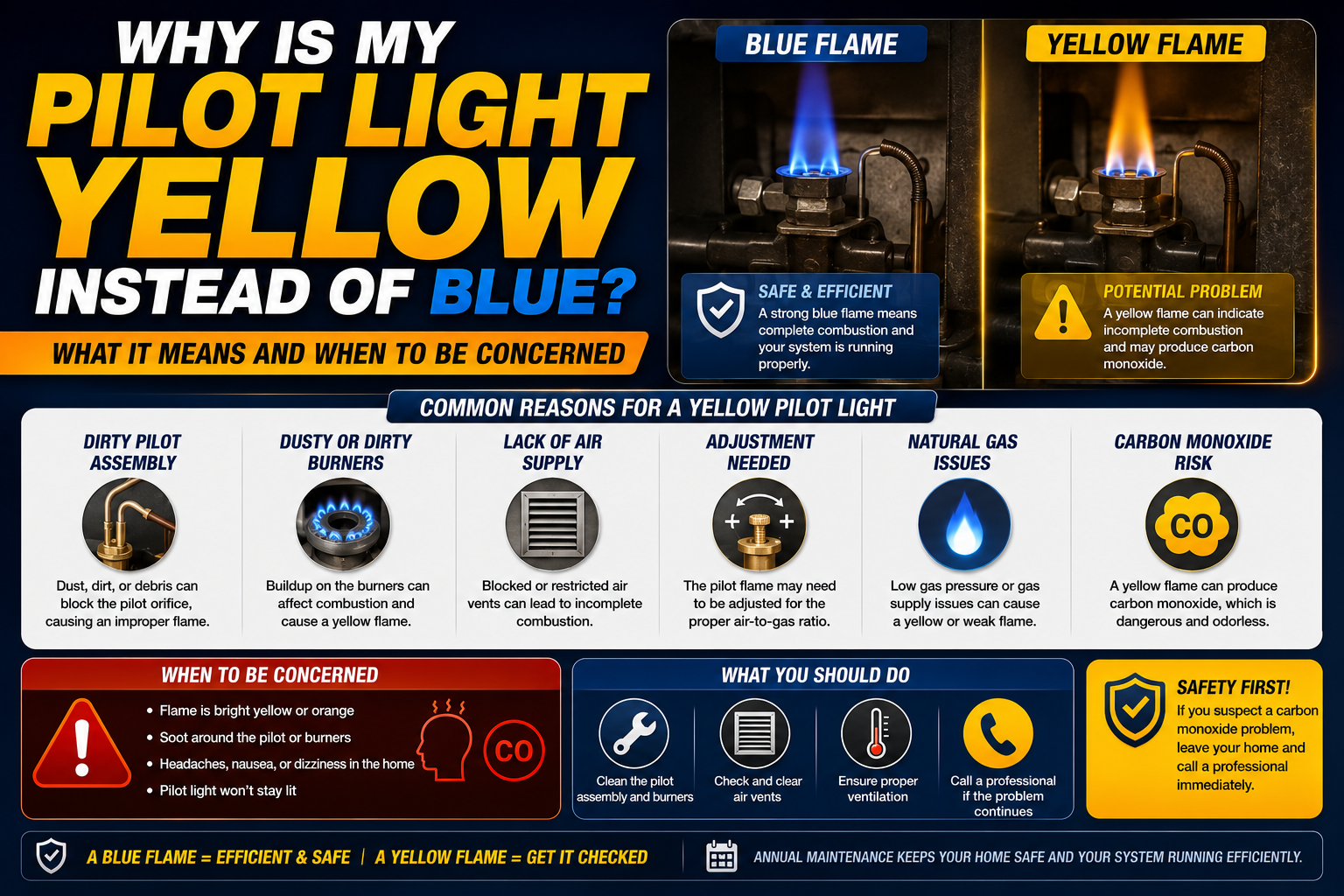
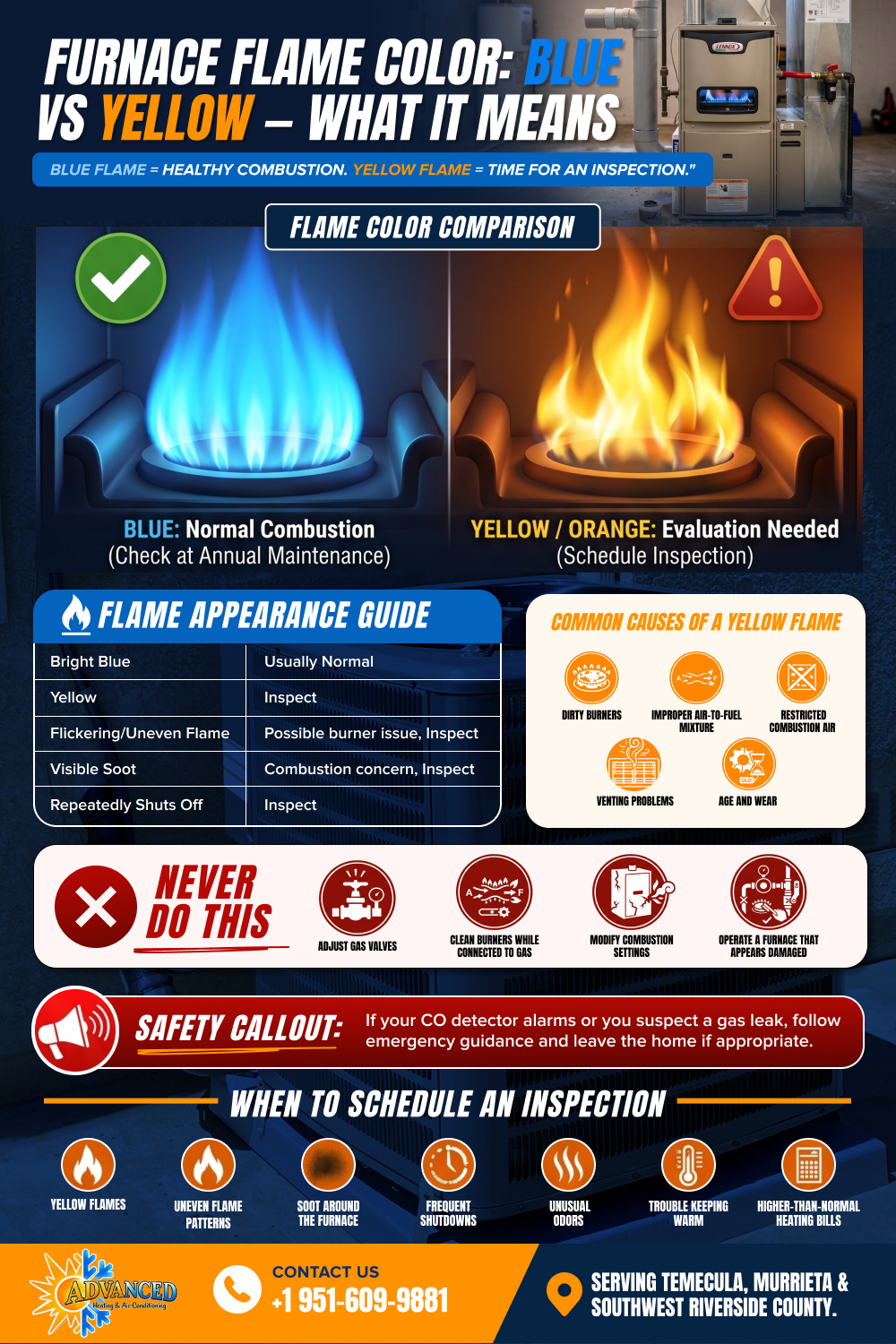
Under normal operating conditions, the burner flames in most residential natural gas furnaces should appear:
- Mostly blue
- Even across each burner
- Steady
- Well-defined
A blue flame generally indicates proper combustion.
If the flame suddenly becomes yellow or orange, it’s worth having the furnace inspected.
Why Flame Color Matters
The burner flame tells technicians a great deal about how a furnace is operating.
When we perform annual heating maintenance, we don’t simply verify that the furnace turns on.
We also evaluate:
- Burner operation
- Flame appearance
- Ignition
- Combustion performance
- Airflow
- Venting
- Safety controls
Changes in flame appearance can provide valuable clues that additional inspection is needed.
1. Dirty Burners
Over time, burners collect:
- Dust
- Dirt
- Rust
- Debris
These contaminants can interfere with normal flame patterns.
Professional cleaning helps restore proper burner operation.
2. Improper Air-to-Fuel Mixture
Gas furnaces require the correct mixture of fuel and combustion air.
If that balance changes, flame appearance may change as well.
Possible contributing factors include:
- Dirty burners
- Restricted combustion air
- Mechanical issues
- Installation concerns
These adjustments should only be made by qualified technicians.
3. Restricted Combustion Air
Your furnace needs adequate airflow for proper combustion.
Restricted combustion air may result from:
- Blocked intake piping
- Dirty components
- Storage blocking equipment clearances
- Ventilation issues
Maintaining the area around the furnace helps promote safe operation.
4. Venting Problems
High-efficiency furnaces rely on properly functioning vent systems.
If venting becomes restricted, the combustion process can be affected.
Potential causes include:
- Debris
- Animal nests
- Ice (in colder climates)
- Damaged vent piping
Professional inspection is recommended whenever venting concerns are suspected.
5. Age and Wear
As furnaces get older, components naturally wear.
Burners, igniters, and combustion-related components may require cleaning, adjustment, or replacement as part of normal maintenance.
Annual inspections help identify these issues before they affect reliability.
Is a Yellow Flame Dangerous?
A yellow flame doesn’t automatically mean your furnace is unsafe.
However…
It does indicate that the combustion process should be professionally evaluated.
Because combustion involves natural gas, venting, and safety systems, homeowners should avoid attempting repairs or adjustments themselves.
If you ever suspect a gas leak or your carbon monoxide detector alarms, follow emergency safety guidance immediately and leave the home if appropriate.
What Homeowners Should Never Do
Avoid:
- ❌ Adjusting gas valves.
- ❌ Cleaning burners while connected to gas.
- ❌ Modifying combustion settings.
- ❌ Operating a furnace that appears damaged.
Gas furnaces contain safety systems that should only be serviced by trained professionals.
Signs You Should Schedule an Inspection
Call an HVAC professional if you notice:
- Yellow burner flames
- Uneven flame patterns
- Soot around the furnace
- Frequent shutdowns
- Unusual odors
- Difficulty keeping the home warm
- Higher-than-normal heating bills
Many of these symptoms may have multiple causes, making a complete inspection the best approach.
Annual Maintenance Helps Prevent Problems
One reason we encourage annual furnace maintenance is because homeowners rarely see what’s happening inside their heating system.
During a professional inspection, technicians typically examine:
- Burner flames
- Ignition system
- Heat exchanger
- Blower assembly
- Air filter
- Electrical connections
- Safety controls
- Combustion performance
Finding small issues early often helps prevent unexpected winter breakdowns.
What Homeowners Can Check
While combustion should be left to professionals, homeowners can safely:
- ✔ Replace dirty air filters.
- ✔ Keep the furnace area clean.
- ✔ Avoid storing boxes or chemicals near the furnace.
- ✔ Keep intake and exhaust vents clear.
- ✔ Schedule yearly heating maintenance.
These simple habits support efficient system operation.
Comparison Table
- Bright Blue — Typical meaning: normal combustion. Inspection recommended? During annual maintenance.
- Yellow — Typical meaning: combustion should be evaluated. Inspection recommended? Yes.
- Flickering, uneven flame — Typical meaning: possible burner issue. Inspection recommended? Yes.
- Visible soot — Typical meaning: combustion concern. Inspection recommended? Yes.
- Furnace repeatedly shuts off — Typical meaning: multiple possible causes. Inspection recommended? Yes.
From the Field
One homeowner in Winchester called us after watching an online video that claimed every yellow furnace flame meant the heat exchanger had failed.
Naturally, they were worried.
During our inspection, we found the heat exchanger was in good condition. The actual issue was dirty burners that needed professional cleaning and servicing.
We’ve also inspected systems where unusual flame patterns pointed us toward airflow or combustion issues that were corrected before they became larger problems.
That’s why we never diagnose a furnace based on flame color alone.
Every heating system deserves a complete inspection before conclusions are made.
Frequently Asked Questions
What color should my furnace flame be?
Most residential natural gas furnaces normally produce a steady blue burner flame.
Can a dirty furnace cause yellow flames?
Dirty burners or other combustion-related issues can affect flame appearance and should be professionally evaluated.
Should I try adjusting the burners myself?
No.
Combustion adjustments involve natural gas and safety systems and should only be performed by qualified HVAC technicians.
Does a yellow flame mean I need a new furnace?
Not necessarily.
Many causes can affect flame appearance. A professional inspection helps determine the actual issue before any repair or replacement decisions are made.
In Summary
Your furnace’s burner flame provides valuable information about how the system is operating.
While a blue flame is generally expected during normal operation, a yellow flame is a sign that the combustion process should be professionally inspected.
Regular maintenance, clean burners, proper airflow, and routine safety inspections help keep your furnace operating efficiently and reliably throughout the heating season.
Why Trust Advanced Heating & Air Conditioning?
Since 2008, Advanced Heating & Air Conditioning has proudly served homeowners throughout Temecula, Murrieta, Menifee, Winchester, Lake Elsinore, Hemet, Wildomar, French Valley, and surrounding communities.
Our certified technicians perform detailed heating inspections using professional diagnostic equipment to evaluate combustion, airflow, ignition, venting, and overall system performance. We believe homeowners deserve honest answers, thorough inspections, and repairs based on facts—not guesswork.
Whether your furnace needs routine maintenance or you’re concerned about an unusual flame, we’re here to help you stay safe and comfortable all winter long.
Related Articles
- Why Is My Furnace Making Loud Noises?
- Why Is My Furnace Blowing Cold Air?
- Is It Better to Repair or Replace Your Furnace?
- How Often Should You Have Your HVAC System Serviced?
- Why Is My Heating Bill So High?
- How Often Should You Change Your HVAC Air Filter?
- Why Does My Air Conditioner Keep Turning On and Off?