



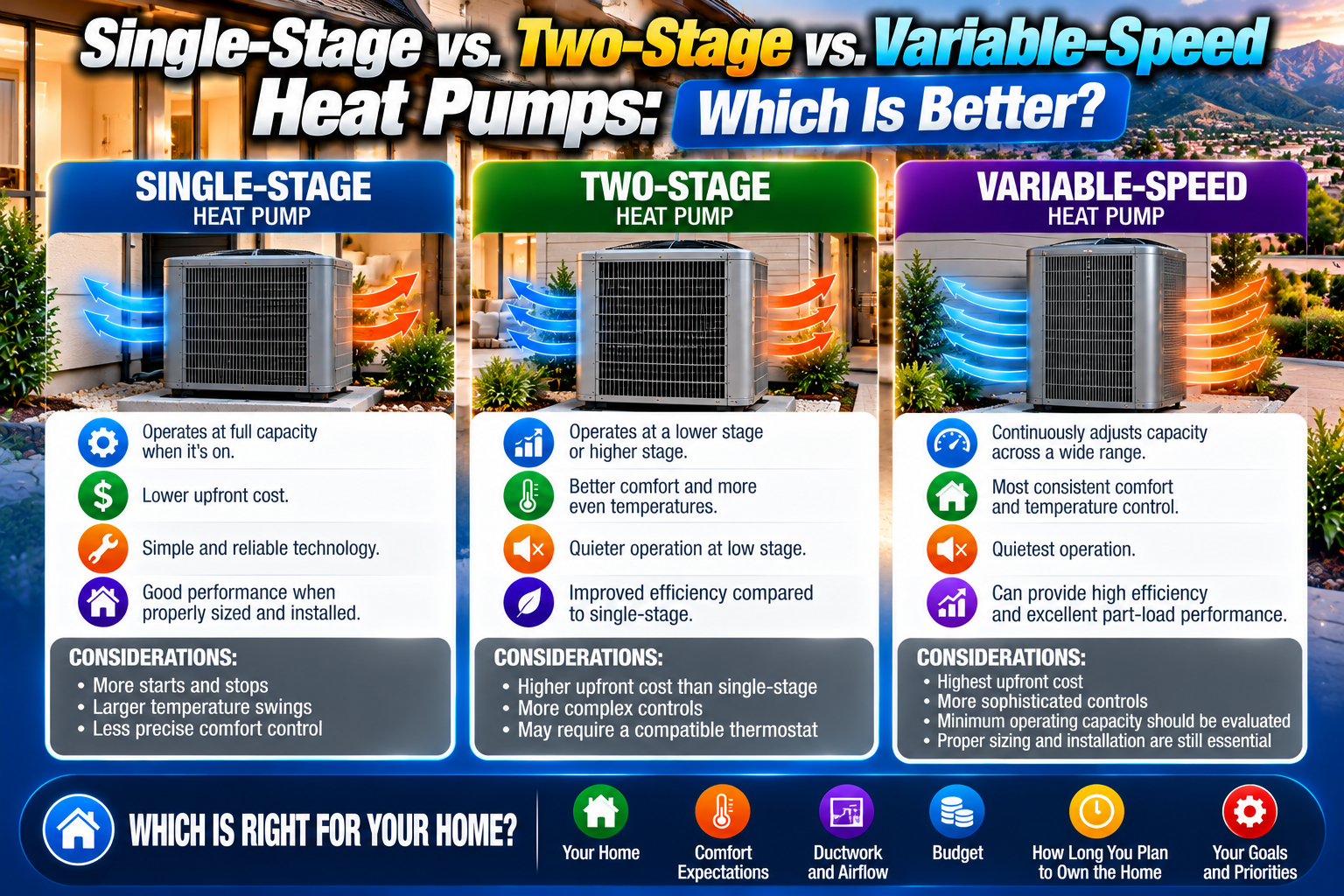
Single-Stage vs. Two-Stage vs. Variable-Speed Heat Pumps
Single-stage, two-stage, variable-speed—"premium" isn't automatically the right answer. Here's how each heat-pump type actually operates, the real differences in comfort, noise,
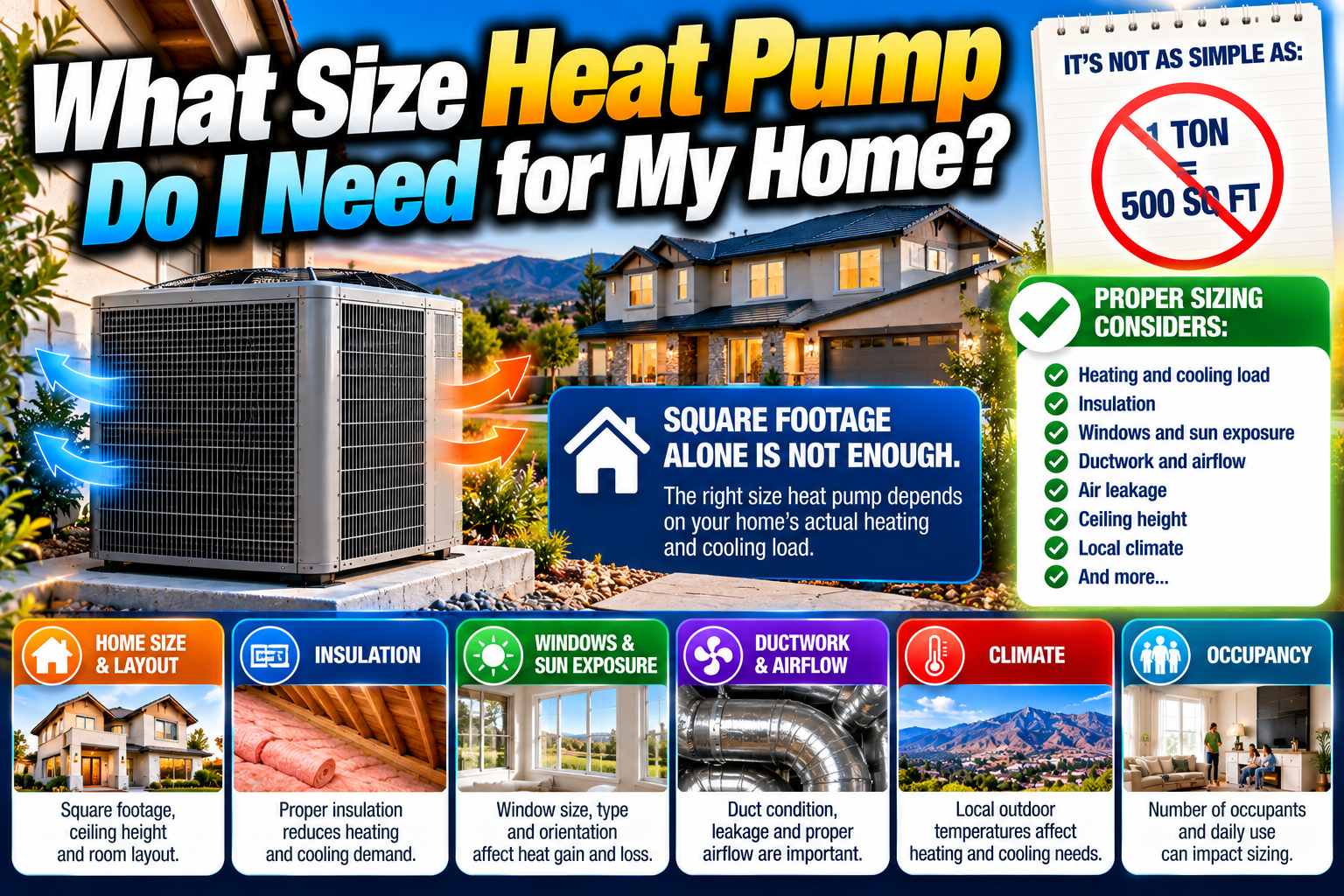
What Size Heat Pump Do I Need for My Home?
"How many tons do I need?" isn't answered by square footage. Two identical-size homes can need very different capacity. Here's what actually determines proper heat-pump sizing—an
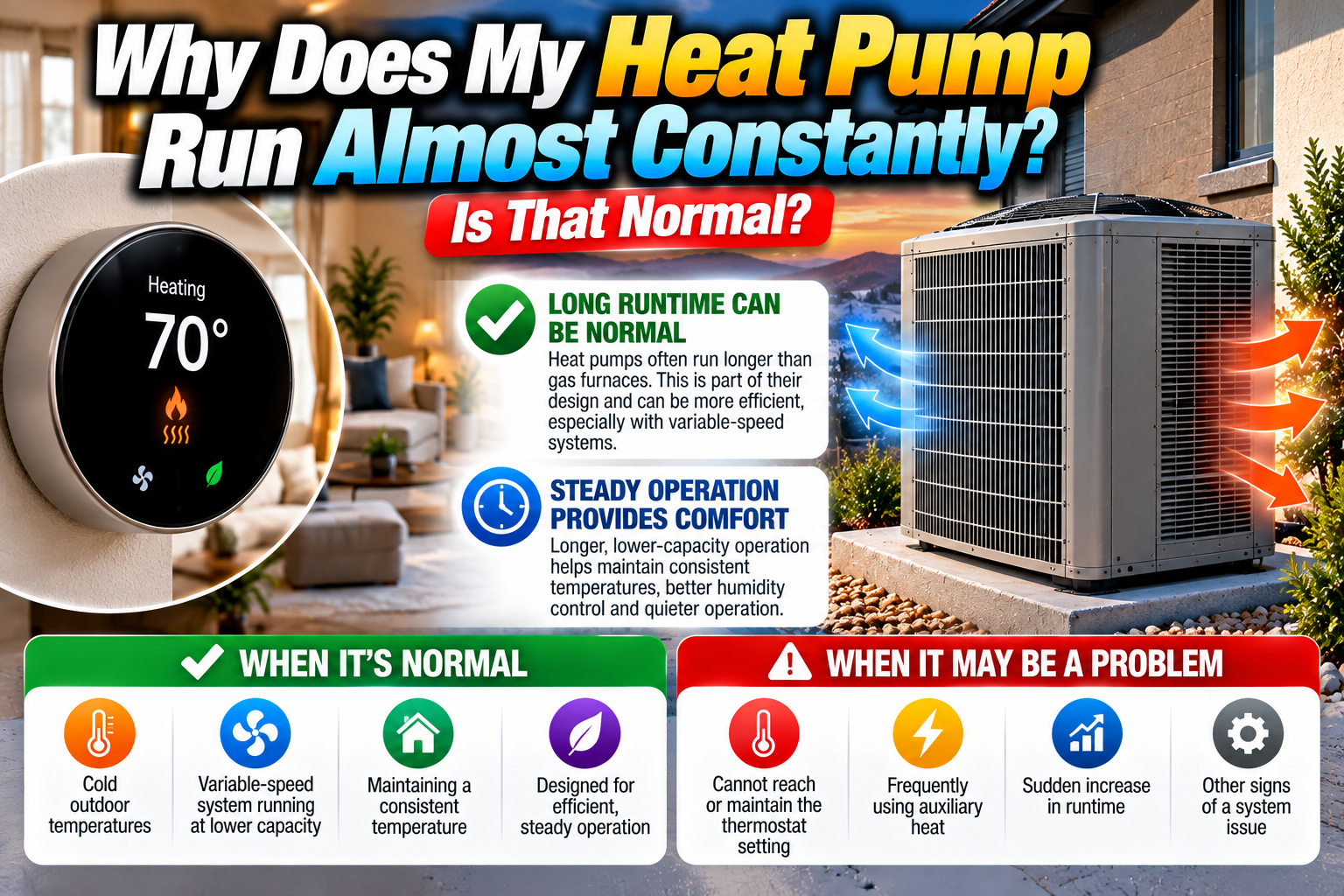
Why Does My Heat Pump Run Constantly? Is It Normal?
Heat pumps often run longer than a gas furnace did—and with variable-speed equipment, nearly all day can be normal. Here's how to tell steady, efficient operation from a heat pum
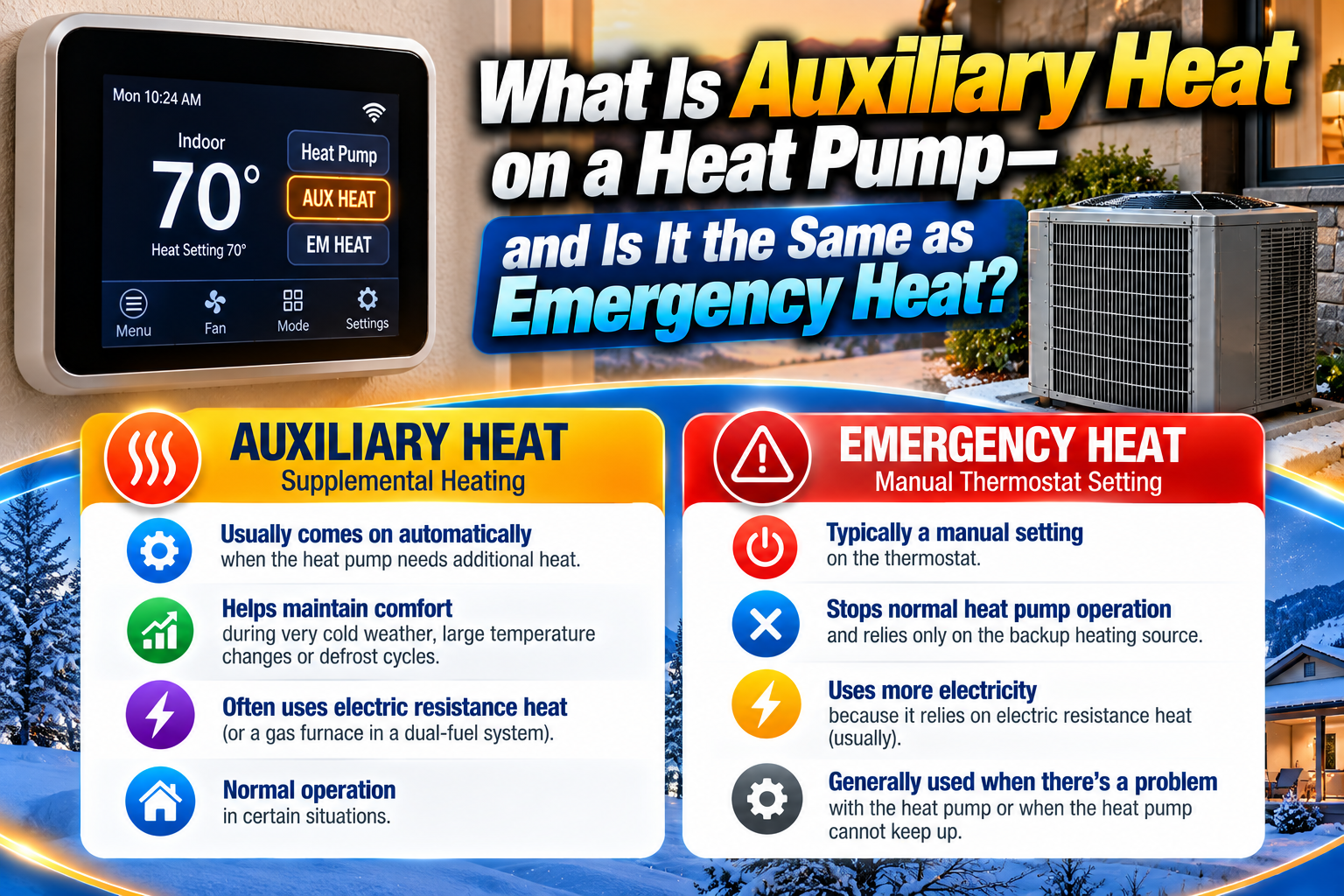
Auxiliary Heat vs. Emergency Heat on a Heat Pump
Saw AUX HEAT or EM HEAT on your thermostat? They're related but not the same. Here's what auxiliary and emergency heat each do, when they're normal, why they can spike your electri
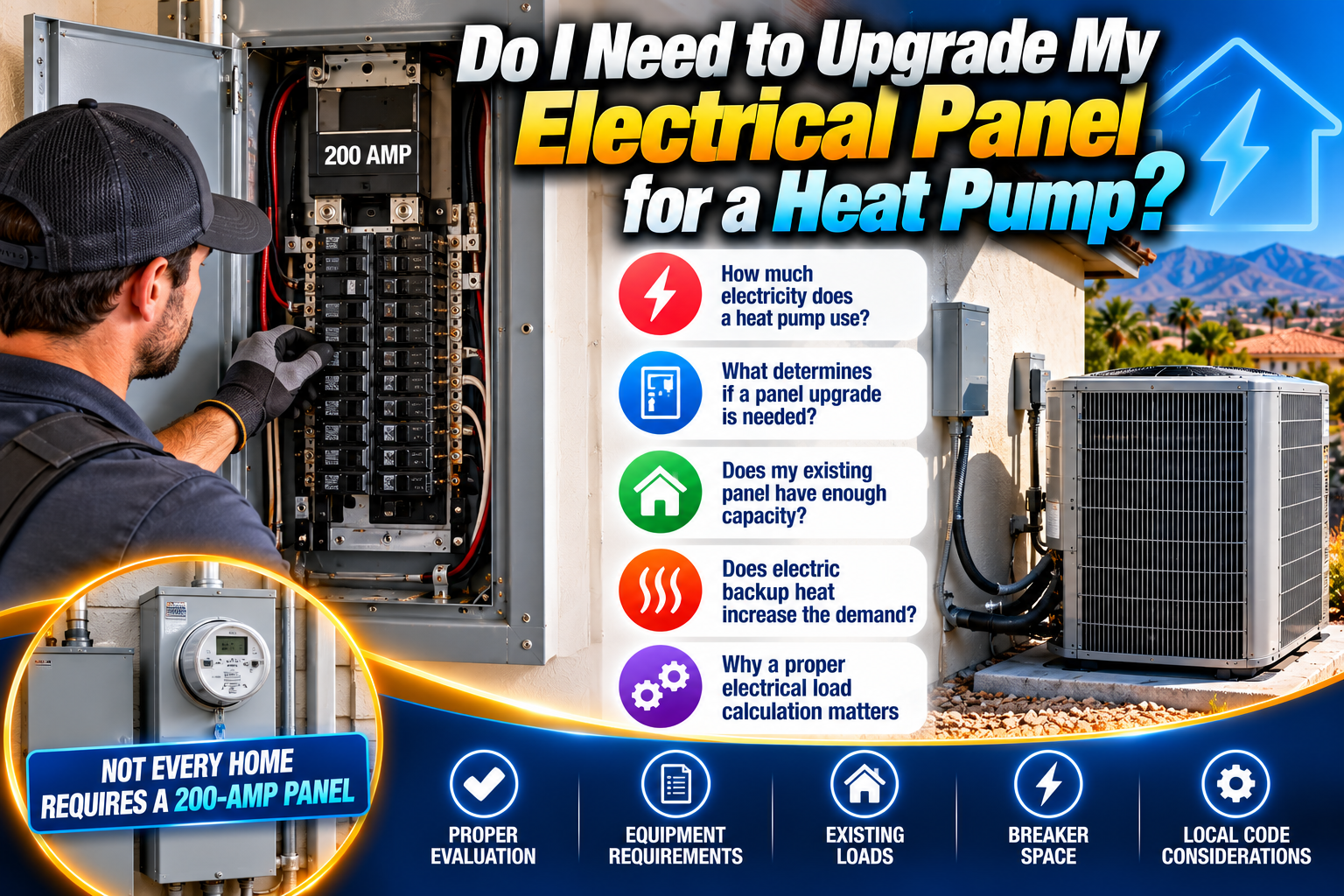
Do I Need to Upgrade My Electrical Panel for a Heat Pump?
"You'll need 200 amps first" isn't automatically true. Here's what actually determines a heat pump's electrical requirements, when a panel upgrade is really needed, and why a load
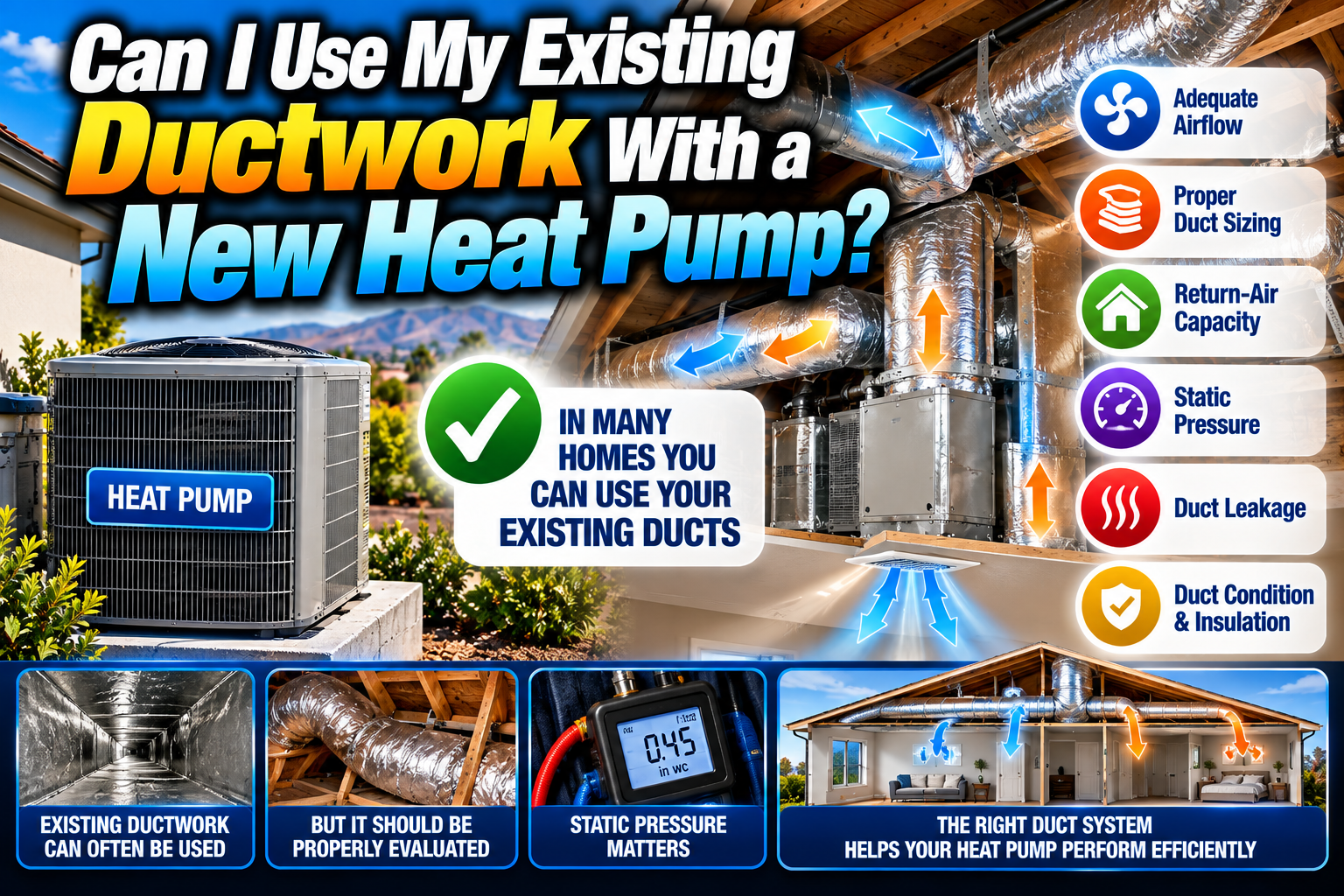
Can I Use My Existing Ductwork With a New Heat Pump?
You don't automatically need all-new ducts for a heat pump — but your old ducts shouldn't be assumed correct either. Here's what to check before installation.
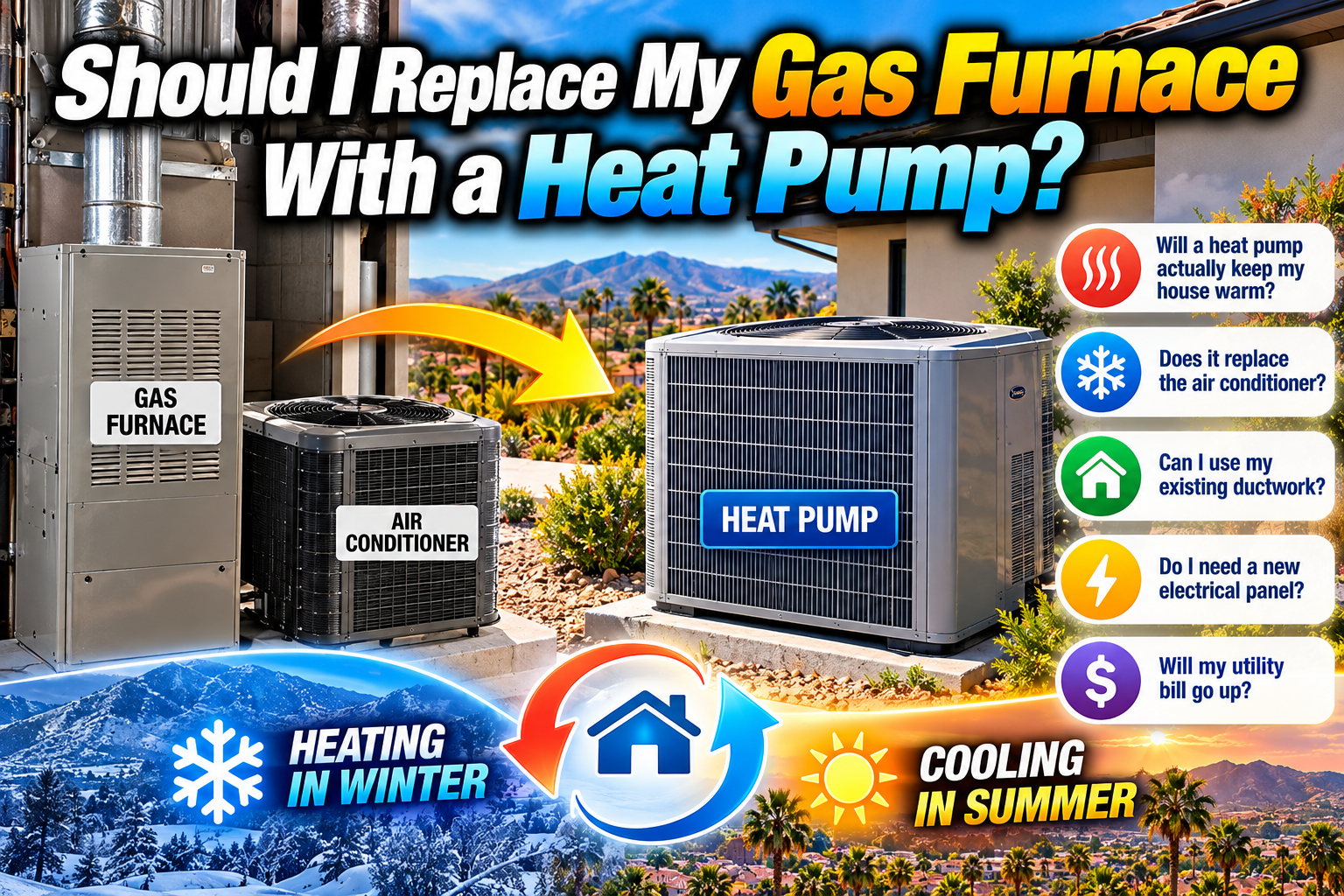
Should I Replace My Gas Furnace With a Heat Pump?
Furnace and AC aging out? A heat pump can do both jobs. Here's how heat pumps work in Southern California, what happens to your ductwork and gas, and how to decide.
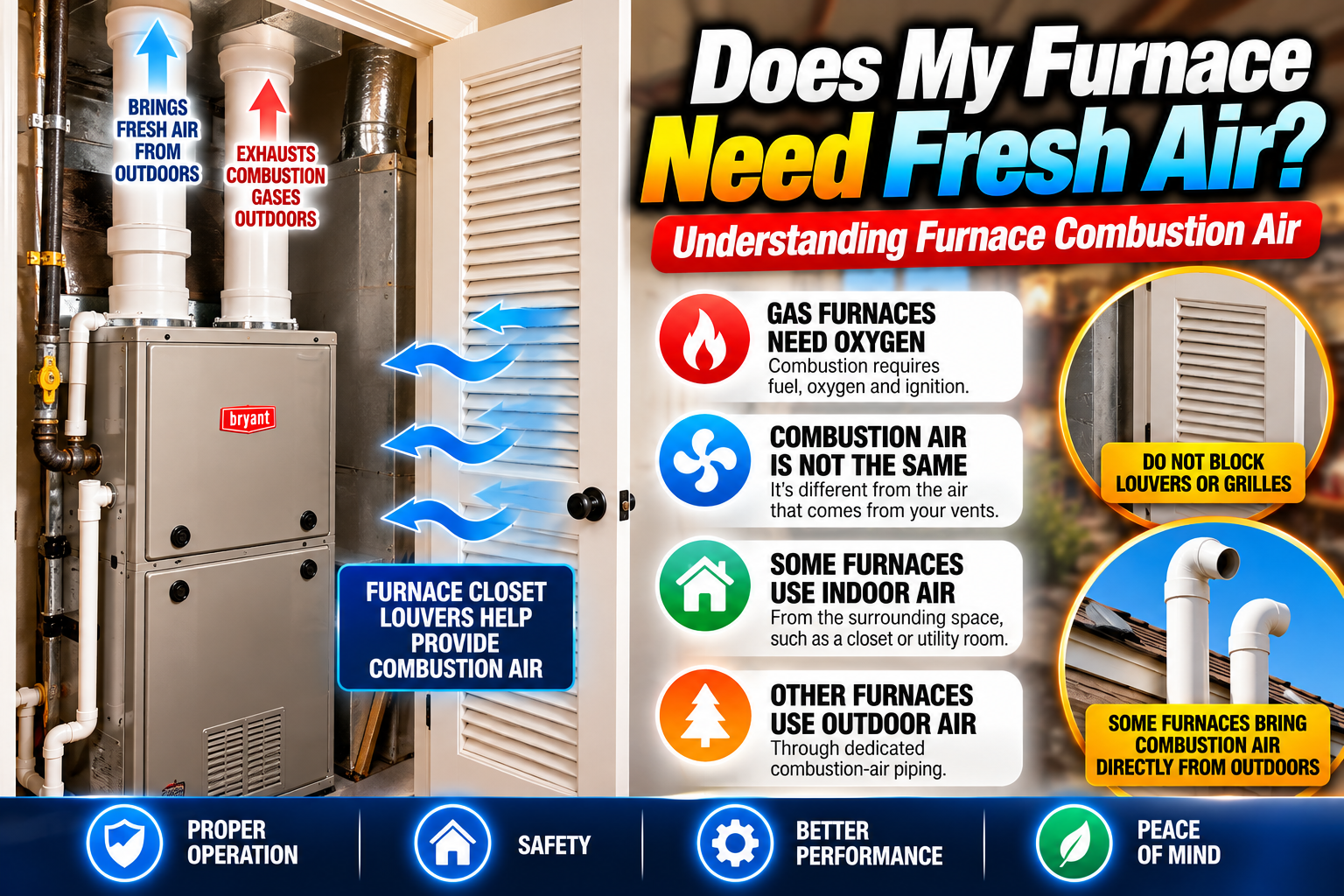
Does My Furnace Need Fresh Air? Combustion Air Explained
A gas furnace needs combustion air — not just gas and electricity. Here's what those closet vents and PVC pipes do, and why you shouldn't block them.
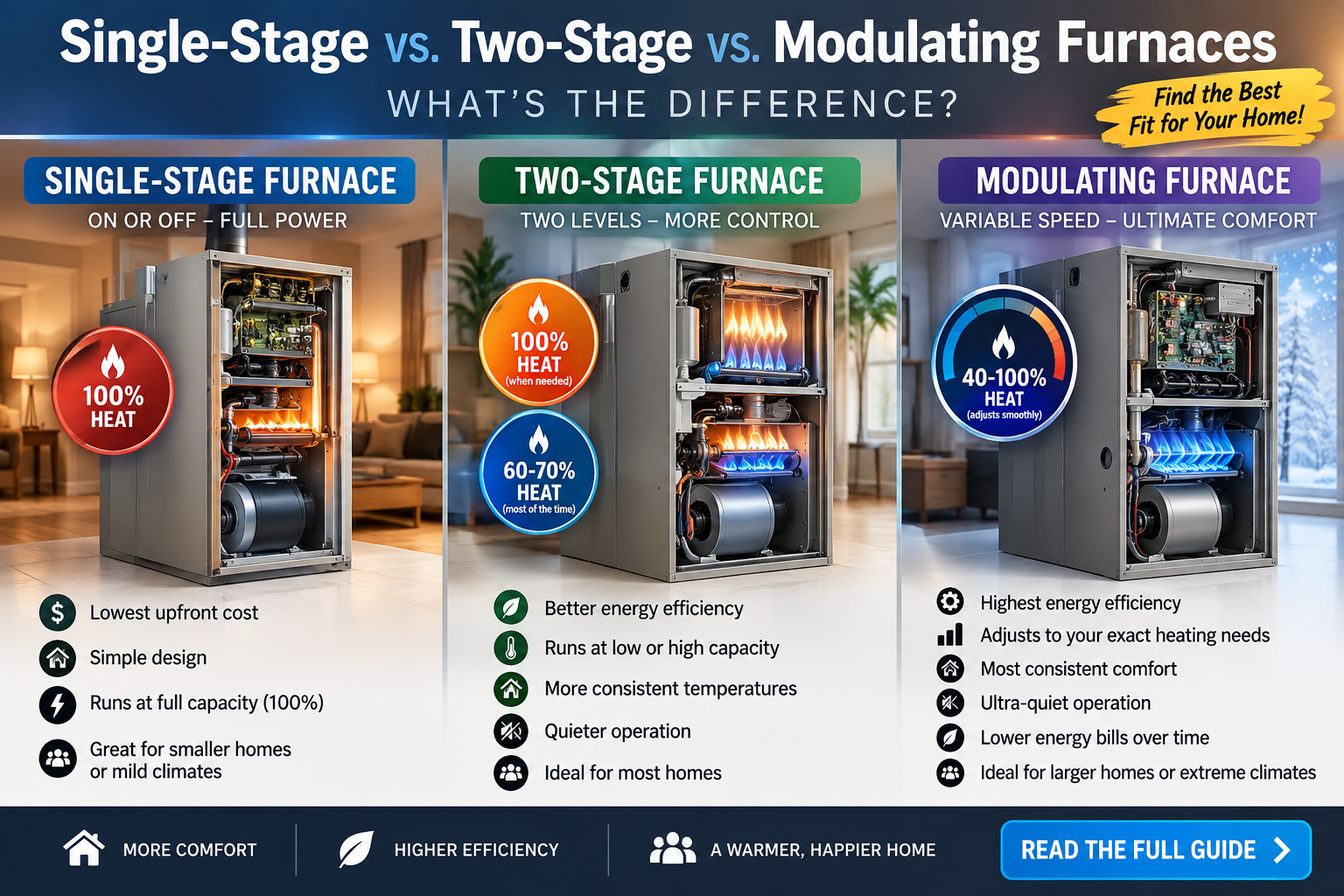
Single-Stage vs Two-Stage vs Modulating Furnaces
Single-stage, two-stage, modulating, variable-speed — here's what furnace stages actually mean for comfort, noise, and runtime, and how to choose in Southern California.
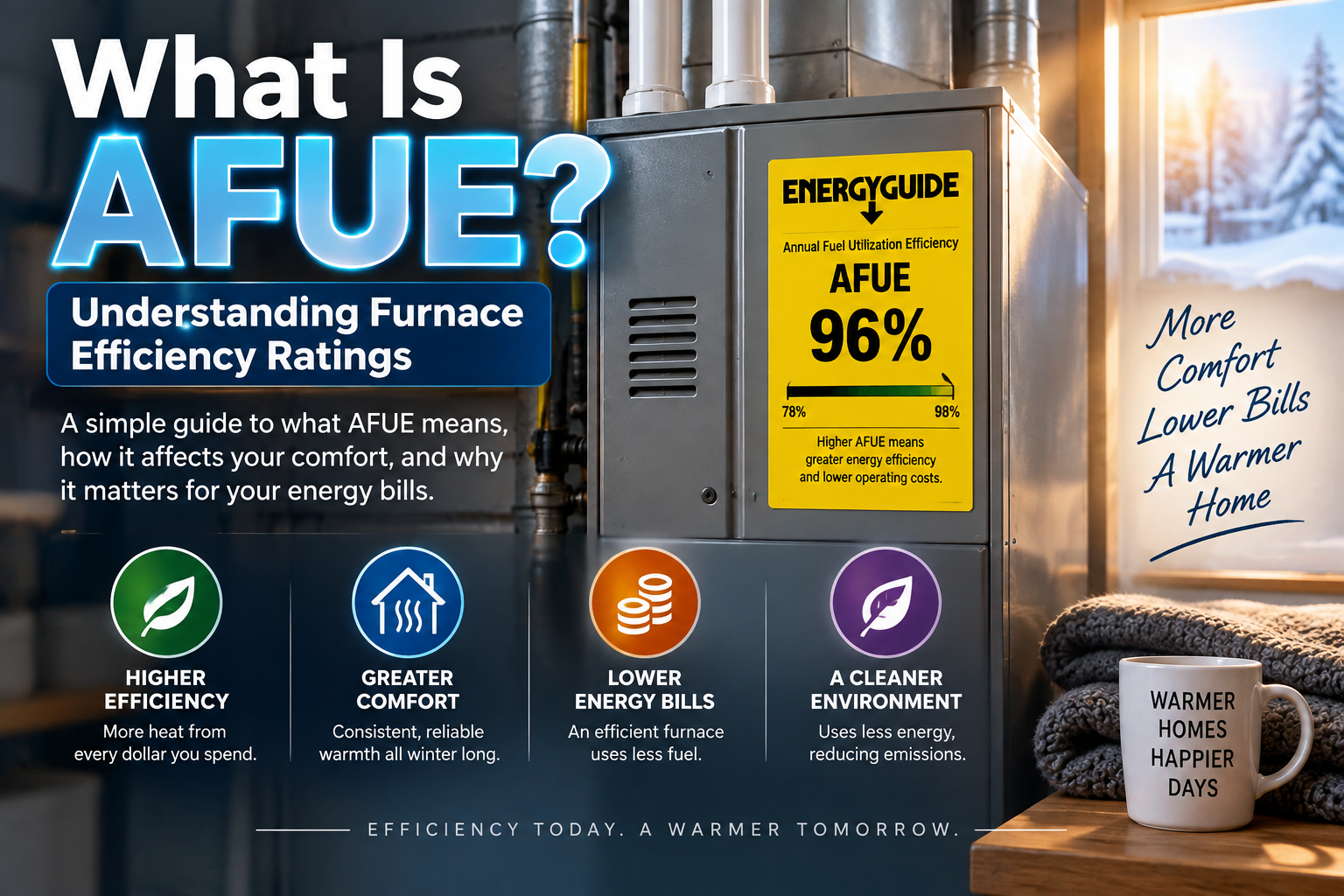
What Is AFUE? A Guide to Furnace Efficiency Ratings
A higher AFUE number isn't automatically the better furnace. Here's what AFUE really measures, what 80% vs 95% means, and how to choose in Southern California.


