


Should I Replace My Gas Furnace With a Heat Pump?
Should I Replace My Gas Furnace With a Heat Pump?
Your gas furnace is getting older.
Maybe it’s starting to need repairs.
Maybe your air conditioner is aging too.
Then someone tells you:
“Instead of installing another furnace and AC, you should consider a heat pump.”
That leads to a lot of questions.
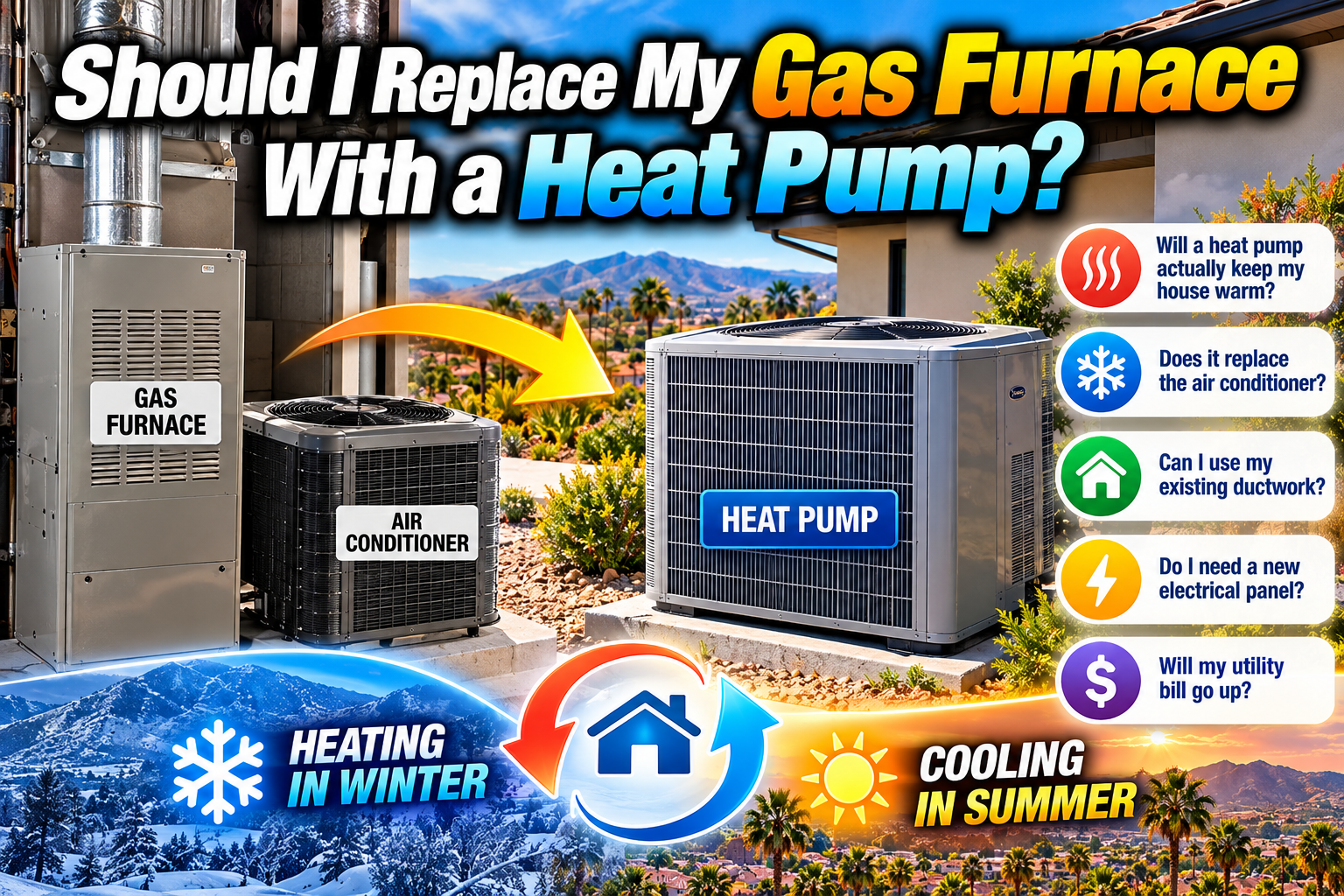
Will a heat pump actually keep your house warm?
Does it replace the furnace?
Does it replace the air conditioner too?
Can you use your existing ductwork?
Do you need a new electrical panel?
Will your utility bill go up?
And does switching make sense in a place like Temecula and the surrounding Southern California communities?
These are exactly the questions homeowners should ask before choosing their next HVAC system.
Key Takeaways
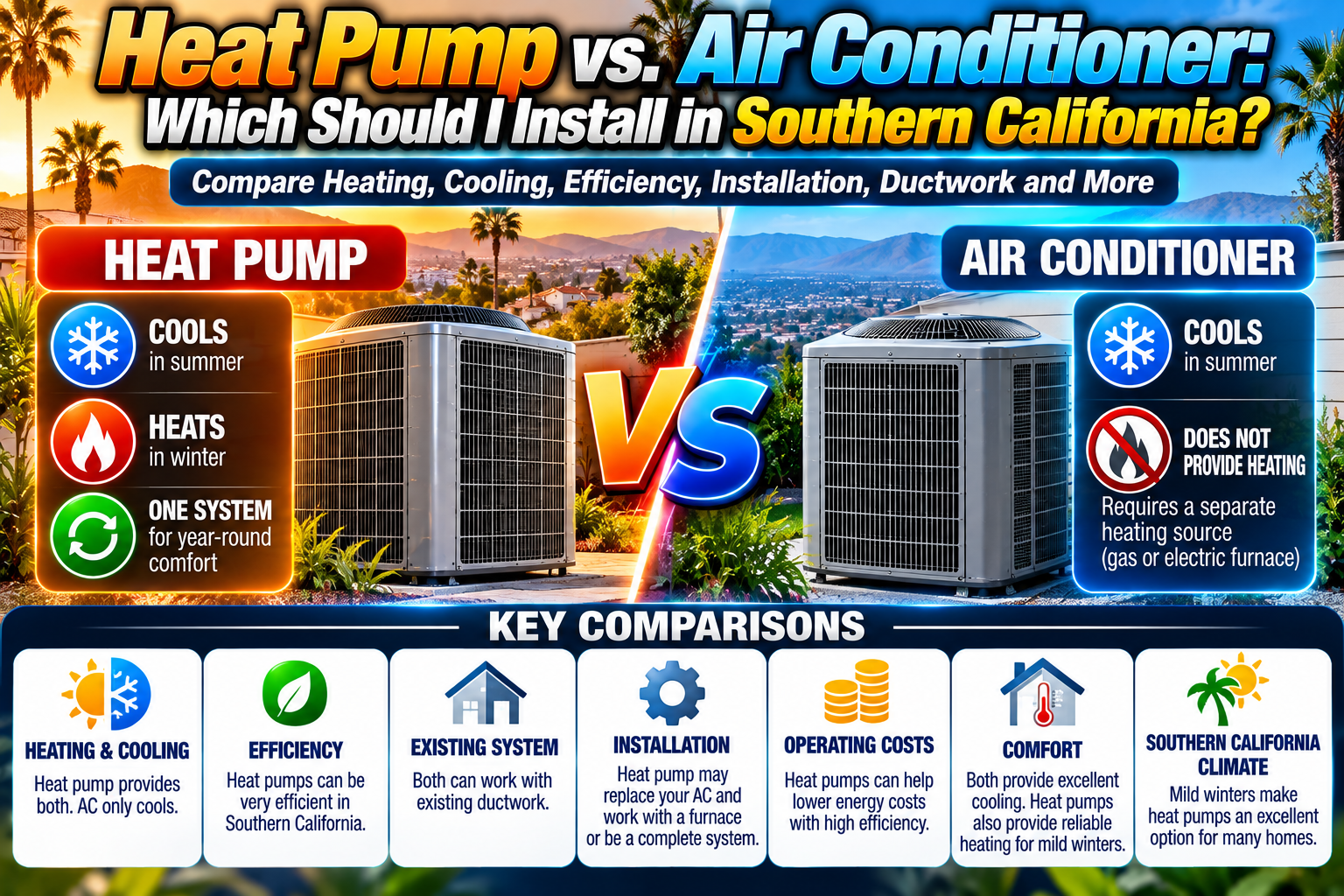
- A heat pump can provide both heating and air conditioning.
- In many homes, a heat pump can replace the traditional AC condenser and provide heating as well.
- Southern California’s relatively mild winters can make heat pumps an attractive option.
- Existing ductwork may be reusable, but it should be evaluated for airflow, sizing, leakage and condition.
- Electrical capacity needs to be checked before installation.
- A heat pump should be properly sized to the home’s heating and cooling loads.
- Switching doesn’t automatically guarantee lower utility bills.
- Homeowners with an existing gas furnace can also consider a dual-fuel system instead of eliminating gas completely.
- The right decision depends on the house—not simply whether heat pumps are popular.
First: What Is a Heat Pump?
A heat pump is an HVAC system that can provide:
Cooling in summer
and
Heating in winter.
During cooling mode, it operates similarly to a conventional central air conditioner.
It absorbs heat from inside your home and moves that heat outdoors.
During heating mode, the refrigeration cycle reverses.
The system extracts available heat from outdoor air and transfers it into your home.
So instead of creating heat by burning natural gas, the heat pump primarily:
Moves heat.
That’s the fundamental difference.
Does a Heat Pump Replace My Air Conditioner?
In a central heat-pump installation:
Yes, generally.
The outdoor heat-pump unit performs the cooling job that a conventional AC condenser would normally perform.
But it can also reverse operation and provide heating.
Instead of having:
AC = cooling only
the outdoor heat pump becomes:
Cooling + heating.
This is one reason a heat pump becomes especially interesting when your air conditioner and furnace are both approaching replacement age.
Does a Heat Pump Replace My Gas Furnace?
It can.
One common configuration is:
Heat pump + air handler
with no gas furnace used for normal heating.
But that’s not the only option.
Another configuration is:
Heat pump + gas furnace.
That’s commonly called a:
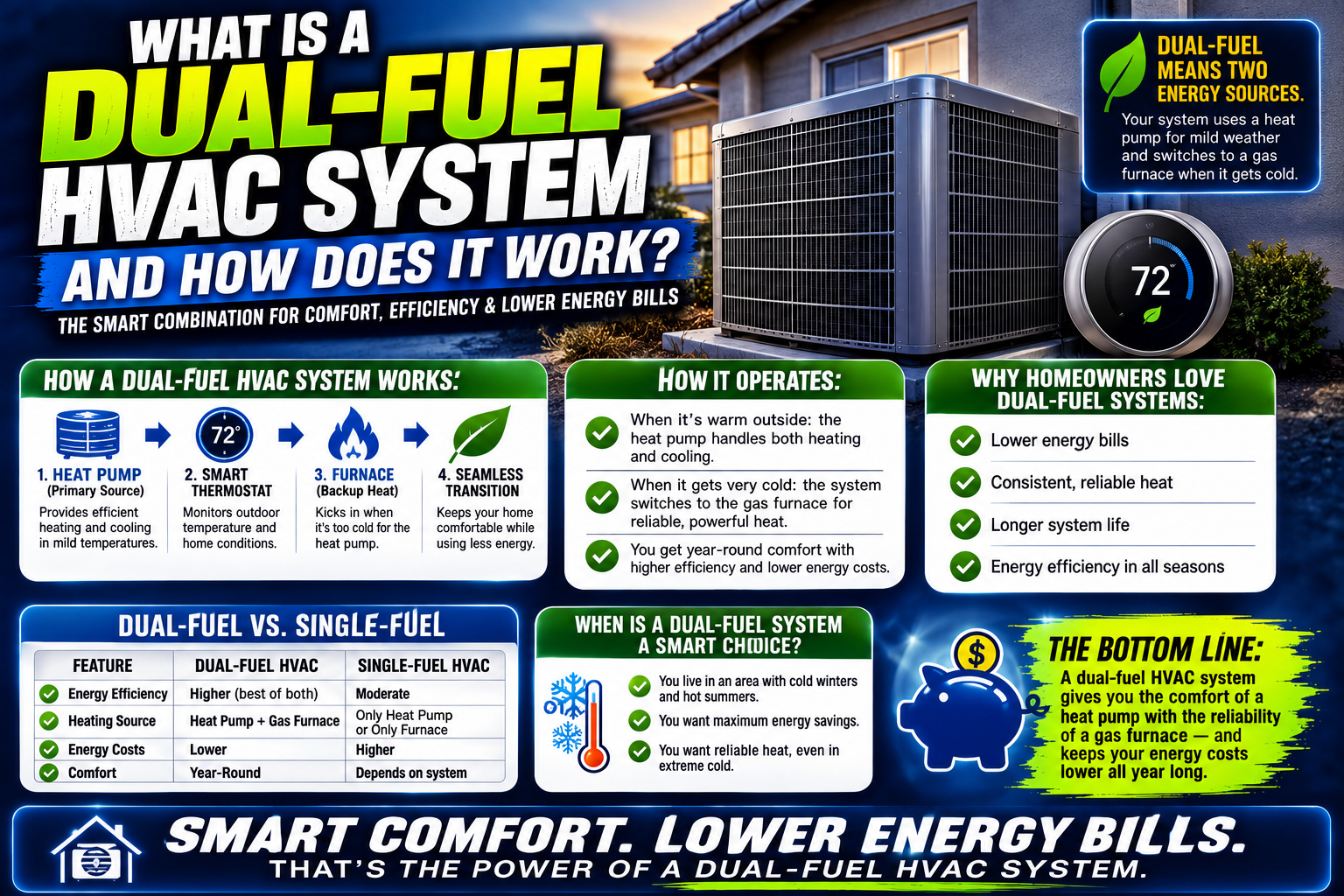
Dual-fuel system.
So switching to a heat pump doesn’t automatically mean you must eliminate natural gas heating.
Do Heat Pumps Work Well in Southern California?
Modern heat pumps can operate across a wide range of outdoor temperatures, with actual capacity and efficiency depending on the specific equipment and conditions.
Southern California is particularly interesting because winters are relatively mild compared with much of the United States.
That means homeowners in:
and surrounding communities generally don’t experience the prolonged extreme winter temperatures found in colder regions.
That can make heat pumps a very practical heating option when the equipment is correctly selected and installed.
This is also reflected in current homeowner discussions: people in moderate California climates are actively considering heat pumps when replacing aging furnaces.
Will a Heat Pump Keep My House Warm?
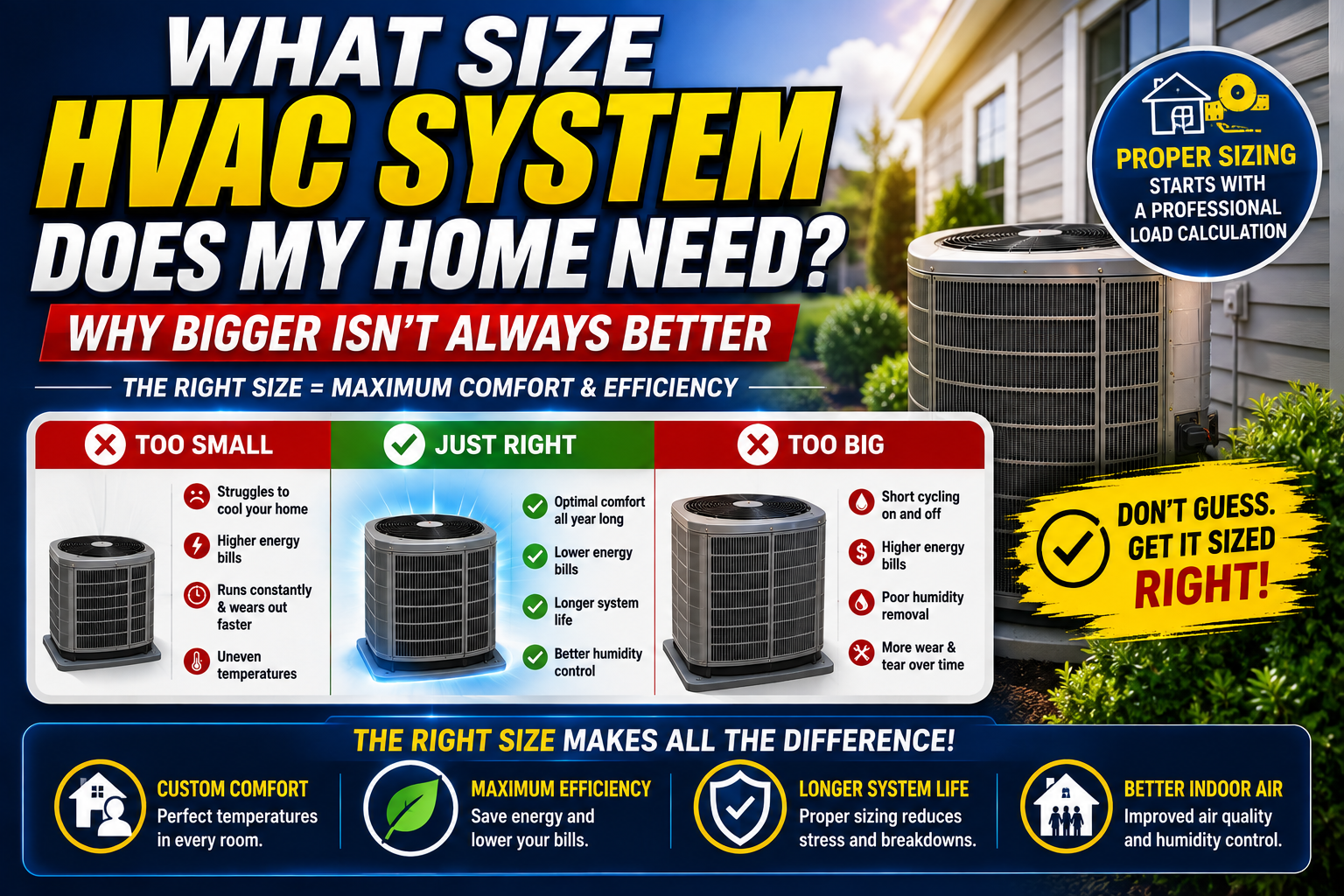
A properly designed heat-pump system should be selected to meet the home’s heating requirements under expected local conditions.
But this is where HVAC design matters.
You shouldn’t simply say:
“My old AC was 4 tons, so install a 4-ton heat pump.”
The contractor should evaluate the home’s:
- Heating load
- Cooling load
- Ductwork
- airflow
- insulation
- windows
- air leakage
and other characteristics.
The equipment then needs to be selected based on actual performance data for the temperatures where the home is located.
Does Heat-Pump Air Feel Different From Furnace Air?
It can.
This is something homeowners converting from gas should understand before installation.
A gas furnace can produce relatively hot supply air.
A heat pump often provides heating using longer, steadier cycles with supply air that may feel less intensely hot at the register.
That does not necessarily mean the heat pump isn’t heating.
The comfort strategy is different.
Instead of:
Very hot air → furnace off → temperature falls → furnace on
a properly designed heat pump may provide:
Steadier heating for longer periods.
Many homeowners find that comfortable once they understand how the system operates.
Will My Heat Pump Run Longer Than My Gas Furnace?
Possibly—and that isn’t automatically a problem.
Heat pumps frequently use longer operating cycles.
Variable-capacity equipment can run at reduced output for extended periods to closely match the home’s heating or cooling demand.
Homeowners shouldn’t judge system performance solely by:
“How long is it running?”
Instead ask:
Is the home comfortable?
Is it maintaining the thermostat setting?
Is the equipment operating within its designed parameters?
Can I Use My Existing Ductwork?
Possibly.
And this is one of the most important questions to answer before installation.
The existing duct system should be evaluated for:
- Supply capacity
- Return capacity
- Duct sizing
- Leakage
- Insulation
- Damaged flex duct
- Restrictions
- Static pressure
and overall airflow.
A California homeowner asking this exact gas-to-heat-pump question recently specifically wanted to know whether existing attic ductwork would need modification.
The answer shouldn’t be:
“Heat pumps always need new ducts.”
Nor should it be:
“Your old ducts are automatically fine.”
The correct answer is:
Evaluate them.
Why Is Ductwork So Important With a Heat Pump?
Because buying high-efficiency equipment doesn’t fix poor air distribution.
Imagine installing a premium heat pump onto ductwork with:
- Undersized returns
- crushed flex ducts
- major leakage
- or excessive static pressure.
You now own expensive equipment attached to an airflow problem.
The homeowner may still experience:
- Weak airflow
- hot and cold rooms
- noise
- long runtimes
and poor comfort.
Good HVAC installation means evaluating the system, not merely replacing equipment.
Do I Need to Replace All My Ductwork?
Not automatically.
Existing ducts may be reusable if they’re:
- Properly sized
- reasonably sealed
- in good condition
- appropriately insulated
- and capable of handling the required airflow.
Some homes may need:
No duct replacement.
Others may need:
- Duct sealing
- return-air improvements
- selected duct replacement
- or a larger redesign.
This should be determined from the actual house.
Will I Need a New Thermostat?
Possibly.
The thermostat has to be compatible with the new system and its control strategy.
Depending on the equipment, the system may use:
Conventional thermostat controls
or
manufacturer-specific communicating controls.
A dual-fuel system may also require controls capable of deciding when the heat pump operates and when the gas furnace operates.
Thermostat compatibility should therefore be part of the equipment-selection process.
Do I Need an Electrical Upgrade for a Heat Pump?
Maybe.
A contractor should evaluate the home’s electrical system before finalizing the installation.
Important considerations can include:
- Available panel capacity
- breaker requirements
- wire size
- outdoor-unit requirements
- indoor equipment
- and whether supplemental electric heat is part of the system.
A homeowner in a current California heat-pump discussion specifically asked about the electrical requirements before converting from a gas furnace.
That’s a very reasonable question.
Does Every Heat Pump Need Electric Heat Strips?
No.
System configurations vary.
Some heat-pump systems use supplemental electric resistance heat.
Others may be designed differently.
A dual-fuel system can use a gas furnace as the alternate heating source.
The appropriate configuration depends on:
- Climate
- equipment capacity
- home heating load
- electrical infrastructure
- and homeowner preferences.
What Is a Dual-Fuel Heat Pump?
A dual-fuel system combines:
Electric heat pump
Gas furnace.
The heat pump can provide heating during appropriate conditions.
The gas furnace can take over when the system controls determine that gas heating is preferred.
This gives homeowners two heating sources.
Current homeowners are actively comparing heat-pump-only systems with heat-pump-plus-gas-furnace configurations.
Do I Need Dual Fuel in Temecula?
Not every home does.
Southern California’s relatively mild climate means many homes can be candidates for all-electric heat-pump systems.
But dual fuel may still appeal to homeowners who:
- Already have natural gas infrastructure
- Prefer gas-furnace heating
- Want two heating options
- or have other economic or comfort considerations.
The decision should be based on the house and homeowner—not a blanket rule.
What Happens to My Existing Gas Furnace?
If you’re converting to an all-electric heat-pump/air-handler system, the gas furnace may be removed as part of the project.
The gas connection would then need to be properly addressed as required for the installation.
If you’re installing dual fuel, the gas furnace remains part of the heating system.
What If My Gas Furnace Is Bad but My AC Is Still Good?
This is one of the more difficult decisions.
Suppose:
Furnace = 20 years old
but
AC = 7 years old.
Should you remove a functioning air conditioner just to install a heat pump?
There isn’t one correct answer.
A Southern California homeowner recently posed essentially this exact situation: an older furnace was failing while the AC was still functional, and they were weighing whether to replace only the furnace or move to a heat pump.
Consider:
- Remaining AC life
- repair history
- efficiency
- heat-pump installation cost
- long-term plans
- and whether replacing both now makes financial sense.
What If My Furnace and AC Are Both Old?
Now the heat-pump conversation becomes much more compelling.
If you’re already replacing:
Outdoor AC
and
Indoor furnace
you are effectively making a complete HVAC-system decision.
That’s the ideal time to compare:
New AC + gas furnace
versus
Heat pump + air handler
versus
Heat pump + gas furnace (dual fuel).
Instead of automatically replacing what you already had, compare the options.
Will a Heat Pump Lower My Utility Bills?
Maybe.
But don’t let anyone promise this without evaluating your situation.
Operating cost depends on:
- Electricity rates
- natural-gas rates
- heat-pump efficiency
- outdoor temperature
- thermostat setting
- home heating load
- solar production
- duct losses
- and system usage.
A heat pump can be highly efficient at moving heat.
That doesn’t mean every homeowner will see the same dollar savings.
What If I Have Solar?
Solar can change the economics of electrification.
A homeowner with available solar production may evaluate electric heating differently than someone purchasing all electricity from the grid.
But don’t simply assume:
Solar = free heat forever.
Consider:
- Annual solar production
- household consumption
- EV charging
- rate structure
- and expected heat-pump usage.
A Southern California homeowner discussion specifically raised solar production as part of the gas-versus-heat-pump decision.
Can a Heat Pump Cool as Well as an Air Conditioner?
A properly selected heat pump can provide central cooling just like a properly selected air-conditioning system.
Remember:
In cooling mode, both use a refrigeration cycle to move heat from inside to outside.
The actual cooling performance depends on:
- Equipment capacity
- efficiency
- installation
- airflow
- ductwork
- and building load.
The word heat pump doesn’t mean it’s primarily a heater that happens to provide weak AC.
Cooling is one of its primary functions.
Does a Heat Pump Work When It’s 100°F Outside?
Heat-pump cooling performance depends on the specific equipment and outdoor conditions, just as conventional AC performance does.
In the Temecula Valley, equipment needs to be selected for summer cooling demand as well as winter heating demand.
That’s why the load calculation matters in both directions.
A system should not be selected based solely on winter heating.
Is a Heat Pump More Efficient Than a Gas Furnace?
This is not an apples-to-apples efficiency comparison.
A furnace creates heat by burning fuel.
A heat pump transfers heat.
Because the heat pump moves heat rather than creating all of it through resistance, it can deliver multiple units of heat for each unit of electrical energy consumed under appropriate conditions.
That’s why heat pumps are often described using:
COP
and seasonal heating metrics such as:
HSPF2
rather than furnace AFUE alone.
What Is HSPF2?
HSPF2 is a seasonal heating-efficiency metric used for heat pumps.
Generally, a higher rating represents greater seasonal heating efficiency under the test procedure.
But just like SEER2:
The rating isn’t the whole installation.
Actual performance depends on:
- Climate
- equipment sizing
- ductwork
- controls
- installation
- and home characteristics.
Should I Buy the Highest-Efficiency Heat Pump Available?
Not automatically.
Higher efficiency can be valuable.
But compare:
- Equipment cost
- expected operating savings
- comfort features
- variable-capacity capability
- warranty
- noise
- electrical requirements
- and how long you expect to own the home.
The most expensive unit isn’t automatically the best investment for every house.
Should My Heat Pump Be the Same Size as My Old AC?
Not automatically.
This is important.
The old air conditioner may have been improperly sized.
The home may also have changed through:
- Window replacement
- insulation
- room additions
- duct modifications
- or other improvements.
Heat-pump sizing should consider both heating and cooling requirements.
Don’t simply copy the old equipment label.
Does a Heat Pump Need Maintenance?
Yes.
A heat pump performs both heating and cooling duties, so maintenance remains important.
Service can include evaluating:
- Filters
- indoor coil
- outdoor coil
- refrigerant system
- electrical components
- blower
- airflow
- thermostat/control operation
- and system performance.
Heat pumps aren’t maintenance-free simply because they don’t burn gas.
How Long Does a Heat Pump Last?
There isn’t one guaranteed lifespan.
Equipment life depends on:
- Installation
- runtime
- maintenance
- climate
- airflow
- equipment quality
- and repair history.
Because a heat pump may operate during both summer and winter, annual runtime can be greater than an AC-only condenser.
Proper installation and maintenance therefore matter.
Is a Heat Pump Worth It in Temecula?
For many homeowners, it deserves serious consideration.
The Temecula Valley’s climate can make heat-pump technology particularly attractive because one system can handle:
Hot summer cooling
and
mild-to-moderate winter heating.
But whether it’s the right investment for a particular home depends on:
- Existing equipment
- ductwork
- electrical capacity
- utility rates
- solar
- home heating/cooling load
- and homeowner goals.
The right answer should come from an actual evaluation—not a generic online calculator.
Questions to Ask Before Replacing a Gas Furnace With a Heat Pump
When comparing proposals, ask:
- Did you calculate my heating and cooling requirements?
- Can my existing ductwork handle the airflow?
- Did you check static pressure?
- Can my electrical panel support the equipment?
- Do I need supplemental heat?
- Should I consider dual fuel?
- What are the heat pump’s heating-capacity ratings at lower outdoor temperatures?
- What are the SEER2 and HSPF2 ratings?
- What thermostat/control system does it use?
- What happens to my existing gas connection?
- What warranties are included?
Those questions produce a much better conversation than simply:
“How many tons is it?”
Frequently Asked Questions
Can a heat pump completely replace my gas furnace?
Yes, depending on the home’s heating requirements, equipment selected, electrical infrastructure, and system design.
Does a heat pump replace my AC too?
A central heat pump provides both cooling and heating, so its outdoor unit typically performs the job of the conventional AC condenser.
Are heat pumps good for Southern California?
Southern California’s relatively mild winter climate can make heat pumps an attractive option, provided the system is correctly sized and installed.
Can I keep my existing ductwork?
Possibly. The ductwork should be evaluated for size, airflow, leakage, insulation, and condition.
Do I need to upgrade my electrical panel?
Not always. Electrical requirements depend on the equipment and existing electrical system.
Will a heat pump lower my gas bill?
An all-electric heat pump can significantly reduce or eliminate furnace gas use, but total household gas usage depends on other gas appliances.
Will my electric bill increase?
Heating with a heat pump adds electrical consumption. Whether your total energy cost rises or falls depends on electricity rates, gas rates, equipment efficiency, solar, usage, and the home.
Do heat pumps blow cold air?
During normal heating, heat-pump supply air can feel cooler than gas-furnace supply air while still being warm enough to heat the home. That’s different from an equipment malfunction producing truly cold air.
Should I keep my gas furnace as backup?
Some homeowners choose dual fuel. Others install an all-electric heat-pump system. The best configuration depends on the home and homeowner’s priorities.
Is a heat pump better than a furnace?
Neither is universally “better.” They use different technologies and have different advantages. In Southern California, a heat pump deserves serious consideration because it provides both heating and cooling.
What if my AC is still fairly new?
Compare the remaining value and expected life of the AC against the cost and benefits of replacing the entire system now.
What if both my AC and furnace are old?
That’s an excellent time to compare a traditional AC/furnace replacement against a heat-pump system because you’re already considering replacement of both major components.
Don’t Automatically Replace What You Already Have
For decades, a common Southern California HVAC replacement was:
Old AC → new AC
Old gas furnace → new gas furnace.
That’s still an option.
But it’s no longer the only conversation homeowners should have.
If your HVAC system is approaching replacement, ask about:
Heat pump + air handler
Heat pump + gas furnace
and
Traditional AC + furnace.
Then compare those options based on the actual house.
That’s much better than selecting equipment simply because:
“That’s what was installed before.”
Heat Pump Installation in the Temecula Valley
Advanced Heating & Air Conditioning installs heat pumps and can evaluate whether a heat-pump system makes sense for your home.
A proper recommendation should consider the home’s heating and cooling loads, ductwork, airflow, electrical capacity and other characteristics before equipment is selected.
Advanced serves Temecula, Murrieta, Menifee, Winchester, Wildomar, French Valley, Canyon Lake, Lake Elsinore, Hemet and surrounding Southern California communities.
Advanced Heating & Air Conditioning
951-609-9881
California Contractor License #916901
AdvancedHeatingAndAir.com
REAL PEOPLE. REAL SERVICE. REAL COMFORT.