


Why Does My Furnace Smell Like It’s Burning? 9 Common Causes Every Homeowner Should Know
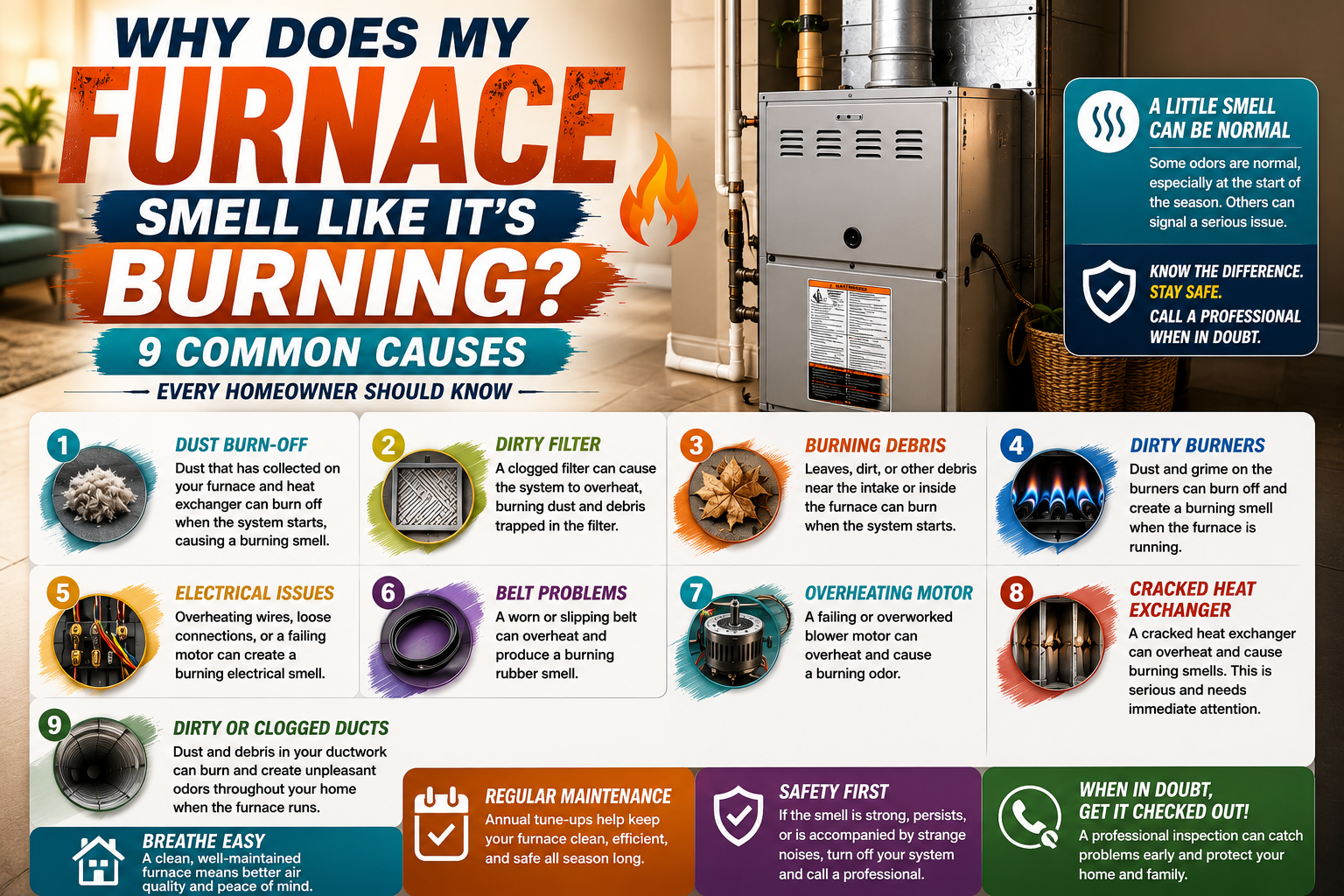
Why Does My Furnace Smell Like It’s Burning? 9 Common Causes Every Homeowner Should Know
Key Takeaways
- A slight burning dust smell during the first use of the heating season is usually normal.
- Persistent burning odors should never be ignored.
- Dirty air filters, overheating, electrical problems, or foreign objects may all cause unusual smells.
- If you smell burning plastic, electrical wiring, or gas, turn the system off and seek professional assistance immediately.
Table of Contents
- Is a Burning Smell Normal?
- Common Causes of Furnace Odors
- When Should You Be Concerned?
- What You Can Check Yourself
- Frequently Asked Questions
- From the Field
- Summary
Why Does My Furnace Smell Like It’s Burning?
Every fall, we receive dozens of phone calls from homeowners saying:
“I turned my heater on for the first time and it smells like something is burning.”
The good news?
Many times, this is completely normal.
But not every burning smell is harmless.
Learning the difference between a temporary seasonal odor and a warning sign can help protect both your HVAC system and your home.
The Most Common Cause: Dust Burning Off
If your furnace has been sitting unused for several months, dust naturally settles on:
- Heat exchangers
- Burners
- Blower components
- Interior metal surfaces
When the furnace starts for the first time, this dust burns away.
You may notice:
- A light burning smell
- Slight haze near supply vents
- The odor lasting anywhere from a few minutes to an hour
This is one of the most common questions we answer every heating season.
If the smell disappears after the first few heating cycles, there’s usually no cause for concern.
1. Dirty Air Filter
A clogged air filter restricts airflow.
Restricted airflow can cause the furnace to operate at higher temperatures.
In some cases, homeowners notice:
- Hot metal smells
- Slight burning odors
- Reduced airflow
Replacing the air filter is one of the easiest ways to help your furnace operate efficiently.
2. Electrical Components
If the smell resembles:
- Burning plastic
- Melting insulation
- Hot electrical wiring
Turn the furnace off immediately.
Possible causes include:
- Loose wiring
- Overheated motors
- Failing capacitors
- Electrical shorts
- Damaged control boards
Electrical smells should always be inspected promptly.
3. Blower Motor Problems
Blower motors contain bearings and electrical windings.
As motors begin wearing out, they may produce:
- Hot electrical smells
- Burning insulation odors
- Unusual noises
- Reduced airflow
Often, these symptoms appear together.
4. Foreign Objects
Occasionally objects accidentally fall into floor registers.
Examples include:
- Small toys
- Pet hair
- Paper
- Fabric
- Plastic items
As the furnace operates, these materials may create unusual odors.
5. Dirty Furnace Components
Dust doesn’t only collect on the heat exchanger.
It also accumulates on:
- Blower wheels
- Burners
- Interior cabinet surfaces
Professional maintenance includes cleaning many of these components, helping reduce seasonal odors.
6. Overheating Furnace
Restricted airflow can cause excessive operating temperatures.
Possible causes include:
- Dirty filter
- Blocked vents
- Dirty blower
- Closed registers
When temperatures become too high, homeowners sometimes notice hot metal or burning odors before the furnace shuts itself down.
7. Belt or Mechanical Wear (Older Systems)
Some older furnaces use blower belts.
As belts wear, they may:
- Slip
- Overheat
- Produce a rubber-like burning smell
Most newer residential systems no longer use traditional blower belts, but older equipment still may.
8. Rodent or Pest Activity
During cooler months, rodents occasionally enter attics, garages, or crawlspaces.
Sometimes nests develop inside unused HVAC equipment.
If nesting materials contact warm components, unusual odors may develop.
A professional inspection can determine whether pests have affected the system.
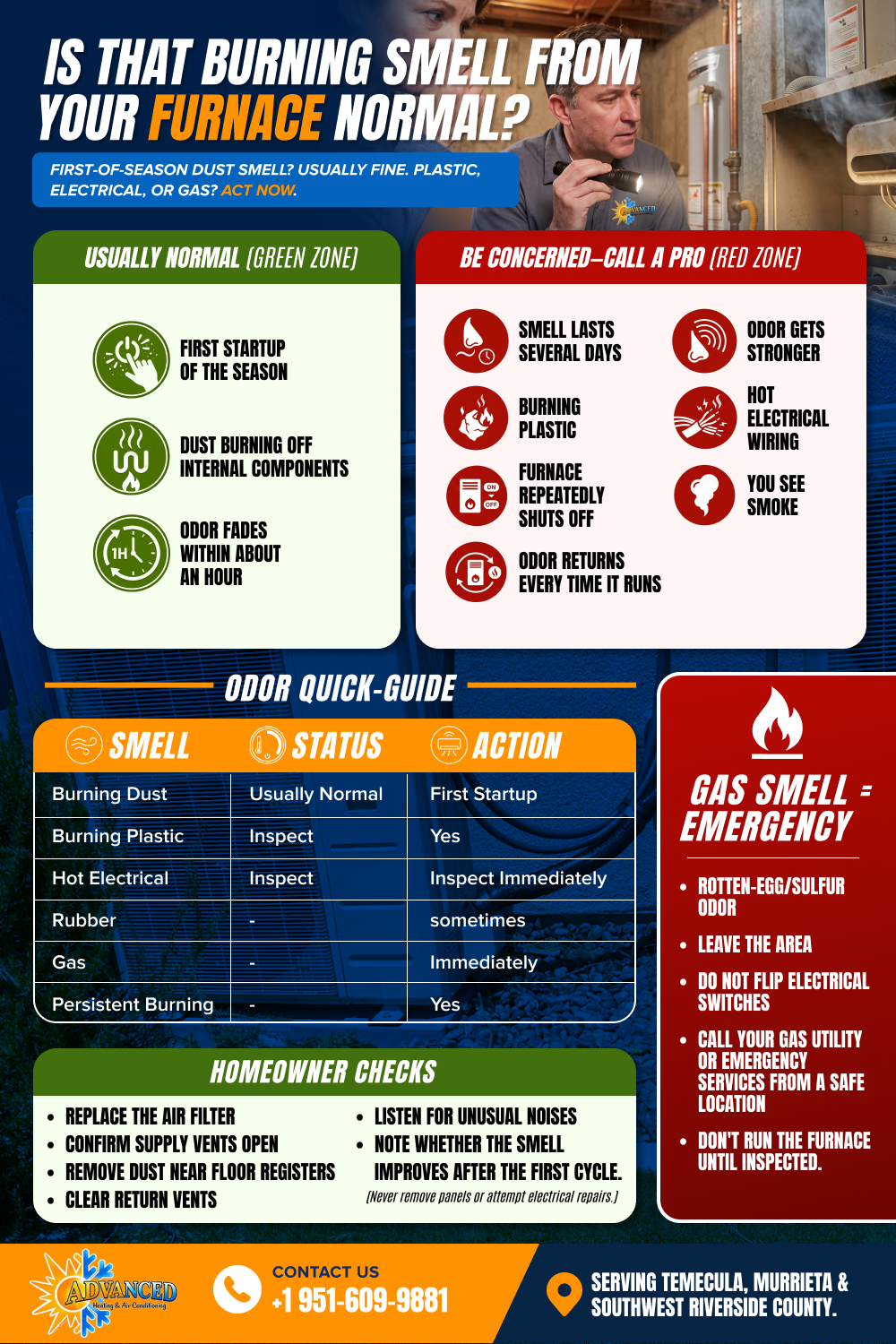
9. Gas Smell vs. Burning Smell
Homeowners sometimes confuse these odors.
Natural gas has a very distinct sulfur or “rotten egg” smell.
A burning dust smell is completely different.
If you ever smell gas:
- Leave the area.
- Avoid operating electrical switches.
- Contact your gas utility or emergency services from a safe location.
- Do not continue operating the furnace until it has been inspected.
When Is a Burning Smell Normal?
Usually normal:
- ✔ First furnace startup of the season
- ✔ Dust burning off internal components
- ✔ Odor disappears within an hour
When Should You Be Concerned?
Call an HVAC professional if:
- The smell lasts several days.
- The odor gets stronger.
- You smell burning plastic.
- You smell hot electrical wiring.
- The furnace repeatedly shuts off.
- You notice smoke.
- The odor returns every time the furnace operates.
What Homeowners Can Check
Before scheduling service:
- ✔ Replace the air filter.
- ✔ Check that supply vents are open.
- ✔ Remove dust near floor registers.
- ✔ Verify nothing is blocking return vents.
- ✔ Listen for unusual noises.
- ✔ Observe whether the smell improves after the first heating cycle.
Never remove furnace panels or attempt electrical repairs yourself.
Comparison Table
- Burning dust — Usually normal? Yes (first startup). Professional inspection recommended? Usually no.
- Burning plastic — Usually normal? No. Professional inspection recommended? Yes.
- Hot electrical smell — Usually normal? No. Professional inspection recommended? Immediately.
- Rubber smell — Usually normal? Sometimes. Professional inspection recommended? Yes.
- Gas smell — Usually normal? No. Professional inspection recommended? Immediately.
- Persistent burning odor — Usually normal? No. Professional inspection recommended? Yes.
From the Field
One homeowner in Murrieta called us in a panic after turning on their furnace for the first cool evening of the year. They were convinced something inside the system was on fire because of the strong burning smell coming from the vents.
After inspecting the furnace, we found exactly what we expected—a layer of dust that had accumulated during months of inactivity. After the furnace completed a couple of heating cycles, the odor disappeared completely.
On another service call, however, a homeowner reported a “burning smell” that turned out to be an overheating blower motor with damaged electrical windings. That repair needed immediate attention.
The lesson is simple: not every burning smell means danger, but persistent or unusual odors deserve professional evaluation.
Frequently Asked Questions
Is it normal for my furnace to smell when I first turn it on?
Yes. Dust burning off the heat exchanger and other internal components is very common during the first use of the heating season.
How long should the smell last?
Typically between a few minutes and about an hour. If the odor continues beyond the first few heating cycles, schedule an inspection.
What does an electrical burning smell mean?
It may indicate overheating electrical components, damaged wiring, or motor problems. Turn the system off and have it inspected.
Can a dirty air filter cause burning smells?
Yes. Restricted airflow can contribute to overheating, which may create hot metal or burning odors.
In Summary
A burning smell coming from your furnace isn’t always a reason to panic.
In many cases, it’s simply dust burning off after months of inactivity.
However, if the smell resembles burning plastic, electrical wiring, or continues well after the first few heating cycles, it’s important to have the system professionally inspected.
Understanding the difference between normal seasonal odors and warning signs can help keep your heating system operating safely and efficiently.
Why Trust Advanced Heating & Air Conditioning?
Since 2008, Advanced Heating & Air Conditioning has proudly served homeowners throughout Temecula, Murrieta, Menifee, Winchester, Lake Elsinore, Hemet, Wildomar, French Valley, and surrounding communities.
Our experienced technicians believe in educating homeowners—not just fixing equipment. Whether you’re dealing with unusual furnace odors, airflow issues, or seasonal maintenance, we’ll take the time to explain what’s happening, answer your questions, and recommend solutions that help keep your family safe and comfortable.