


Why Does My Carbon Monoxide Detector Keep Going Off? What Every Homeowner Should Know
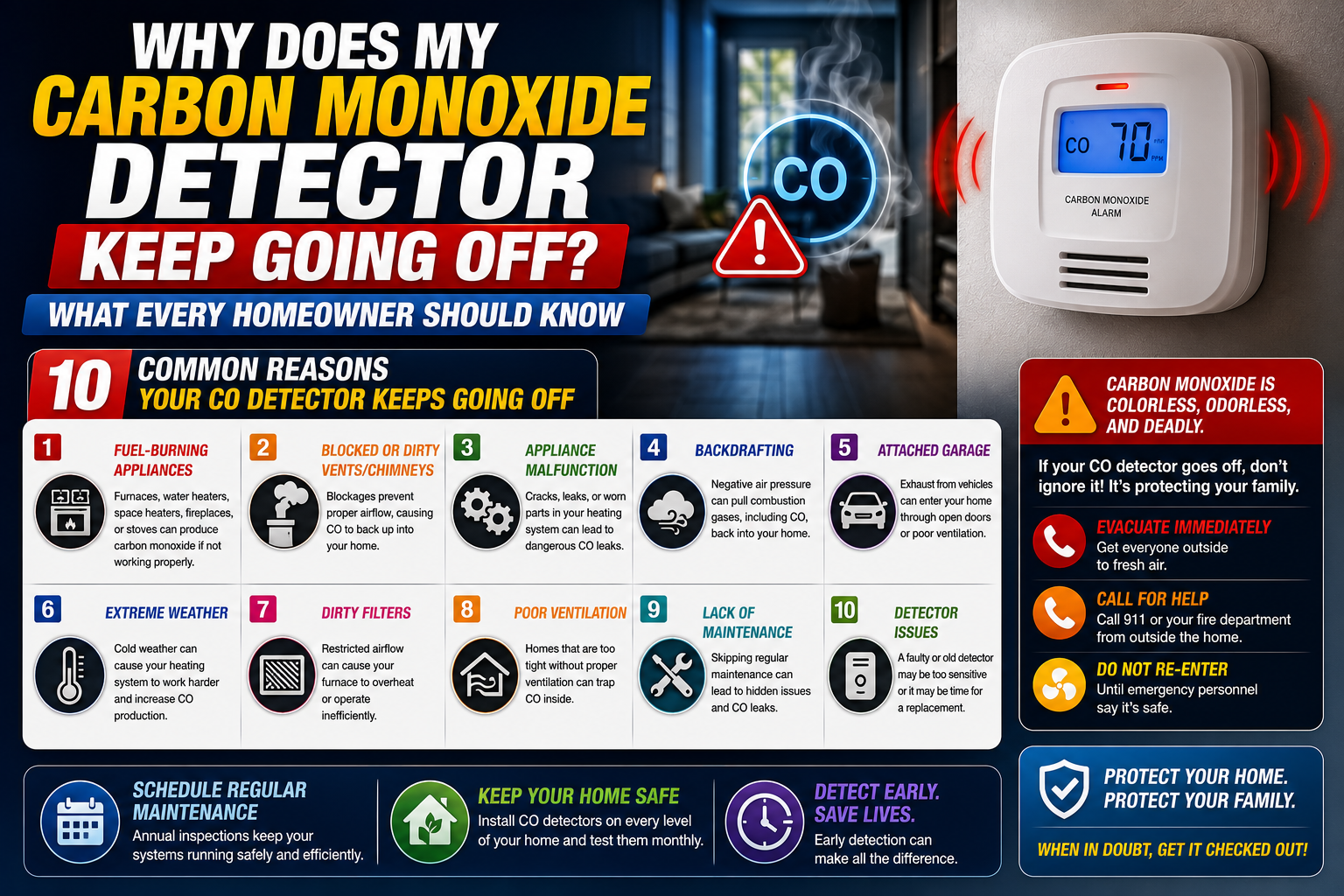
Why Does My Carbon Monoxide Detector Keep Going Off? What Every Homeowner Should Know
Key Takeaways
- Never ignore a carbon monoxide alarm.
- Carbon monoxide (CO) is a colorless, odorless gas that can be dangerous.
- A carbon monoxide alarm does not automatically mean your furnace is the source, but your heating system should be inspected if it’s operating.
- If your detector alarms, your first priority is protecting everyone in the home.
Table of Contents
- What Is Carbon Monoxide?
- Why CO Detectors Go Off
- Is My Furnace the Problem?
- What You Should Do Immediately
- Preventing Carbon Monoxide Problems
- Frequently Asked Questions
- From the Field
- Summary
What Is Carbon Monoxide?
Carbon monoxide, often called CO, is a gas produced whenever fuel burns.
Possible household sources include:
- Natural gas furnaces
- Gas water heaters
- Gas fireplaces
- Gas ranges
- Portable generators
- Attached garages with running vehicles
Because carbon monoxide has:
- No color
- No smell
- No taste
…the only reliable way to detect it inside your home is with a properly functioning carbon monoxide detector.
That’s why every home with fuel-burning appliances should have working CO alarms installed according to the manufacturer’s recommendations and local building codes.
My Carbon Monoxide Detector Went Off. What Should I Do?
If your carbon monoxide detector is sounding an alarm indicating possible CO, treat it seriously.
Your priorities should be:
- Get everyone (including pets) outside to fresh air.
- Call your local fire department, gas utility, or emergency services if instructed by your detector’s guidance or local authorities.
- Do not re-enter the home until it has been determined to be safe.
Once the immediate safety concern has been addressed, the source of the carbon monoxide can be investigated by the appropriate professionals.
Does a Carbon Monoxide Alarm Mean My Furnace Is Bad?
Not necessarily.
Many homeowners assume:
“The furnace must be leaking carbon monoxide.”
Sometimes that’s true.
Many times it isn’t.
Potential CO sources include:
- Water heaters
- Fireplaces
- Gas ovens
- Vehicles left running in attached garages
- Other fuel-burning appliances
If your furnace has been operating, it should absolutely be included in the inspection, but it should not be assumed to be the only possible source.
Common Furnace-Related Causes
If the heating system is involved, possible causes may include:
Cracked Heat Exchanger
A damaged heat exchanger is one possible concern that HVAC professionals inspect for.
Heat exchangers should only be evaluated by qualified technicians using appropriate inspection methods.
Blocked Exhaust Vent
Modern furnaces rely on proper venting.
Blocked exhaust piping from debris, nests, or other obstructions can interfere with proper venting and should be inspected.
Improper Combustion
A furnace should burn fuel efficiently.
If combustion isn’t occurring correctly, professional testing is needed to determine the cause.
Poor Maintenance
Regular maintenance helps identify developing issues before they become larger problems.
During annual heating inspections, technicians evaluate many safety-related components, including combustion performance and venting.
Sometimes It’s the Detector
Not every alert means carbon monoxide is present.
Carbon monoxide detectors can also require attention because of:
- Low batteries
- End-of-life replacement reminders
- Device malfunction
- Manufacturer-specific warning signals
It’s important to understand the difference between a low-battery chirp and an actual carbon monoxide alarm by referring to your detector’s manual.
If you’re unsure, treat the situation cautiously until you know otherwise.
Signs of Carbon Monoxide Exposure
Carbon monoxide exposure can produce symptoms that may resemble other illnesses.
Possible symptoms can include:
- Headache
- Dizziness
- Nausea
- Fatigue
- Confusion
If multiple people in the home experience symptoms while a CO alarm is sounding, leave the home immediately and seek appropriate emergency assistance.
How to Help Prevent Carbon Monoxide Problems
Homeowners can reduce risk by:
- ✔ Scheduling annual furnace maintenance.
- ✔ Replacing furnace air filters regularly.
- ✔ Keeping vents clear of obstructions.
- ✔ Never operating generators inside garages or enclosed spaces.
- ✔ Never blocking combustion air openings.
- ✔ Replacing carbon monoxide detectors according to manufacturer recommendations.
- ✔ Testing CO detectors regularly using the test button as recommended.
Annual Furnace Maintenance Matters
During a professional heating inspection, technicians may evaluate:
- Combustion performance
- Burner operation
- Venting system
- Heat exchanger condition (using appropriate inspection methods)
- Safety controls
- Airflow
- Electrical components
These inspections help identify developing issues before they become major problems.
Comparison Table
- Low battery chirp — Action: replace battery or detector as recommended.
- CO alarm sounding — Action: leave the home and follow emergency guidance.
- Furnace due for maintenance — Action: schedule inspection.
- Blocked furnace vent — Action: have it inspected before operating.
- Detector older than manufacturer recommends — Action: replace detector.
From the Field
One homeowner in Temecula called us after their carbon monoxide detector began alarming during the first cold week of winter. They assumed their furnace had failed and immediately shut the system off.
After the home’s immediate safety concerns were addressed, the heating system was professionally inspected. The furnace itself was operating properly, but another fuel-burning appliance required attention.
On another service call, we discovered a blocked exhaust vent that was preventing proper venting of the heating system.
Every situation is different.
That’s why we never assume the cause before performing a complete inspection.
Safety always comes first.
Frequently Asked Questions
Can a furnace produce carbon monoxide?
Any fuel-burning appliance has the potential to produce carbon monoxide if it isn’t operating or venting properly. Regular maintenance helps verify safe operation.
Should I ignore a carbon monoxide detector if I think it’s a false alarm?
No.
Always take a carbon monoxide alarm seriously until the situation has been evaluated.
How often should carbon monoxide detectors be replaced?
Follow the manufacturer’s recommendations. Many detectors have a limited service life and should be replaced when they reach the end of that period.
Should I have my furnace inspected every year?
Yes.
Annual maintenance helps verify proper operation, improve efficiency, and identify potential problems before they become more serious.
In Summary
A carbon monoxide detector is one of the most important safety devices in your home.
If it alarms, don’t assume it’s a faulty detector—or that the furnace is automatically to blame.
Protect your family first by treating the alarm seriously, following appropriate emergency guidance, and having the home’s fuel-burning appliances inspected by qualified professionals.
Routine HVAC maintenance and properly functioning carbon monoxide detectors work together to help keep your home safe throughout the heating season.
Why Trust Advanced Heating & Air Conditioning?
Since 2008, Advanced Heating & Air Conditioning has proudly served homeowners throughout Temecula, Murrieta, Menifee, Winchester, Lake Elsinore, Hemet, Wildomar, French Valley, and surrounding communities.
Your family’s safety is our highest priority. Our certified technicians perform thorough heating inspections, evaluate combustion and venting systems, and help homeowners understand how to keep their HVAC systems operating safely and efficiently. We believe education is just as important as repairs because informed homeowners make safer decisions.
Related Articles
- Why Is My Furnace Blowing Cold Air?
- Why Is My Furnace Making Loud Noises?
- Is It Better to Repair or Replace Your Furnace?
- Why Is My Heating Bill So High?
- How Often Should You Have Your HVAC System Serviced?
- How Often Should You Change Your HVAC Air Filter?
- Why Does My Air Conditioner Keep Turning On and Off?